THE CLASSIC COLLECTION✦Building the pacific railwayCLASSIC FREE BOOKS
Building the pacific railway
Edwin L. (Edwin Legrand) Sabin
THE CLASSIC COLLECTION · 1918
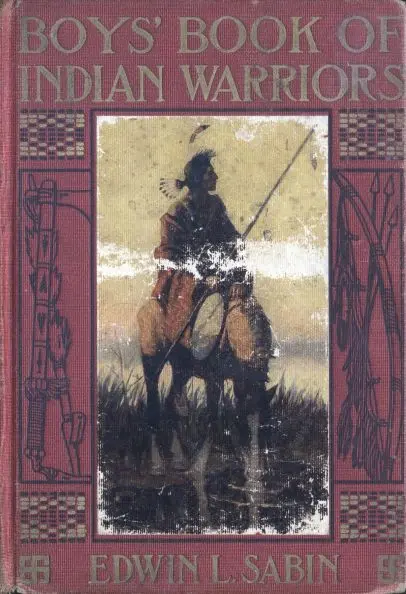
"Boys' Book of Indian Warriors and Heroic Indian Women" by Edwin L. Sabin is a collection of historical accounts written in the early 20th century. This work explores the lives and exploits of notable Native American warriors and women throughout American history, highlighting their courage and resilience against external pressures and conflicts. The author aims to present the narrative from the perspective of the Native Americans, offering insights into their motivations and beliefs." "The opening of this collection introduces the warrior Piskaret of the Adirondack tribe, recounting his daring exploits during the 17th century as he takes on the formidable Iroquois. Set against the backdrop of a bitter and protracted conflict between various Native tribes and colonizing forces, Piskaret embarks on a solo reconnaissance mission, using cunning tactics to evade his enemies. The narrative vividly details his journey into enemy territory, where he stealthily attacks the Iroquois during the night, showcasing both his bravery and the harsh realities of the times. Through Piskaret’s story, the text sets the stage for a broader exploration of Native American history and identity."
Introduction adapted from the source catalogue; source summaries may be automatically generated.
Free to read · English · 82,783 words · No account needed
MAKE TIME FOR A GOOD BOOK
On by default. Untick to stop anonymous reading totals. Each page counts after 10 seconds in view. How this works.
Anonymous counting is on unless you have switched it off.
Here they were, with only one hundred and twenty soldiers, and less than three weeks' provisions, cut off by one thousand, two thousand, three thousand merciless Indian warriors, and by the French settlers and traders who probably would be glad to have the English killed.
"The English are to be struck down, but no Frenchman is to be harmed,"
had said Catharine.
That looked bad indeed.
This night guards were doubled along the parapets, and in the block-houses. The major himself walked guard most of the night. From the distant villages of the Ottawas, the Wyandots, and the Potawatomis drifted the clamor of dances--an ugly sound, full of meaning, now.
Precisely at ten o'clock in the morning a host of bark canoes from the Ottawa side of the Detroit River slanted across the current, and made landing. Pontiac approached at the head of a long file of thirty chiefs and as many warriors. They walked with measured, stately tread. Every man was closely wrapped in a gay blanket.
They were admitted through the gate of the fort, but it was closed against the mass of warriors, women and children who pressed after.
As Pontiac, with his escort, stalked for the council room, his quick glances saw that the soldiers were formed, under arms, and moving from spot to spot, and that a double rank had been stationed around the headquarters.
In the council chamber he noted, too, that each officer wore his sword,
and two pistols!
"Why," asked Pontiac, of Major Gladwyn, "do I see so many of my father's young men standing in the street with their guns?"
"It is best that my young men be exercised as soldiers, or they will grow lazy and forget," answered the major.
Ha! Pontiac knew. Somehow his plans had been betrayed; his game was up, unless he chose an open fight.
His chiefs and warriors sat uneasily. They all feared death. By Indian law they ought to be killed for having intended to shed blood in a calumet council.
Pontiac started his talk. He acted confused, as though he was not certain what course to pursue.
Once he did seem about to offer the belt wrong end first, as the signal--and Major Gladwyn, still sitting, slightly raised his hand. Instantly from outside the door sounded the clash of arms and the quick roll of a drum, to show that the garrison was on the alert. The officers half drew their swords.
Pontiac flushed yet darker. He stammered, and offering the belt right end first, closed his talk, and sat down again.
Your reading position is saved on this browser. Take it to another device with a library code. Reading pages adapt to text, rather than matching a printed edition.
Edwin L. (Edwin Legrand) Sabin

Edwin L. (Edwin Legrand) Sabin

Edwin L. (Edwin Legrand) Sabin

Edwin L. (Edwin Legrand) Sabin
BEHIND THE BOOK
This eBook is for the use of anyone anywhere in the United States and most other parts of the world at no cost and with almost no restrictions whatsoever. You may copy it, give it away or re-use it under the terms of the Project Gutenberg License included with this eBook or online at www.gutenberg.org. If you are not located in the United States, you will have to check the laws of the country where you are located before using this eBook. Read the source licence.
The original source file, including credits and licence, is retained by this library. Request an original-format copy at no charge. Please include the book title and Project Gutenberg identifier #31131.
KEEP YOUR CURIOSITY GOING
Cécile Tormay

Moritz Busch
John L. Ransom
Frances Wright
Cécile Tormay

Mabel Potter Daggett