THE CLASSIC COLLECTION✦Building the pacific railwayCLASSIC FREE BOOKS
Building the pacific railway
Edwin L. (Edwin Legrand) Sabin
THE CLASSIC COLLECTION · 1918
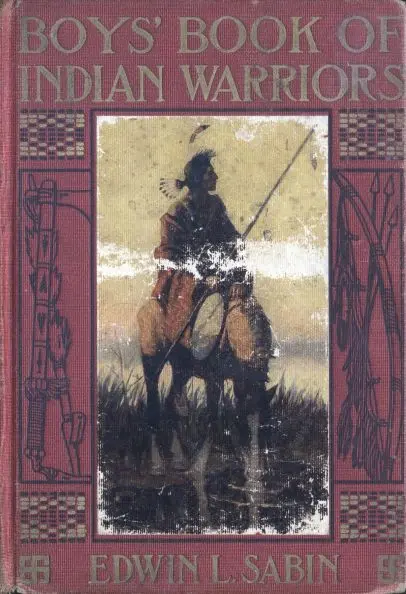
"Boys' Book of Indian Warriors and Heroic Indian Women" by Edwin L. Sabin is a collection of historical accounts written in the early 20th century. This work explores the lives and exploits of notable Native American warriors and women throughout American history, highlighting their courage and resilience against external pressures and conflicts. The author aims to present the narrative from the perspective of the Native Americans, offering insights into their motivations and beliefs." "The opening of this collection introduces the warrior Piskaret of the Adirondack tribe, recounting his daring exploits during the 17th century as he takes on the formidable Iroquois. Set against the backdrop of a bitter and protracted conflict between various Native tribes and colonizing forces, Piskaret embarks on a solo reconnaissance mission, using cunning tactics to evade his enemies. The narrative vividly details his journey into enemy territory, where he stealthily attacks the Iroquois during the night, showcasing both his bravery and the harsh realities of the times. Through Piskaret’s story, the text sets the stage for a broader exploration of Native American history and identity."
Introduction adapted from the source catalogue; source summaries may be automatically generated.
Free to read · English · 82,783 words · No account needed
MAKE TIME FOR A GOOD BOOK
On by default. Untick to stop anonymous reading totals. Each page counts after 10 seconds in view. How this works.
Anonymous counting is on unless you have switched it off.
In the days of Mah-to-toh-pa the Mandans numbered two thousand, in two towns allied with the towns of the Minnetarees. They were beset by the tough, winter-traveling Assiniboins to the north, and by the treacherous Arikarees and the bold Sioux to the south. Therefore when in 1833 the wandering artist George Catlin of Pennsylvania, who spent eight years painting Indians in their homes all the way from Florida to the Rocky Mountains, made a long stay among the Mandans, they rejoiced him by their brave tales as well as with their curious habits.
According to all the reports, the "bravest of the braves" in the Mandan towns was Mahtotohpa; second chief by rank, but first of all by deeds. "Free, generous, elegant, and gentlemanly in his deportment--handsome, brave and valiant," says Artist Catlin. Such words speak well for Four Bears, but not a bit too well.
Before he arrived at the Artist Catlin lodge to have his portrait painted, the warning ran ahead of him: "Mahtotohpa is coming in full dress!" He was escorted by a great throng of admiring women and children. Now it was twelve o'clock noon, and he had been since early morning getting ready, so as to appear as befitted a noble chief.
His dress was complete: shirt, leggins, moccasins, head-dress, necklace, belt, robe, medicine-bag, tobacco sack, pipe, quiver, bow, knife, lance, shield, tomahawk and war-club. And as he proudly stood erect, waiting, he made a splendid sight.
His shirt was mountain-sheep skins, one before, one behind, sewed together at their edges. They were embroidered with porcupine quills brightly dyed, and fringed with the black scalp-locks of the enemies whom he had slain in combat, and tasseled with ermine tails. They were pictured with his deeds, painted in sign language.
The leggins were of finely dressed deer-skin, worked with the porcupine quills, fringed with the scalp-locks, and fitting tightly from moccasins to thighs.
The moccasins were of buck-skin, armored with the dyed quills.
The head-dress was a crest of two polished buffalo horns set in a thick mat of ermine, from which fell clear to his heels a ridgy tail of countless eagle plumes also set in the ermine fur.
The necklace was of fifty grizzly-bear claws, strung from otter skin.
The belt was of tanned buck-skin, supporting tomahawk and broad-bladed scalping knife with elk-horn haft.
The robe slung from his shoulders like a Roman toga was the softened hide of a young buffalo bull worn fur side in; and on the white skin side all the battles of his life had been painted.
The medicine-bag was a beaver skin, ornamented with hawk-bills and ermine. He held it in his right hand.
Your reading position is saved on this browser. Take it to another device with a library code. Reading pages adapt to text, rather than matching a printed edition.
Edwin L. (Edwin Legrand) Sabin

Edwin L. (Edwin Legrand) Sabin

Edwin L. (Edwin Legrand) Sabin

Edwin L. (Edwin Legrand) Sabin
BEHIND THE BOOK
This eBook is for the use of anyone anywhere in the United States and most other parts of the world at no cost and with almost no restrictions whatsoever. You may copy it, give it away or re-use it under the terms of the Project Gutenberg License included with this eBook or online at www.gutenberg.org. If you are not located in the United States, you will have to check the laws of the country where you are located before using this eBook. Read the source licence.
The original source file, including credits and licence, is retained by this library. Request an original-format copy at no charge. Please include the book title and Project Gutenberg identifier #31131.
KEEP YOUR CURIOSITY GOING
Cécile Tormay

Moritz Busch
John L. Ransom
Frances Wright
Cécile Tormay

Mabel Potter Daggett