THE CLASSIC COLLECTION✦Building the pacific railwayCLASSIC FREE BOOKS
Building the pacific railway
Edwin L. (Edwin Legrand) Sabin
THE CLASSIC COLLECTION · 1918
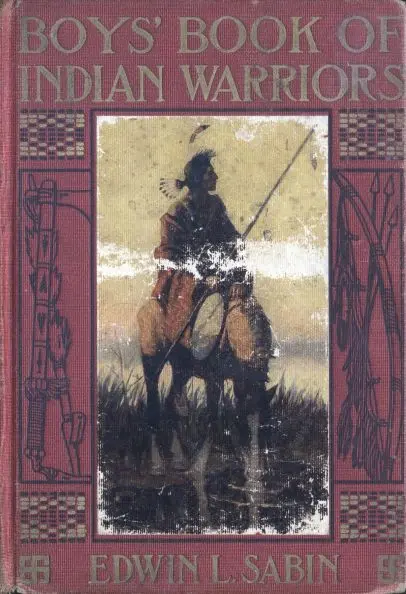
"Boys' Book of Indian Warriors and Heroic Indian Women" by Edwin L. Sabin is a collection of historical accounts written in the early 20th century. This work explores the lives and exploits of notable Native American warriors and women throughout American history, highlighting their courage and resilience against external pressures and conflicts. The author aims to present the narrative from the perspective of the Native Americans, offering insights into their motivations and beliefs." "The opening of this collection introduces the warrior Piskaret of the Adirondack tribe, recounting his daring exploits during the 17th century as he takes on the formidable Iroquois. Set against the backdrop of a bitter and protracted conflict between various Native tribes and colonizing forces, Piskaret embarks on a solo reconnaissance mission, using cunning tactics to evade his enemies. The narrative vividly details his journey into enemy territory, where he stealthily attacks the Iroquois during the night, showcasing both his bravery and the harsh realities of the times. Through Piskaret’s story, the text sets the stage for a broader exploration of Native American history and identity."
Introduction adapted from the source catalogue; source summaries may be automatically generated.
Free to read · English · 82,783 words · No account needed
MAKE TIME FOR A GOOD BOOK
On by default. Untick to stop anonymous reading totals. Each page counts after 10 seconds in view. How this works.
Anonymous counting is on unless you have switched it off.
The party proceeded at top speed. The southwest fork seemed to be the best, for boating. The stream shallowed. At the next camp Sacagawea was more excited.
"She say here in dis spot is where de Snake camp was surprise' by de Minnetaree, five years ago, an' chase' into de timber," announced Drouillard the hunter. "De Minnetaree keel four warrior an' capture four boy an' all de women. She was capture' here, herself."
Hurrah! the trail was getting warm. The canoes had to be hauled by tow-lines, with Sacagawea proudly riding in one of them and helping to fend off with a pole. She had not been here since she was a girl of eleven or twelve, but she caught more landmarks.
"Dat is w'at ze Snake call ze Beaver's Head," proclaimed Chaboneau, whose feet had given out. "Ze Snake spen' deir summer 'cross ze mountains jes' ze odder side. She t'ink we sure to meet some on dis side, to hunt ze boof'lo. Mebbe furder up one leetle way."
Captain Lewis took three men and struck out, to find an Indian trail and follow it into the mountains.
"I'll not come back until I've met with the Snakes," he asserted.
He was gone a long time. The shallow river, full of rapids and shoals, curved and forked and steadily shrank. But although Sacagawea eagerly peered, and murmured to herself, no Indians appeared.
The water was icy cold, from the snow range. This was middle August, in extreme southwestern Montana (a high country). The nights were cold, too. Game grew scarce. Three thousand miles had been logged off, from St. Louis. Unless the company could get guides and horses from the Snakes, and travel rapidly, they would be stuck, for the winter--likely enough starve; at any rate be forced to quit.
By August 16 Captain Lewis had not returned. Captain Clark set out afoot, with Sacagawea and Chaboneau, to walk across country. The Snakes simply must be found.
The toiling boats rounded a great bend, and a shout arose.
"There's Clark! He's sighted Injuns, hasn't he?"
"So has Sacagawea! Sure she has! See?"
"Injuns on horseback, boys! Hooray!"
For Captain Clark, yonder up the curve, was holding high his hand, palm front, in the peace sign. Sacagawea had run ahead, little Toussaint bobbing in the net on her back; she danced as she ran; she ran back again to him, sucking her fingers.
"Dat mean she see her own peoples!" panted Cruzatte the chief boatman, who was a trapper and trader, too, and knew Indians. "Dere dey come, on de hoss. Hooray!"
"Hooray!"
Your reading position is saved on this browser. Take it to another device with a library code. Reading pages adapt to text, rather than matching a printed edition.
Edwin L. (Edwin Legrand) Sabin

Edwin L. (Edwin Legrand) Sabin

Edwin L. (Edwin Legrand) Sabin

Edwin L. (Edwin Legrand) Sabin
BEHIND THE BOOK
This eBook is for the use of anyone anywhere in the United States and most other parts of the world at no cost and with almost no restrictions whatsoever. You may copy it, give it away or re-use it under the terms of the Project Gutenberg License included with this eBook or online at www.gutenberg.org. If you are not located in the United States, you will have to check the laws of the country where you are located before using this eBook. Read the source licence.
The original source file, including credits and licence, is retained by this library. Request an original-format copy at no charge. Please include the book title and Project Gutenberg identifier #31131.
KEEP YOUR CURIOSITY GOING
Cécile Tormay

Moritz Busch
John L. Ransom
Frances Wright
Cécile Tormay

Mabel Potter Daggett