THE CLASSIC COLLECTION✦Building the pacific railwayCLASSIC FREE BOOKS
Building the pacific railway
Edwin L. (Edwin Legrand) Sabin
THE CLASSIC COLLECTION · 1919
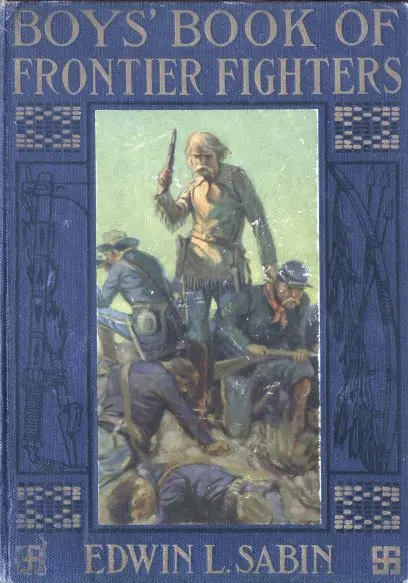
"Boys' Book of Frontier Fighters" by Edwin L. Sabin is a historical account written in the early 20th century. This work focuses on the daring exploits of American pioneers and soldiers as they fought against indigenous tribes during the westward expansion of the United States. With tales of courage, strategic battles, and significant historical figures such as Captain Benjamin Church during King Philip's War, it explores themes of bravery and survival in the face of adversity. At the start of the book, the author introduces Captain Benjamin Church, a renowned Indian fighter known for his fierce engagement in conflicts during the late 17th century. The narrative details his relentless pursuit of the Pokanokets and the capture of Chief Annawan, who was a key figure in King Philip’s War. Captain Church's character is depicted as steadfast and resourceful, highlighting a gripping encounter that showcases his gritty determination as he navigates a dangerous swamp, battles formidable foes, and ultimately captures his adversary, illustrating the complex dynamics of colonial America during this tumultuous period. The opening chapters set the stage for a series of heroic tales that celebrate the spirit of frontier fighters and their roles in shaping American history.
Introduction adapted from the source catalogue; source summaries may be automatically generated.
Free to read · English · 88,860 words · No account needed
MAKE TIME FOR A GOOD BOOK
On by default. Untick to stop anonymous reading totals. Each page counts after 10 seconds in view. How this works.
Anonymous counting is on unless you have switched it off.
They could not wait to get into town with him. They planted a stake at once--they tore off the remainder of his rags--they stretched his arms to the utmost above his head and tied his hands together to the top of the stake. There he was. He heartily wished that he had let horses alone, but resolved to die manfully.
But they did not burn him. The men, women and children danced around him, and yelled and hooted and screamed and made faces, switched him and slapped him, until midnight. They wanted to make the most of him, so they untied him and hustled him on into the town, for another day's sport.
The first thing in the morning he saw the scalp of his friend Montgomery, bound upon a hoop and drying in the sun, before a house. That was a reminder. The next thing, he was led out, to run the gauntlet.
The people were waiting, lined up in two rows facing inward. The rows bristled with clubs, switches, hoe-handles and tomahawks. The two persons at this end were warriors, holding butcher-knives! They would initiate him! Gosh! The lines were closed by a man beating a drum. Back of the man was the council-house.
Simon knew that he was to run between the lines, from the butcher-knives through the clubs and hoe-handles and tomahawks past the drum, to the council-house--if he could.
"Not for me," thought Simon. "I'll fool those yaller varmints."
He stood braced, two warriors grasping him. The drum suddenly boomed with a new note, the warriors shoved him--"Go!" The air trembled with the expectant clamor. But Simon, a bloody white-skinned giant, veered aside. He avoided the butcher-knives; he struck for the clear, the lines broke in furious pursuit, headed him off, he doubled like a rabbit, doubled again, sighted an open place, felled two Indians with his fists, headed for the opening, was tackled, stumbled under the blows, recovered, lunged on, and gasping clutched the post at the council-house doorway. It was sanctuary.
He was seized none too kindly, wrenched from the post, and with his arms bound was seated under a guard, outside the council-house, while the council of chiefs, surrounded by squatting warriors, voted upon whether to burn him now or later.
The white man came out to bring him the news.
"You are to be taken to Wakatomica."
That was another Shawnee town, about seventy miles north.
"What will they do with me there?" Simon asked.
"Burn you, by thunder," the white man snarled; and swore at him, and strode away as angrily as any of the red men.
Your reading position is saved on this browser. Take it to another device with a library code. Reading pages adapt to text, rather than matching a printed edition.
Edwin L. (Edwin Legrand) Sabin

Edwin L. (Edwin Legrand) Sabin

Edwin L. (Edwin Legrand) Sabin

Edwin L. (Edwin Legrand) Sabin
BEHIND THE BOOK
This eBook is for the use of anyone anywhere in the United States and most other parts of the world at no cost and with almost no restrictions whatsoever. You may copy it, give it away or re-use it under the terms of the Project Gutenberg License included with this eBook or online at www.gutenberg.org. If you are not located in the United States, you will have to check the laws of the country where you are located before using this eBook. Read the source licence.
The original source file, including credits and licence, is retained by this library. Request an original-format copy at no charge. Please include the book title and Project Gutenberg identifier #31130.
KEEP YOUR CURIOSITY GOING
Cécile Tormay

Moritz Busch
John L. Ransom
Frances Wright
Cécile Tormay

Mabel Potter Daggett