THE CLASSIC COLLECTION✦Building the pacific railwayCLASSIC FREE BOOKS
Building the pacific railway
Edwin L. (Edwin Legrand) Sabin
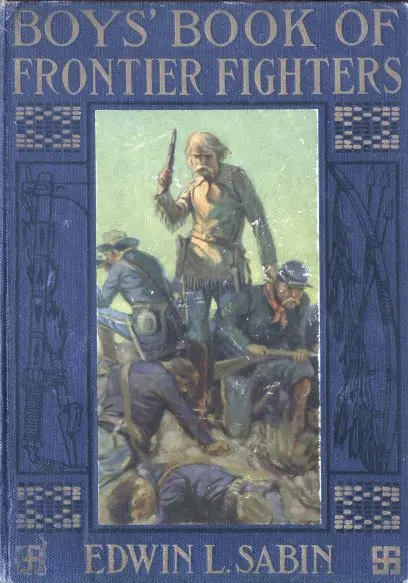
THE CLASSIC COLLECTION · 1919
"Boys' Book of Frontier Fighters" by Edwin L. Sabin is a historical account written in the early 20th century. This work focuses on the daring exploits of American pioneers and soldiers as they fought against indigenous tribes during the westward expansion of the United States. With tales of courage, strategic battles, and significant historical figures such as Captain Benjamin Church during King Philip's War, it explores themes of bravery and survival in the face of adversity. At the start of the book, the author introduces Captain Benjamin Church, a renowned Indian fighter known for his fierce engagement in conflicts during the late 17th century. The narrative details his relentless pursuit of the Pokanokets and the capture of Chief Annawan, who was a key figure in King Philip’s War. Captain Church's character is depicted as steadfast and resourceful, highlighting a gripping encounter that showcases his gritty determination as he navigates a dangerous swamp, battles formidable foes, and ultimately captures his adversary, illustrating the complex dynamics of colonial America during this tumultuous period. The opening chapters set the stage for a series of heroic tales that celebrate the spirit of frontier fighters and their roles in shaping American history.
Introduction adapted from the source catalogue; source summaries may be automatically generated.
Free to read · English · 88,860 words · No account needed
MAKE TIME FOR A GOOD BOOK
On by default. Untick to stop anonymous reading totals. Each page counts after 10 seconds in view. How this works.
Anonymous counting is on unless you have switched it off.
"Oh, pshaw! They say back at Zarah that there hasn't been an Injun seen from the trail in ten days. I fancy our escort scared the buffalo. Now like as not we won't get a shot."
"Just the same, it's queer the buffalo are all out yonder in the open instead of grazing on the river bottoms. If any Injuns are at hand, they'd be hiding along the river."
"Oh, pshaw!" laughed the captain. "We're safe enough. I'll get you back to Lizzie. Don't you worry yourself."
"Lizzie" was the lieutenant's bride, at Fort Riley. He had left her for the first time since they were married.
Drawn by its rapidly trotting mules the wagon trundled about three miles farther--and the captain had a glimpse of something new, moving over the low brush ahead and toward the river. It seemed to be a flock of wild turkeys bobbing along, now above the brush, now settling into it. N-no? What, then? Men on horses.
He clutched the lieutenant's arm.
"Look there, Hallowell. What is it?"
The lieutenant looked only once.
"Injuns, by Jiminy! We're in for it."
He whirled his team around and with voice and shake of lines quickened them to a gallop on the back trail for Zarah, six miles.
The captain objected.
"Wait! Hold on, Hallowell. They may be part of the escort."
Lieutenant Hallowell was wiser. This was his second year in Indian
country.
"No, no! I know Injuns when I see 'em. Gid-dap! Yip!"
"Well, by thunder, I'll see for myself."
So the captain clambered from the seat to the side step, and hanging hard to the front wagon-bow, took a good look.
"Indians, aren't they?" asked the lieutenant, braced to the lines.
"Yes; and coming like blazes!"
That they were. The objects that had resembled turkeys were their feathered heads rising from a ravine. They were fully out now; had dropped their buffalo-robes, and all exposed in the open were tearing for the road.
"How many, Cap?"
"About thirty."
"Oh, dear!" sighed young Lieutenant Hallowell, "I'll never see Lizzie
again."
"Never mind Lizzie. Let's get ourselves out of here, first."
"All right, Cap," replied Lieutenant Hallowell, briskly. "You do the shooting and I'll do the driving."
He snatched the whip, slipped from his seat to the very front end of the box; and letting the lines lie lax began to lash and yell. The mules bolted free, twitching the wagon over the ruts.
Captain Booth sprawled inside; grabbed the lieutenant's one navy revolver, and with his own two tumbled over the seat and dived to the pucker-hole at the rear end, to fight the Indians off.
Your reading position is saved on this browser. Take it to another device with a library code. Reading pages adapt to text, rather than matching a printed edition.
Edwin L. (Edwin Legrand) Sabin

Edwin L. (Edwin Legrand) Sabin

Edwin L. (Edwin Legrand) Sabin

Edwin L. (Edwin Legrand) Sabin
BEHIND THE BOOK
This eBook is for the use of anyone anywhere in the United States and most other parts of the world at no cost and with almost no restrictions whatsoever. You may copy it, give it away or re-use it under the terms of the Project Gutenberg License included with this eBook or online at www.gutenberg.org. If you are not located in the United States, you will have to check the laws of the country where you are located before using this eBook. Read the source licence.
The original source file, including credits and licence, is retained by this library. Request an original-format copy at no charge. Please include the book title and Project Gutenberg identifier #31130.
KEEP YOUR CURIOSITY GOING
Cécile Tormay

Moritz Busch
John L. Ransom
Frances Wright
Cécile Tormay

Mabel Potter Daggett