THE CLASSIC COLLECTION✦Building the pacific railwayCLASSIC FREE BOOKS
Building the pacific railway
Edwin L. (Edwin Legrand) Sabin
THE CLASSIC COLLECTION · 1919
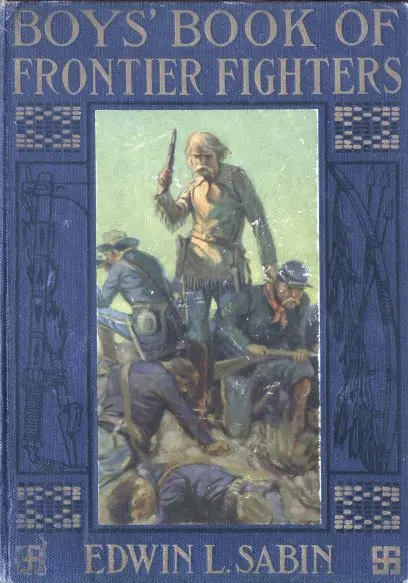
"Boys' Book of Frontier Fighters" by Edwin L. Sabin is a historical account written in the early 20th century. This work focuses on the daring exploits of American pioneers and soldiers as they fought against indigenous tribes during the westward expansion of the United States. With tales of courage, strategic battles, and significant historical figures such as Captain Benjamin Church during King Philip's War, it explores themes of bravery and survival in the face of adversity. At the start of the book, the author introduces Captain Benjamin Church, a renowned Indian fighter known for his fierce engagement in conflicts during the late 17th century. The narrative details his relentless pursuit of the Pokanokets and the capture of Chief Annawan, who was a key figure in King Philip’s War. Captain Church's character is depicted as steadfast and resourceful, highlighting a gripping encounter that showcases his gritty determination as he navigates a dangerous swamp, battles formidable foes, and ultimately captures his adversary, illustrating the complex dynamics of colonial America during this tumultuous period. The opening chapters set the stage for a series of heroic tales that celebrate the spirit of frontier fighters and their roles in shaping American history.
Introduction adapted from the source catalogue; source summaries may be automatically generated.
Free to read · English · 88,860 words · No account needed
MAKE TIME FOR A GOOD BOOK
On by default. Untick to stop anonymous reading totals. Each page counts after 10 seconds in view. How this works.
Anonymous counting is on unless you have switched it off.
The grass was fired, nevertheless, in several spots. It was dry, and caught like tinder; the flames crackled and leaped, and raced down upon the thicket. The smoke rose densely. The Indians might be dimly seen, running about in the drifting veil and carrying off their killed and wounded.
Jim Bowie's voice pealed like a trumpet.
"We're not dead yet. Clean away the brush and leaves as far as you can reach, some of you. The rest of us pile up rocks and dirt for a breastworks for the wounded."
They labored madly. The horses tore loose and bolted. The Indians whooped, gleeful, and shot briskly. But the wind changed, into the north, and the fire surged past, just grazing the thicket; the slowly creeping back-fire was easily smothered with blankets.
Had they been saved? No! The Indians started another fire, on the north. The dried grass was even higher here. The flames roared in a front ten feet in air; the pungent smoke drifted chokingly.
"Put the wounded and baggage in the center," were the orders. "Then every man clear his own space. When it comes, lay on with blankets, robes, anything. We may be roasted here, but it's sure death for us outside."
The heat and smoke became terrific. "The Indians," said Rezin Bowie, "fired about twenty shots a minute," riddling the thicket. "The sparks were flying about so thickly that no man could open his powder horn without running the risk of being blown up." If the Indians charged in after the fire, under cover of the smoke, the Texans could only empty their guns and meet the charge with knives and hatchets.
Now the flames were upon them. The branches and the cactus twisted and popped. Cowering and shielding their wounded, the men "lay to" with whatever came to hand--blankets, buffalo robes, bear-skins, coats, shirts--and beat out the ground-fire. Their hair, beards and eye-brows were singed; they could scarcely see. And leaping overhead, or splitting, the storm passed on.
It left the thicket bare to the blackened branches and shriveled cactus-lobes. Every inch fumed with the acrid smoke.
"Raise that breastworks. It's all we've got, boys. We'll have to
fight from inside it."
"Dat Jim nigger 'lowed he was in a toler'ble fight, but 'twa'n't nothin' 'side ob dis," chattered boy Charles.
They toiled, piling their rampart ring higher, while they constantly peered right, left, before, behind, expecting a charge.
Bob Armstrong cheered.
"The reds are going! They've had enough!"
That seemed true. The Indians had taken away their dead and wounded; they were commencing to follow, but some of them remained in sight.
Your reading position is saved on this browser. Take it to another device with a library code. Reading pages adapt to text, rather than matching a printed edition.
Edwin L. (Edwin Legrand) Sabin

Edwin L. (Edwin Legrand) Sabin

Edwin L. (Edwin Legrand) Sabin

Edwin L. (Edwin Legrand) Sabin
BEHIND THE BOOK
This eBook is for the use of anyone anywhere in the United States and most other parts of the world at no cost and with almost no restrictions whatsoever. You may copy it, give it away or re-use it under the terms of the Project Gutenberg License included with this eBook or online at www.gutenberg.org. If you are not located in the United States, you will have to check the laws of the country where you are located before using this eBook. Read the source licence.
The original source file, including credits and licence, is retained by this library. Request an original-format copy at no charge. Please include the book title and Project Gutenberg identifier #31130.
KEEP YOUR CURIOSITY GOING
Cécile Tormay

Moritz Busch
John L. Ransom
Frances Wright
Cécile Tormay

Mabel Potter Daggett