THE CLASSIC COLLECTION✦Building the pacific railwayCLASSIC FREE BOOKS
Building the pacific railway
Edwin L. (Edwin Legrand) Sabin
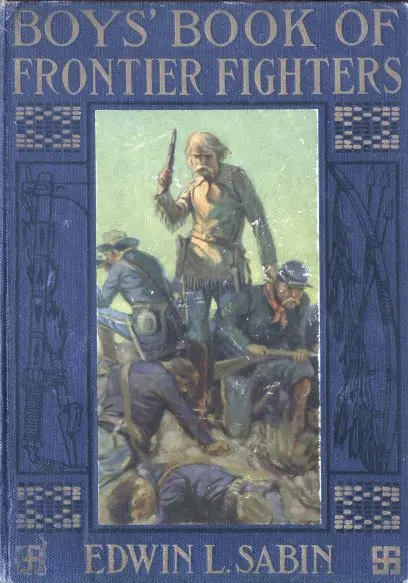
THE CLASSIC COLLECTION · 1919
"Boys' Book of Frontier Fighters" by Edwin L. Sabin is a historical account written in the early 20th century. This work focuses on the daring exploits of American pioneers and soldiers as they fought against indigenous tribes during the westward expansion of the United States. With tales of courage, strategic battles, and significant historical figures such as Captain Benjamin Church during King Philip's War, it explores themes of bravery and survival in the face of adversity. At the start of the book, the author introduces Captain Benjamin Church, a renowned Indian fighter known for his fierce engagement in conflicts during the late 17th century. The narrative details his relentless pursuit of the Pokanokets and the capture of Chief Annawan, who was a key figure in King Philip’s War. Captain Church's character is depicted as steadfast and resourceful, highlighting a gripping encounter that showcases his gritty determination as he navigates a dangerous swamp, battles formidable foes, and ultimately captures his adversary, illustrating the complex dynamics of colonial America during this tumultuous period. The opening chapters set the stage for a series of heroic tales that celebrate the spirit of frontier fighters and their roles in shaping American history.
Introduction adapted from the source catalogue; source summaries may be automatically generated.
Free to read · English · 88,860 words · No account needed
MAKE TIME FOR A GOOD BOOK
On by default. Untick to stop anonymous reading totals. Each page counts after 10 seconds in view. How this works.
Anonymous counting is on unless you have switched it off.
"Reckon so. Or Potawatomis. Glad they ain't Shawnees," answered Little Fat Bear. "Shucks! If I hadn't tumbled--! Don't you cry, brother," he warned.
"Who's cryin'! Don't you bawl, yourself!"
"I blamed near skinned out. If I'd had a better head start I'd have run clean home; and then the folks would be makin' these Injuns hop, you bet," declared Brashear, the "Buck Elk."
"Aw, the Injuns would have followed you. They'd likely have shot you, so you wouldn't give the alarm," retorted Fat Bear, wisely. "We're all right. Who's afraid of Injuns. If we don't act up they'll treat us well. The Miamis and Potawatomis ain't as bad as the Shawnees."
"Wonder where they'll take us," puffed the fifth boy.
They were being hustled at a trot. The river was crossed on the slushy ice. All that day they traveled northward; and all the next day, and the next, and the next, and on and on. No pursuit was sighted. Probably Colonel Pope and the other families had thought that they were spending Sunday at the ponds, and had not looked for them until Monday morning.
The Indians were Miamis. That promised a journey clear to northern Indiana, perhaps. Whew! But Little Fat Bear and Buck Elk encouraged the fellows to "keep a stiff upper lip," and take whatever came; then the Indians would respect them more. If they put up a "holler" and "bellered," they'd be licked.
This worked out finely. Pluck always does. They and their captors got along splendidly, and they were not tied at night nor made to carry loads. Nevertheless, it was a tremendous journey, straight northward through the wilderness, with never a glimpse of any town, until, after a week or more, they arrived at the Miami village.
"How far've we come, you think?" asked William Wells, when the village was to be seen and by the preparations they knew that it was the place.
"Upwards of two hundred miles, I'll bet," replied Fat Bear. He was not
so fat, now.
That was a shrewd guess. The village was upon the Little Calumet River, near present Valparaiso in northwestern Indiana--a full two hundred and twenty-five miles from Louisville opposite the southern boundary. They had been taken through the whole state.
"The gauntlet! Cracky! We've got to run the gauntlet!"
"Golly! The same as any prisoners!"
"Don't you show the white feather, any of you. Keep together and run
like sixty."
"And don't you tumble over again, either," they warned, of Fat Bear. "If you're down once, you'll get licked proper."
"Make for the council house. That's the way to do."
Your reading position is saved on this browser. Take it to another device with a library code. Reading pages adapt to text, rather than matching a printed edition.
Edwin L. (Edwin Legrand) Sabin

Edwin L. (Edwin Legrand) Sabin

Edwin L. (Edwin Legrand) Sabin

Edwin L. (Edwin Legrand) Sabin
BEHIND THE BOOK
This eBook is for the use of anyone anywhere in the United States and most other parts of the world at no cost and with almost no restrictions whatsoever. You may copy it, give it away or re-use it under the terms of the Project Gutenberg License included with this eBook or online at www.gutenberg.org. If you are not located in the United States, you will have to check the laws of the country where you are located before using this eBook. Read the source licence.
The original source file, including credits and licence, is retained by this library. Request an original-format copy at no charge. Please include the book title and Project Gutenberg identifier #31130.
KEEP YOUR CURIOSITY GOING
Cécile Tormay

Moritz Busch
John L. Ransom
Frances Wright
Cécile Tormay

Mabel Potter Daggett