THE CLASSIC COLLECTION✦Ten Girls from HistoryCLASSIC FREE BOOKS
Ten Girls from History
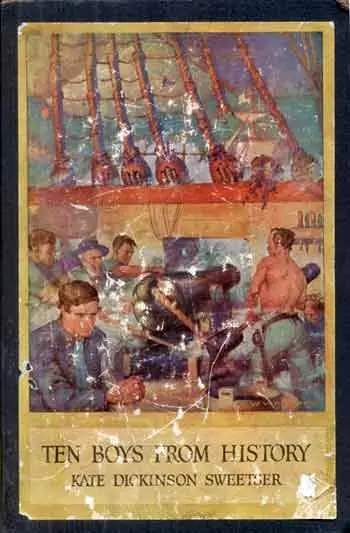
Kate Dickinson Sweetser
THE CLASSIC COLLECTION · 1907
"Boys and Girls from Thackeray" by Kate Dickinson Sweetser is a collection of literary adaptations crafted in the early 20th century. This work presents engaging stories derived from the childhood and youth of notable characters created by William Makepeace Thackeray, such as Henry Esmond and Becky Sharp. The purpose of this compilation is to introduce Thackeray’s work to younger audiences, showcasing the delightful pastimes and experiences of his characters, making his literature accessible and appealing to a new generation of readers. At the start of the compilation, the author highlights Thackeray's fondness for depicting the early lives of his characters, especially with the introduction of Henry Esmond, a lonely boy of about twelve years old who resides in the Castlewood estate. As Henry navigates his new environment following the arrival of the new Viscount and Viscountess Castlewood, he experiences kindness for the first time from Lady Castlewood, establishing a sense of belonging. The opening vividly illustrates the contrast between Henry’s earlier isolation and the warmth offered by his new family, setting the stage for the themes of friendship, belonging, and the trials of youth that resonate throughout Thackeray's narratives.
Introduction adapted from the source catalogue; source summaries may be automatically generated.
Free to read · English · 103,497 words · No account needed
MAKE TIME FOR A GOOD BOOK
On by default. Untick to stop anonymous reading totals. Each page counts after 10 seconds in view. How this works.
Anonymous counting is on unless you have switched it off.
Thomas Newcome had now been for three years in the possession of that joy which his soul longed after, and yet in spite of his happiness, his honest face grew more melancholy, his loose clothes hung only the looser on his lean limbs; he ate his meals without appetite; his nights were restless and he would sit for hours silent, and was constantly finding business which took him to distant quarters of England. Notwithstanding this change in him the Colonel insisted that he was perfectly happy and contented, but the truth was, his heart was aching with the knowledge that Clive had occupations, ideas, associates, in which the elder could take no interest. Sitting in his blank, cheerless bedroom, Newcome could hear the lad and his friends making merry and breaking out in roars of laughter from time to time. The Colonel longed to share in the merriment, but he knew that the party would be hushed if he joined it, that the younger men were happier and freer without him, and without laying any blame upon them for this natural state of affairs, it saddened the days and nights of our genial Colonel.
Clive, meanwhile, passed through the course of study prescribed by Mr. Gandish and drew every cast and statue in that gentleman's studio. Grindley, his tutor, getting a curacy, Clive did not replace him, but took a course of modern languages, which he learned with great rapidity. And now, being strong enough to paint without a master, Mr. Clive must needs have a studio, as there was no good light in the house in Fitzroy Square. If his kind father felt any pang even at this temporary parting, he was greatly soothed and pleased by a little mark of attention on Clive's part. He walked over with Colonel Newcome to see the new studio, with its tall centre window, and its curtains and hard wardrobes, china jars, pieces of armour, and other artistic properties, and with a very sweet smile of kindness and affection lighting up his honest face, took out a house-key and gave it to his father: "That's your key, sir," he said to the Colonel; "and you must be my first sitter, please, father; for, though I am to be a historical painter, I shall condescend to do a few portraits, you know." The Colonel grasped his son's hand as Clive fondly put the other hand on his father's shoulder. Then Colonel Newcome walked away for a minute or two, and came back wiping his moustache with his handkerchief, and still holding the key in the other hand. He spoke about some trivial subject when he returned; but his voice quite trembled, his face glowed with love and pleasure, and the little act of affection compensated him for many weary hours of solitude. It is certain that Clive worked much better after he had this apartment of his own, and meals at home were gayer; and the rides with his father more frequent and agreeable. The Colonel used his key not infrequently, and found Clive and his friend J. J. as a general thing absorbed in executing historical subjects on the largest possible canvases. Meanwhile Colonel Newcome was preparing his mind to leave his idol, who he knew would be happy without as with him. During the three years since he had come from India the Colonel had spent money lavishly and had also been obliged to pay dearly for some of Clive's boyish extravagances. At first, the Colonel had thought he might retire from the army altogether, but experience showed him that he could not live upon his income. He proposed now to return to India to get his promotion as full Colonel when the thousand a year to which that would entitle him, together with his other investments, would be ample for Clive and himself to live on. While the Colonel's thoughts were absorbed in this matter his favourite Ethel was constantly away with her grandmother. The Colonel went to see her at Brighton, and once, twice, thrice, Lady Kew's door was denied to him. Once when the Colonel encountered his pretty Ethel with her riding master she greeted him affectionately, but when he rode up to her she looked so constrained, when he talked about Clive she was so reserved, when he left her, so sad, he could only feel pain and regret. Back he went to London, having in a week only caught this single glance of his darling, but filled with determination to have a frank talk with his sister-in-law, Lady Ann, and if possible to mend the family disagreement and turn the tide of Lady Ann's affection again towards his son. This he attempted to do, and would have succeeded had not Barnes Newcome been the head of the house. As we know, his opinion of Clive was not to that young man's advantage. These opinions were imparted to his Uncle Hobson at the bank, and Uncle Hobson carried them home to his wife, who took an early opportunity of repeating them to the Colonel, and the Colonel was brought to see that Barnes was his boy's enemy, and words very likely passed between them, for Thomas Newcome took a new banker at this time, and was very angry because Hobson Brothers wrote to him to say that he had overdrawn his account. "I am sure there is some screw loose," remarked Clive to a friend, "and that my father and the people in Park Lane have disagreed, because he goes there very little now; and he promised to go to Court when Ethel was presented and he didn't go." This state of affairs between the members of the Newcome family continued for some months. Then, happily, a truce was declared, the quarrel between the Newcome brothers came to an end--for that time at least--and was followed by a rather showy reconciliation and a family dinner at Brianstone Square. Everybody was bent upon being happy and gracious. It was "My dear brother, how do you do?" from Sir Brian. "My dear Colonel, how glad we are to see you! How well you look!" from Lady Ann. Ethel Newcome ran to him with both hands out, an eager welcome on her beautiful face. And even Lady Kew held out her hand to Colonel Newcome, saying briskly: "Colonel, it is an age since we met," and turning to Clive with equal graciousness to say, "Mr. Clive, let me shake hands with you; I have heard all sorts of good of you, that you have been painting the most beautiful things, that you are going to be quite famous." There was no doubt about it,--it was an evening of reconciliation on every side.
Your reading position is saved on this browser. Take it to another device with a library code. Reading pages adapt to text, rather than matching a printed edition.
Kate Dickinson Sweetser
Kate Dickinson Sweetser
Kate Dickinson Sweetser
Kate Dickinson Sweetser
BEHIND THE BOOK
This eBook is for the use of anyone anywhere in the United States and most other parts of the world at no cost and with almost no restrictions whatsoever. You may copy it, give it away or re-use it under the terms of the Project Gutenberg License included with this eBook or online at www.gutenberg.org. If you are not located in the United States, you will have to check the laws of the country where you are located before using this eBook. Read the source licence.
The original source file, including credits and licence, is retained by this library. Request an original-format copy at no charge. Please include the book title and Project Gutenberg identifier #10111.
KEEP YOUR CURIOSITY GOING

Abby Morton Diaz
Helen Hunt Jackson
Mary Frances Blaisdell
Stuart Dodgson Collingwood

Kate Douglas Smith Wiggin
Hesba Stretton