My pets
Marshall Saunders
THE CLASSIC COLLECTION · 1916
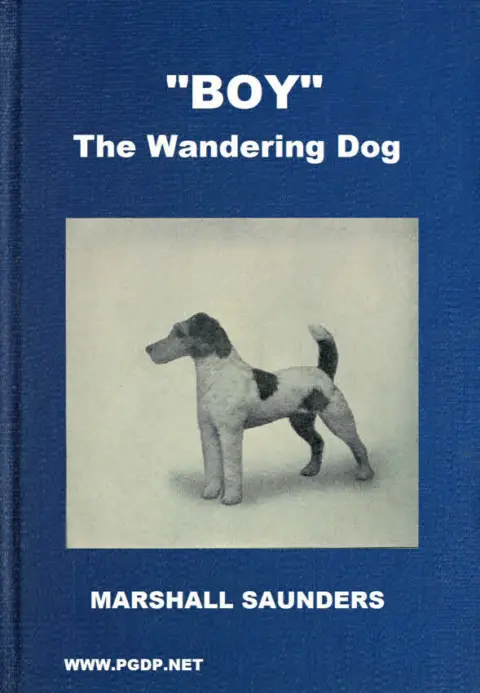
"Boy" the Wandering Dog: Adventures of a Fox-Terrier by Marshall Saunders is a work of fiction written in the early 20th century. The narrative follows a resourceful and expressive fox-terrier named Boy as he navigates the challenges of urban life and seeks companionship and adventure in the bustling city of New York. Throughout the story, themes of loyalty, friendship, and the unique perspectives of animals are explored. At the start of the story, Boy arrives in New York after his wanderings and immediately realizes the importance of making friends in such a vast city. He encounters a rather gruff bulldog named Gringo, who initially appears standoffish but soon warms up to Boy, sharing insights about the city and its challenges for dogs. As their conversation unfolds, Boy also reflects on the changes he's seen in the city and his desire to belong, showcasing his witty personality and sharp observations about both human and animal behavior. The opening portion sets the tone for a whimsical yet profound exploration of life through the eyes of a dog, inviting readers to empathize with Boy’s adventures and the fascinating characters he meets.
Introduction adapted from the source catalogue; source summaries may be automatically generated.
Free to read · English · 89,328 words · No account needed
MAKE TIME FOR A GOOD BOOK
On by default. Untick to stop anonymous reading totals. Each page counts after 10 seconds in view. How this works.
Anonymous counting is on unless you have switched it off.
“Oh! dear,” whimpered cook, “ain’t she the holy fright--the darlin’ thing,” and Annie said something even worse. However, from that day on, they never criticised her as sharply as they had before. The baby had brought a new spirit into the house.
My dear master still thought his wife was beautiful, and I could see that he was perfectly terrified, lest she should eat too many sweets and get fat again. He offered her a diamond necklace, if she would stop eating chocolates, and he watched her at the table, and coaxed her not to touch any puddings that had a rich sauce.
One day, he found a little bit of brown paste on her upper lip. “Dearest,” he said anxiously, “have you been eating chocolates?”
She blushed like a naughty child. “Just one,” she said; “nurse had some. But I won’t do it again,” she went on shaking her head, “I’m really anxious to please you, Rudolph.”
He kissed her quite warmly for him, and pushing the table away, sat down quite close beside her, and began to read.
I was delighted that she liked to have him read to her now, but it made a great difference to me. She used to watch the clock with cunning eyes, and get more and more interested in what he was reading, the later the evening grew. Sometimes, she asked a question which did not exactly fit in, for example when he was declaiming about the war in Poland, and she said, “I always did dislike Spaniards.”
He laid down his book. “I said nothing about Spaniards, my dear.”
Her thoughts had been wandering, and she couldn’t speak till he gave her a clue. “I was reading of the woes of the Poles.”
“That is what I meant,” she said, “Poles of course, I never did care
for them.”
“I didn’t know you had ever met any,” he said dreamily, then he plunged again into his book.
She was nearly dead with sleep that night, and soon she said, “Rudolph, would you just read me something about children, before I go to bed?”
He put down the war-book, and took up one of poetry. I was sleepy too, but I caught a phrase, “The cry of the children,” and later in the night, this phrase came back to me.
We had no walk--it was too late to go when mistress went to the baby, and master said to me, “Let us turn in too, Boy-Dog.”
It was good we got a little sleep early in the night, for we had rather
a disturbed time later.
Your reading position is saved on this browser. Take it to another device with a library code. Reading pages adapt to text, rather than matching a printed edition.
Marshall Saunders
Marshall Saunders
Marshall Saunders
Marshall Saunders
BEHIND THE BOOK
This eBook is for the use of anyone anywhere in the United States and most other parts of the world at no cost and with almost no restrictions whatsoever. You may copy it, give it away or re-use it under the terms of the Project Gutenberg License included with this eBook or online at www.gutenberg.org. If you are not located in the United States, you will have to check the laws of the country where you are located before using this eBook. Read the source licence.
The original source file, including credits and licence, is retained by this library. Request an original-format copy at no charge. Please include the book title and Project Gutenberg identifier #50394.
KEEP YOUR CURIOSITY GOING
Coulson Kernahan

Maurice Baring
Frances Wright
Cécile Tormay

Frederic Jesup Stimson

W. H. P. (William Henry Pope) Jarvis