
The Writing of News A Handbook with Chapters on Newspaper Correspondence and Copy Reading
Charles G. (Charles Griffith) Ross
THE CLASSIC COLLECTION · 1904
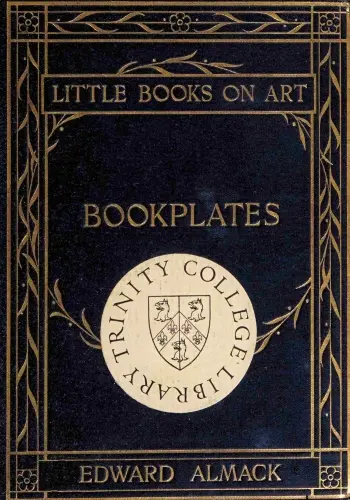
"Bookplates" by Edward Almack is a specialized art book written in the early 20th century. This work delves into the history, styles, and artistry of bookplates—decorative labels indicating ownership of a book—tracing their evolution from early armorial designs to modern interpretations. The book is enriched with illustrations showcasing various bookplate designs, catering to collectors, historians, and those interested in the intersection of visual arts and literature. The opening of "Bookplates" introduces the significance of these artistic labels, asserting that they serve to enhance the books they are affixed to. Almack discusses the different terminologies used across cultures, such as the German "bibliothekzeichen" and the Latin "ex libris," while providing insights into engraving techniques and styles that characterize bookplate art throughout history. The author emphasizes the cultural and personal narratives intertwined with these items, setting the stage for an exploration of notable artists and significant examples in subsequent chapters. This rich introduction establishes a foundation for understanding how bookplates reflect the tastes and identities of their owners across time.
Introduction adapted from the source catalogue; source summaries may be automatically generated.
Free to read · English · 34,031 words · No account needed
MAKE TIME FOR A GOOD BOOK
On by default. Untick to stop anonymous reading totals. Each page counts after 10 seconds in view. How this works.
Anonymous counting is on unless you have switched it off.
At all events, much romance must always attach to the name of anyone who, like Henry Howard, was oft exchanging tokens with Mary Queen of Scots. In the latter years of Queen Elizabeth he entered into a secret correspondence with James of Scotland, who wrote to him often on intimate terms, and who, on hearing of Elizabeth’s death, sent Howard a ruby as a token. On January 1st, 1604, Howard became Lord Warden of the Cinque Ports, and soon afterwards Baron Howard of Marnhull, Dorsetshire, and Earl of Northampton. In the next year he was made a Knight of the Garter, and in 1608 he was appointed to the office of Lord Privy Seal.
Sir Percivall Hart, Chief Server, and Knight Harbinger to Henry VIII., Edward VI., Mary, and Elizabeth, died in 1580, leaving a son, Sir Percivall Hart, who married twice, first to Anne, daughter of Sir Richard Manwood, Knight, Chief Baron of the Court of Exchequer, by whom he had a son, William; and his second wife was Jane, daughter of Sir Edward Stanhope of Grimston, Knight, by whom he had issue Sir Henry Hart, Knight of the Bath, who died in his father’s lifetime, having married Elizabeth, daughter of---- Burdet, and a widow of Sir Simon Norwich, by whom he left Percyval, Francis, George, and Elizabeth, who died young; Percyval and Jerome, who died without issue; and George, who married Elizabeth, daughter of---- Berisford, and left two sons, Percival and George, and two daughters, Jane and Elizabeth.
William Hart, only son of Sir Percyval by his first wife, succeeded his father in the possession of Lullingstone, and died on March 31st, 1671, aged seventy-seven, and was buried there. He married Elizabeth, daughter of Sir Anthony Weldon, of Swanscombe, Knight, who died in 1677, and lies buried there, by whom he had no issue, upon which the Manor of Lullingstone descended to Percyval Hart, Esq., eldest son of Sir Henry Hart, Knight of the Bath, eldest son of Sir Percyval Hart, Knight, by his second wife as abovementioned. He was afterwards knighted, and left issue by Anne, his wife, one son, Percyval Hart, Esq., who was of Lullingstone, was sheriff in 1707, and Member of Parliament for the county in the ninth and twelfth years of Queen Anne. He died October 27th, 1738, aged seventy, and was buried in Lullingstone Church, having by Sarah, his wife, youngest daughter of Henry Dixon of Hilden, Esquire, an only daughter and heir, Anne, then married to her second husband, Sir Thomas Dyke of Hexham, in Sussex, Baronet.
The notes given below, and many more, all evidently in the hand of John Crane, are in a 1649 copy of Reliquiæ Sacræ Carolinæ:--
Your reading position is saved on this browser. Take it to another device with a library code. Reading pages adapt to text, rather than matching a printed edition.
BEHIND THE BOOK
This eBook is for the use of anyone anywhere in the United States and most other parts of the world at no cost and with almost no restrictions whatsoever. You may copy it, give it away or re-use it under the terms of the Project Gutenberg License included with this eBook or online at www.gutenberg.org. If you are not located in the United States, you will have to check the laws of the country where you are located before using this eBook. Read the source licence.
The original source file, including credits and licence, is retained by this library. Request an original-format copy at no charge. Please include the book title and Project Gutenberg identifier #60858.
KEEP YOUR CURIOSITY GOING
Charles G. (Charles Griffith) Ross
Hannah Webster Foster

Emily Lawless
Edwin Hamlin Carr

Charles De Lano Hine
Andrew Ure