
The Writing of News A Handbook with Chapters on Newspaper Correspondence and Copy Reading
Charles G. (Charles Griffith) Ross
THE CLASSIC COLLECTION · 1904
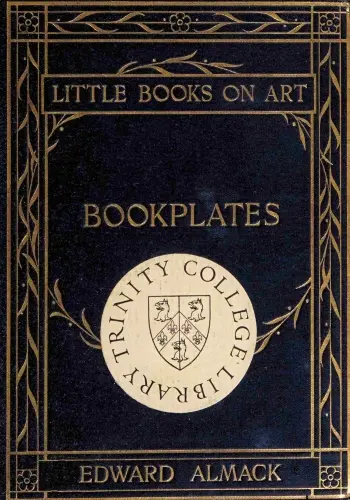
"Bookplates" by Edward Almack is a specialized art book written in the early 20th century. This work delves into the history, styles, and artistry of bookplates—decorative labels indicating ownership of a book—tracing their evolution from early armorial designs to modern interpretations. The book is enriched with illustrations showcasing various bookplate designs, catering to collectors, historians, and those interested in the intersection of visual arts and literature. The opening of "Bookplates" introduces the significance of these artistic labels, asserting that they serve to enhance the books they are affixed to. Almack discusses the different terminologies used across cultures, such as the German "bibliothekzeichen" and the Latin "ex libris," while providing insights into engraving techniques and styles that characterize bookplate art throughout history. The author emphasizes the cultural and personal narratives intertwined with these items, setting the stage for an exploration of notable artists and significant examples in subsequent chapters. This rich introduction establishes a foundation for understanding how bookplates reflect the tastes and identities of their owners across time.
Introduction adapted from the source catalogue; source summaries may be automatically generated.
Free to read · English · 34,031 words · No account needed
MAKE TIME FOR A GOOD BOOK
On by default. Untick to stop anonymous reading totals. Each page counts after 10 seconds in view. How this works.
Anonymous counting is on unless you have switched it off.
The next surname we come to in bookplates has been most familiar to the present and immediate past generation, in the person of Samuel Wilberforce, Bishop of Oxford. These few following remarks are from private recollections. In the power of getting through a day of hard labour, of mind and body, he was unequalled, and to the end of the hard day’s work, with similar laborious days preceding and following, he could display a marvellously ready wit. One evening at a dinner-party at Cuddesdon Palace, the two lady guests on each side of the Bishop were suddenly startled by the crashing fall of a pile of plates. The Bishop, utterly unmoved, instantly remarked, “Oh, it’s nothing; it’s only the coachman going out with the brake.” It was the coachman, and the brake was the vehicle in frequent use. He would do some hours’ work no doubt after his guests had retired, and do some good work before breakfast the next morning. At Bisham Abbey, meeting at dinner two irrepressible spinsters who would argue of ages, he drily remarked, as if addressing the moon, the extraordinary fact in nature, that ladies’ ages always ran thus: 1, 2, 3, 4, 5, 6, 7, 8, 9, 10, 11, 12, 13, 14, 15, 16, 17, 18, 18, 18, 18, 18, 18, 19, 20, 21, 22, 23, 23, 23, 23, 23, 23, and so on.
The bookplate of William Wilberforce is
from a fine large volume all in manuscript, giving a very full account of the Yorkshire election contest, the poll opening on 20th May, 1807, and only finally closing on the 5th June. This volume belongs to Mr. Edward Feetham Coates, as does also an exquisite volume in pen-and-ink, the work of the late Dr. Howard, who has taken Glover’s visitation of Yorkshire, from MSS. Harl., No. 1,394, and besides drawing the arms most exquisitely, and “Wilberforse” among the rest, has given most ample pedigrees and an index. Dr. Howard gives the field argent and the eagle sable; but otherwise Old Guillim’s account of Cotton would nearly hold good:--
“The field is sapphire, an eagle displaied; Pearle, Membred Gules. These armes appertaine to the Right worthy Sir Robert Cotten, of Connington, Knight, a learned Antiquary, and a singular fauorer and preseruer of all good learning and antique monuments. The eagle ... continually practiseth that course of life whereunto nature hath ordained her: ... her sharpnesse and strength of sight is much commended; and it is a greater honour to one of noble offspring to be wise and of sharpe and deepe understanding, then to be rich or powerfull, or great by birth.”
Your reading position is saved on this browser. Take it to another device with a library code. Reading pages adapt to text, rather than matching a printed edition.
BEHIND THE BOOK
This eBook is for the use of anyone anywhere in the United States and most other parts of the world at no cost and with almost no restrictions whatsoever. You may copy it, give it away or re-use it under the terms of the Project Gutenberg License included with this eBook or online at www.gutenberg.org. If you are not located in the United States, you will have to check the laws of the country where you are located before using this eBook. Read the source licence.
The original source file, including credits and licence, is retained by this library. Request an original-format copy at no charge. Please include the book title and Project Gutenberg identifier #60858.
KEEP YOUR CURIOSITY GOING
Charles G. (Charles Griffith) Ross
Hannah Webster Foster

Emily Lawless
Edwin Hamlin Carr

Charles De Lano Hine
Andrew Ure