THE CLASSIC COLLECTION✦The haunts of menCLASSIC FREE BOOKS
The haunts of men
Robert W. (Robert William) Chambers
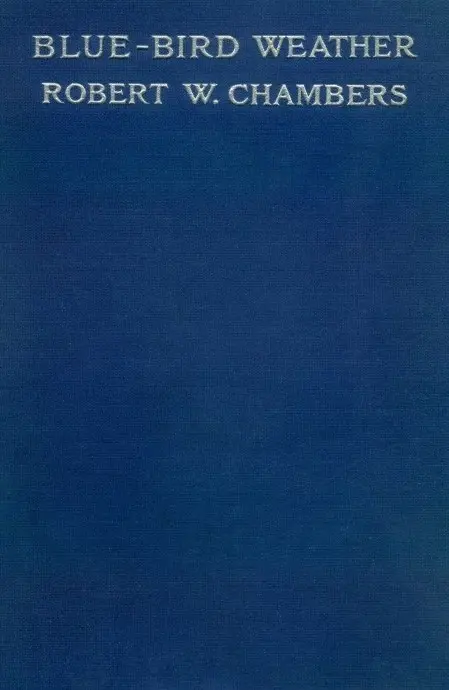
THE CLASSIC COLLECTION · 1912
"Blue-Bird Weather" by Robert W. Chambers is a novel written in the early 20th century. The book tells a poignant story that explores themes of love, redemption, and the complexities of social status, focusing on the interactions between privileged characters and those living in more humble circumstances. The narrative follows John Benton Marche, a wealthy young man who travels to a rundown duck hunting club in Virginia. There he meets the Herold family, consisting of the ailing father, Courtney Herold, and his children, Jim and Molly. As Marche spends time with them, he develops a deep connection with Molly, ultimately leading to a romantic relationship. The story progresses with Marche's proposal to support Jim's education, while revealing Courtney's past as a disgraced man who embezzled money, setting a tension-filled backdrop between their burgeoning love and the hidden truths of their backgrounds. Ultimately, the novel addresses themes of sincerity, love’s transformative power, and the potential for second chances in life.
Introduction adapted from the source catalogue; source summaries may be automatically generated.
Free to read · English · 13,930 words · No account needed
MAKE TIME FOR A GOOD BOOK
On by default. Untick to stop anonymous reading totals. Each page counts after 10 seconds in view. How this works.
Anonymous counting is on unless you have switched it off.
So Marche pegged out the furious old gander, whose name was Uncle Dudley, and in a few minutes that dignified and insulted bird, missing his spouse, began to talk about it.
Every wifely feeling outraged, his spouse replied loudly from the extreme end of the inner lane, telling her husband, and every duck, goose, and swan in the vicinity, what she thought of such an inhuman separation.
Molly laughed, and so did Marche. Duck after duck, goose after goose, joined indignantly in the conversation. The mallard drakes twisted their emerald-green heads and began that low, half gurgling, half quacking conversation in which their mottled brown and gray mates joined with louder quacks. The geese conversed freely; but the long-necked swans held their peace, occupied with the problem of picking to pieces the snaps on their anklets.
"Now," said Molly breathlessly, as the last madly protesting bird had been stooled, "let's get into the blind as soon as we can, Mr. Marche. There may be ducks in Currituck still, and every minute counts now."
So Marche towed the dory around to the westward and drew it into a channel where it might lie concealed under the reeds.
When he came across to the blind he found Molly there, seated on the plank in the cemented pit behind the screen of reeds and rushes, laying out for him his cartridges.
There they were, in neat rows on the rail, fives, sixes, and a few of swanshot, ranged in front of him. And his 12-gauge, all ready, save for the loading, lay across the pit to his right. So he dropped his booted feet into the wooden tub where a foot-warmer lay, picked up the gun, slid a pair of sixes into it, laid it beside him, and turned toward Miss Herold.
The wool collar of her sweater was turned up about her delicately molded throat and face. The wild-rose color ran riot in her cheeks, and her eyes, sky tinted now, were wide open under the dark lashes, and the wind stirred her hair till it rippled bronze and gold under the edge of her shooting hood. She, too, was perfectly ready. A cheap, heavy, and rather rusty gun lay beside her; a heap of cheap cartridges before her.
She turned, and, catching Marche's eyes, smiled adorably, with a slight nod of comradeship. Then, the smile still faintly curving her lips, she crossed her legs in the pit, and, warming her hands in the pockets of her coat, leaned back, resting against the rail behind.
"You haven't a foot-warmer," he said.
"I'm not cold--only my fingers--a little--stooling those birds."
They spoke in low voices, under their breath.
Your reading position is saved on this browser. Take it to another device with a library code. Reading pages adapt to text, rather than matching a printed edition.
Robert W. (Robert William) Chambers
Robert W. (Robert William) Chambers

Robert W. (Robert William) Chambers
Robert W. (Robert William) Chambers
BEHIND THE BOOK
This eBook is for the use of anyone anywhere in the United States and most other parts of the world at no cost and with almost no restrictions whatsoever. You may copy it, give it away or re-use it under the terms of the Project Gutenberg License included with this eBook or online at www.gutenberg.org. If you are not located in the United States, you will have to check the laws of the country where you are located before using this eBook. Read the source licence.
The original source file, including credits and licence, is retained by this library. Request an original-format copy at no charge. Please include the book title and Project Gutenberg identifier #24389.
KEEP YOUR CURIOSITY GOING
Coulson Kernahan

Maurice Baring
Frances Wright
Cécile Tormay

Frederic Jesup Stimson

W. H. P. (William Henry Pope) Jarvis