THE CLASSIC COLLECTION✦PoemsCLASSIC FREE BOOKS
Poems
Katherine Mansfield

THE CLASSIC COLLECTION · 1900
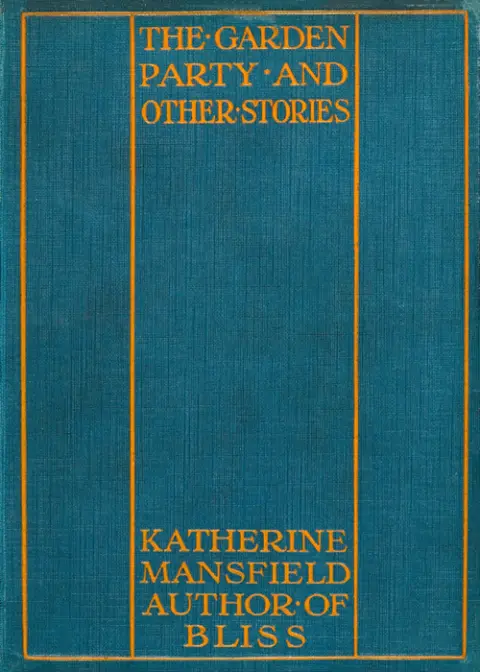
"Bliss, and Other Stories" by Katherine Mansfield is a collection of short stories written in the early 20th century. The narratives explore intricate themes of human emotion, social dynamics, and the nuances of domestic life, often through the perspective of women navigating their roles and relationships. One of the key characters presented is Linda Burnell, a mother deeply involved in the complexities of her family life as they move from city living to the countryside. The opening of the work introduces readers to Linda Burnell's hurried preparations for a significant transition as her family relocates. In a chaotic scene filled with children and luggage, we see Linda's mixed feelings of excitement and stress as she must leave her daughters, Lottie and Kezia, behind temporarily. Kezia’s innocence and curiosity are highlighted, particularly as she interacts with her surroundings and expresses a childlike fascination with the new environment. The scene sets a tone of impending change, hinting at deeper emotional currents and complexities that will unfold as the story progresses, foreshadowing the themes of bliss versus the latent struggles that lie beneath the surface of seemingly idyllic life.
Introduction adapted from the source catalogue; source summaries may be automatically generated.
Free to read · English · 66,663 words · No account needed
MAKE TIME FOR A GOOD BOOK
On by default. Untick to stop anonymous reading totals. Each page counts after 10 seconds in view. How this works.
Anonymous counting is on unless you have switched it off.
It had been nice in the Ladies’ Cabin. The stewardess was so kind and changed her money for her and tucked up her feet. She lay on one of the hard pink-sprigged couches and watched the other passengers, friendly and natural, pinning their hats to the bolsters, taking off their boots and skirts, opening dressing-cases and arranging mysterious rustling little packages, tying their heads up in veils before lying down. Thud, thud, thud, went the steady screw of the steamer. The stewardess pulled a green shade over the light and sat down by the stove, her skirt turned back over her knees, a long piece of knitting on her lap. On a shelf above her head there was a water-bottle with a tight bunch of flowers stuck in it. “I like travelling very much,” thought the little governess. She smiled and yielded to the warm rocking.
But when the boat stopped and she went up on deck, her dress-basket in one hand, her rug and umbrella in the other, a cold, strange wind flew under her hat. She looked up at the masts and spars of the ship black against a green glittering sky and down to the dark landing stage where strange muffled figures lounged, waiting; she moved forward with the sleepy flock, all knowing where to go to and what to do except her, and she felt afraid. Just a little—just enough to wish—oh, to wish that it was daytime and that one of those women who had smiled at her in the glass, when they both did their hair in the Ladies’ Cabin, was somewhere near now. “Tickets, please. Show your tickets. Have your tickets ready.” She went down the gangway balancing herself carefully on her heels. Then a man in a black leather cap came forward and touched her on the arm. “Where for, Miss?” He spoke English—he must be a guard or a stationmaster with a cap like that. She had scarcely answered when he pounced on her dress-basket. “This way,” he shouted, in a rude, determined voice, and elbowing his way he strode past the people. “But I don’t want a porter.” What a horrible man! “I don’t want a porter. I want to carry it myself.” She had to run to keep up with him, and her anger, far stronger than she, ran before her and snatched the bag out of the wretch’s hand. He paid no attention at all, but swung on down the long dark platform, and across a railway line. “He is a robber.” She was sure he was a robber as she stepped between the silvery rails and felt the cinders crunch under her shoes. On the other side—oh, thank goodness!—there was a train with Munich written on it. The man stopped by the huge lighted carriages. “Second class?” asked the insolent voice. “Yes, a Ladies’ compartment.” She was quite out of breath. She opened her little purse to find something small enough to give this horrible man while he tossed her dress-basket into the rack of an empty carriage that had a ticket, Dames Seules, gummed on window. She got into the train and handed twenty centimes. “What’s this?” shouted the man, glaring at the money and then at her, holding it up to his nose, sniffing at it as though he had never in his life seen, much less held, such a sum. “It’s a franc. You know that, don’t you? It’s a franc. That’s my fare!” A franc! Did he imagine that she was going to give him a franc for playing a trick like that just because she was a girl and travelling alone at night? Never, never! She squeezed her purse in her hand and simply did not see him—she looked at a view of St. Malo on the wall opposite and simply did not hear him. “Ah, no. Ah, no. Four sous. You make a mistake. Here, take it. It’s a franc I want.” He leapt on to the step of the train and threw the money on to her lap. Trembling with terror she screwed herself tight, tight, and put out an icy hand and took the money—stowed it away in her hand. “That’s all you’re going to get,” she said. For a minute or two she felt his sharp eyes pricking her all over, while he nodded slowly, pulling down his mouth: “Ve-ry well. Trrrès bien.” He shrugged his shoulders and disappeared into the dark. Oh, the relief! How simply terrible that had been! As she stood up to feel if the dress-basket was firm she caught sight of herself in the mirror, quite white, with big round eyes. She untied her “motor veil” and unbuttoned her green cape. “But it’s all over now,” she said to the mirror face, feeling in some way that it was more frightened than she.
Your reading position is saved on this browser. Take it to another device with a library code. Reading pages adapt to text, rather than matching a printed edition.
Katherine Mansfield

Katherine Mansfield
Katherine Mansfield
BEHIND THE BOOK
This eBook is for the use of anyone anywhere in the United States and most other parts of the world at no cost and with almost no restrictions whatsoever. You may copy it, give it away or re-use it under the terms of the Project Gutenberg License included with this eBook or online at www.gutenberg.org. If you are not located in the United States, you will have to check the laws of the country where you are located before using this eBook. Read the source licence.
The original source file, including credits and licence, is retained by this library. Request an original-format copy at no charge. Please include the book title and Project Gutenberg identifier #44385.
KEEP YOUR CURIOSITY GOING
Coulson Kernahan

Maurice Baring
Frances Wright
Cécile Tormay

Frederic Jesup Stimson

W. H. P. (William Henry Pope) Jarvis