
The William Henry Letters
Abby Morton Diaz
THE CLASSIC COLLECTION · 1926
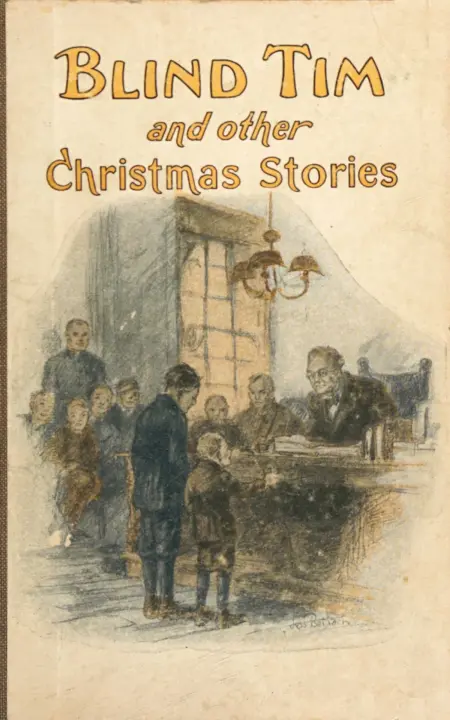
"Blind Tim, and other Christmas stories written for children" by Charles O. Solberg is a collection of short stories probably written in the early 20th century. The stories center around themes of kindness, family, and the spirit of Christmas, crafted to engage a young audience. This book presents heartfelt tales that showcase the importance of compassion and generosity during the Christmas season. The lead story, "Blind Tim," tells the touching tale of a blind boy named Tim whose life is intertwined with challenges and familial ties. Tim longs to participate in the joyous celebrations surrounding Christmas despite his physical limitations. Through his interactions with family and community members, the narrative explores themes of love, longing, and the transformative power of kindness. Other stories in the collection, like "Rags," "A Queer Christmas Tree," and "Buddy's Christmas Tree," further bring to life various facets of Christmas through engaging plots and relatable characters, depicting the struggles and triumphs of children from different backgrounds as they find joy and meaning in the holiday spirit. Each story serves to remind readers of the value of empathy and the true essence of the Christmas season.
Introduction adapted from the source catalogue; source summaries may be automatically generated.
Free to read · English · 17,105 words · No account needed
MAKE TIME FOR A GOOD BOOK
On by default. Untick to stop anonymous reading totals. Each page counts after 10 seconds in view. How this works.
Anonymous counting is on unless you have switched it off.
There was no answer. Grandmother was not yet at home. Crying loudly, and still calling for “Granny,” the lad ran down the path to the road, as tho not knowing what to do next. There he stood crying by the open gate, both his fists in his eyes. He stopped suddenly at an unexpected sound.
“Hi there, little boy, what’s the matter?”
In his crying he had not noticed that a car had stopped in which sat
two men.
“That’s right, little boy, quit your crying,” shouted one of them.
Ginkle stared a moment, then he yelled—
“You lie, I don’t quit. I just stop a little while and then I begin again.” Ginkle once more set up a loud bawling.
“Well, boy, what’s the matter? Can’t you stop long enough to tell us?” asked one of the men as he climbed down and started for the gate.
“Guess he’s purty near too young to explain,” remarked the chauffeur.
“My grannyfader, he hurted. He tumble on de tree,” sobbed Ginkle. The moment he saw the man coming toward him he set out at a run, “Grannyfader, he here,” continued the lad, as he ran and sobbed.
“Believe me, that kid c’n run,” exclaimed the stranger, as he climbed back into the machine. The Ford started, rattled its usual way, and in a moment they were following the boy up the sandy road. When they caught up, one of the men jumped out and ran to catch the hurrying lad, and for the rest of the way he followed him, for the little chap jumped about and refused to be picked up. On ahead they hurried, and the car followed behind them until they reached the place where Ginkle insisted on going into the woods.
“Grannyfader, he here,” he explained. There was nothing to do but to follow the little guide. The stranger had not yet been able to get an idea as to what might be the matter. His companion stopped the machine and came hurrying after into the bushes.
“Oho!” exclaimed the man leading Ginkle, “so this is what’s the matter. Believe me, friend, you’re in bad.”
“So he got help, did he?” groaned Grandfather, as he twisted his head
to look.
“The little feller sure raised some holler,” assured the man, as he bent down, touched Grandfather on the head, and felt of his hand.
“Say,” said the companion, who had also now come up, and was bending to look, “It’s lucky, all right, there seems to be a kind o’ hollow.”
Your reading position is saved on this browser. Take it to another device with a library code. Reading pages adapt to text, rather than matching a printed edition.
BEHIND THE BOOK
This eBook is for the use of anyone anywhere in the United States and most other parts of the world at no cost and with almost no restrictions whatsoever. You may copy it, give it away or re-use it under the terms of the Project Gutenberg License included with this eBook or online at www.gutenberg.org. If you are not located in the United States, you will have to check the laws of the country where you are located before using this eBook. Read the source licence.
The original source file, including credits and licence, is retained by this library. Request an original-format copy at no charge. Please include the book title and Project Gutenberg identifier #72713.
KEEP YOUR CURIOSITY GOING
Abby Morton Diaz
Helen Hunt Jackson
Mary Frances Blaisdell
Stuart Dodgson Collingwood

Kate Douglas Smith Wiggin
Hesba Stretton