THE CLASSIC COLLECTION✦The WesternersCLASSIC FREE BOOKS
The Westerners
Stewart Edward White
THE CLASSIC COLLECTION · 1904
"Blazed Trail Stories" by Stewart Edward White is a collection of short stories written in the early 20th century. The book primarily explores the rugged life of lumberjacks and the adventures and challenges they face in the wilderness. It presents characters such as Roaring Dick and Jimmy Powers, who embody the spirit and camaraderie of the logging community against the backdrop of natural beauty and danger. The opening of the collection introduces us to a lively lumber town during a Fourth of July celebration in the mid-1880s. The narrator observes a gathering of rough-and-tumble rivermen, whose camaraderie is soon put on display during a birl contest—a competition to see who can balance on a log the longest. Amid the festivities, we meet Roaring Dick, an agile and confident birler, and Jimmy Powers, his rival who bears a grudge against Dick from a previous encounter. This initial scene sets a stage for themes of competition, rugged masculinity, and the harsh beauty of nature as the stories promise to delve deeper into the lives and adventures of these wild characters.
Introduction adapted from the source catalogue; source summaries may be automatically generated.
Free to read · English · 50,674 words · No account needed
MAKE TIME FOR A GOOD BOOK
On by default. Untick to stop anonymous reading totals. Each page counts after 10 seconds in view. How this works.
Anonymous counting is on unless you have switched it off.
As though at the signal the night split with the roar of buckshot, and splintered with the answering crackle of a six-shooter three times repeated. The screech of the brake had deceived the messenger as to the whereabouts of the voice. He had jumped to the ground on the wrong side of the stage, thus finding himself without protection against his opponent, who, firing at the flash of the shot-gun, had brought him to the ground.
The road-agent stepped confidently forward. "Billy," said he, pleasantly, "jest pitch me that box."
Billy climbed over the seat and dropped a heavy, iron-bound case to the ground. "Danged if I thinks anybody kin git Buck, thar," he remarked, in thoughtful reference to the messenger.
"Now, drive on," commanded the road-agent.
Three hours later Billy and the sobered tenderfoot pulled into Deadwood. Ten minutes taught the camp what had occurred.
Now, it must be premised that Deadwood had recently chosen a sheriff. He did not look much like a sheriff, for he was small and weak and bald, and most childlike as to expression of countenance. But when I tell you that his name was Alfred, you will know that it was all right. To him the community looked for initiative. It expected him to organise a posse, which would, of course, consist of every man in the place not otherwise urgently employed, and to enter upon instant pursuit. He did not.
"How many is they?" he asked of Billy.
"One lonesome one," replied the stage-driver.
"I plays her a lone hand," announced Alfred.
You see, Alfred knew well enough his own defects. He never could make plans when anybody else was near, but always instinctively took the second place. Then, when the other's scheme had fallen into ruins, he would construct a most excellent expedient from the wreck of it. In the case under consideration he preferred to arrange his own campaign, and therefore to work alone.
By that time men knew Alfred. They made no objection.
"Snowin'," observed one of the chronic visitors of the saloon door. There are always two or three of such in every Western gathering.
"One of you boys saddle my bronc," suddenly requested Alfred, and began to examine his firearms by the light of the saloon lamp.
"Yo' ain't aimin' to set out to-night?" they asked, incredulously.
"I am. Th' snow will make a good trail, but she'll be covered come
mornin'."
So Alfred set out alone, at night, in a snowstorm, without the guidance of a solitary star, to find a single point in the vastness of the prairie.
Your reading position is saved on this browser. Take it to another device with a library code. Reading pages adapt to text, rather than matching a printed edition.
Stewart Edward White
Stewart Edward White
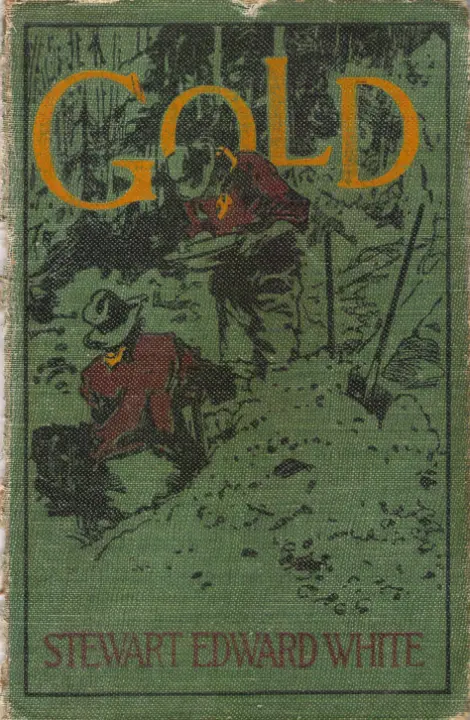
Stewart Edward White
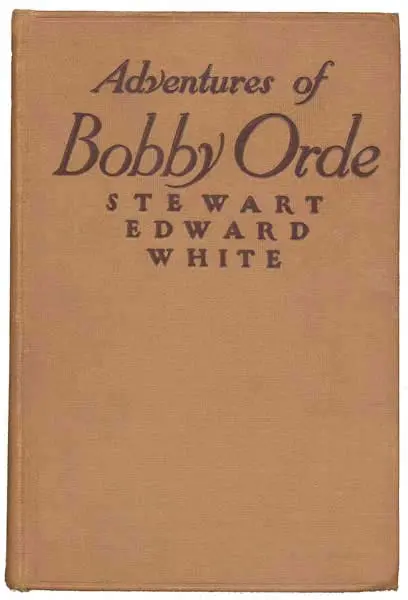
Stewart Edward White
BEHIND THE BOOK
This eBook is for the use of anyone anywhere in the United States and most other parts of the world at no cost and with almost no restrictions whatsoever. You may copy it, give it away or re-use it under the terms of the Project Gutenberg License included with this eBook or online at www.gutenberg.org. If you are not located in the United States, you will have to check the laws of the country where you are located before using this eBook. Read the source licence.
The original source file, including credits and licence, is retained by this library. Request an original-format copy at no charge. Please include the book title and Project Gutenberg identifier #22233.
KEEP YOUR CURIOSITY GOING
Coulson Kernahan

Maurice Baring
Frances Wright
Cécile Tormay

Frederic Jesup Stimson

W. H. P. (William Henry Pope) Jarvis