A world of green hills
Bradford Torrey
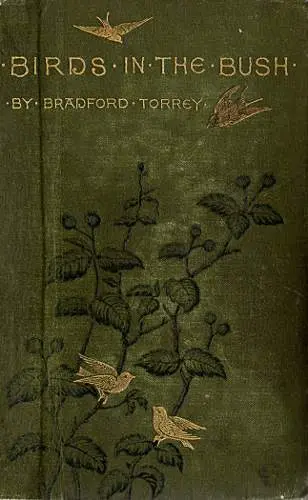
THE CLASSIC COLLECTION · 1885
"Birds in the Bush" by Bradford Torrey is a collection of essays on ornithology written in the late 19th century. The work reflects on the beauty and behavior of birds, particularly in urban settings like Boston Common and the White Mountains, exploring the joy they inspire in observers and the observations made by the author. Torrey’s prose paints a vivid picture of birdwatching and offers insightful commentary on the relationship between humans and the avian world. At the start of the collection, readers are introduced to the environment of Boston Common through the eyes of an enthusiastic ornithologist. The author engages with the local avifauna, recounting personal encounters with various bird species, including the cat-bird and the yellow-bellied woodpecker. He reflects on migration patterns and the surprises nature holds, even in busy urban parks. The writing captures the wonder of birdwatching and encourages an appreciation for these creatures, inviting readers to observe the life around them with curiosity and respect.
Introduction adapted from the source catalogue; source summaries may be automatically generated.
Free to read · English · 64,641 words · No account needed
MAKE TIME FOR A GOOD BOOK
On by default. Untick to stop anonymous reading totals. Each page counts after 10 seconds in view. How this works.
Anonymous counting is on unless you have switched it off.
Two days later I find the following:--
"Into the woods by the Old Road. As I approached them, a little after sundown, a chipper was trilling, and song sparrows and golden warblers were singing,--as were the black-throated greens also, and the Maryland yellow-throats. A wood thrush called brusquely, but offered no further salute to the god of day at his departure. Oven-birds were taking to wing on the right and left. Then, as it grew dark, it grew silent,--except for the hylas,--till suddenly a field sparrow gave out his sweet strain once. After that all was quiet for another interval, till a thrasher from the hillside began to sing. He ceased, and once more there was stillness. All at once the tanager broke forth in a strangely excited way, blurting out his phrase two or three times and subsiding as abruptly as he had commenced. Some crisis in his love-making, I imagined. Now the last oven-bird launched into the air and let fall a little shower of melody, and a whippoorwill took up his chant afar off. This should have been the end; but a robin across the meadow thought otherwise, and set at work as if determined to make a night of it. Mr. Early-and-late, the robin's name ought to be. As I left the wood the whippoorwill followed; coming nearer and nearer, till finally he overpassed me and sang with all his might (while I tried in vain to see him) from a tree or the wall, near the big buttonwood. He too is an early riser, only he rises before nightfall instead of before daylight."
Blackbird, crow, 17;
red-winged, 183;
rusty, 216.
Bluebird, 14, 72, 160, 184, 214, 217.
Blue-gray gnatcatcher, 152.
Bobolink, 16, 78.
Bunting, bay-winged, 27, 174, 234;
snow, 190, 195;
towhee, 25, 39, 62, 178.
Butcher-bird, 5, 11, 66, 208.
Cat-bird, 3, 72, 114.
Cedar-bird, 26, 50, 126, 269.
Chat, yellow-breasted, 69, 152, 153.
Chewink, 25, 39, 62, 178.
Chickadee, 27, 58, 158, 202, 215, 237, 291.
Chimney swift, 23, 96, 272.
Cowbird, 183.
Creeper, brown, 20, 161, 205, 227, 262;
black-and-white, 21, 266, 279.
Crow, common, 26, 78, 209;
fish, 154, 209.
Cuckoo, black-billed, 18.
Finch, grass, 27, 174, 234;
purple, 27, 119, 173, 199, 217, 287;
pine, 206.
Flicker, 25, 121, 232.
Flycatcher, great-crested, 152;
least, 26, 36, 231;
phoebe, 26, 215, 230, 269;
wood pewee, 36, 231, 257;
yellow-bellied, 91.
Goldfinch, 16, 19, 60, 173, 188, 190, 193, 236.
Grosbeak, cardinal, 27, 37, 152, 173;
pine, 197;
rose-breasted, 173, 292.
Humming-bird, ruby-throated, 21.
Indigo-bird, 177.
Jay, blue, 26, 65, 208, 264;
Canada, 257.
Kingbird, 26, 78, 231.
Kingfisher, 26, 154.
Kinglet, golden-crested, 21, 203;
ruby-crowned, 21, 235.
Lark, western meadow, 40, 41;
shore, 206.
Linnet, 27, 119, 173, 199, 217, 287;
red-poll, 27, 190, 192.
Maryland yellow-throat, 9, 21, 85, 166, 266, 296.
Mocking-bird, 27.
Night-hawk, 27, 183.
Nuthatch, red-bellied, 25;
white-bellied, 24.
Oriole, Baltimore, 16, 181;
orchard, 154.
Oven-bird, 21, 42, 86, 124, 136, 256, 283, 296.
Pewee, wood 36, 231, 257.
Phoebe, 26, 215, 230, 269.
Red-poll linnet, 27, 190, 192.
Redstart, 21, 86, 135.
Robin, 15, 16, 35, 38, 111, 131, 160, 202, 229, 294, 298.
Sandpiper, spotted, 123.
Scarlet tanager, 125, 153, 171, 257, 296, 298.
Shrike, 5, 11, 66, 208.
Small-billed water thrush, 21, 86, 266.
Snow-bird, 90, 176, 208, 214, 221, 269.
Snow bunting, 190, 195.
Sparrow, chipping, 10, 16, 126, 173, 233, 289;
field, 27, 40, 173, 233;
fox-colored, 17, 173, 176, 215, 217, 218;
house (or "English"), 14, 17, 20, 22, 45, 110;
savanna, 27, 49, 78;
song, 15, 40, 173, 174, 200, 214, 217, 219;
swamp, 27;
tree, 27, 215;
white-throated, 16, 80, 207, 271.
Swallow, barn, 23;
white-bellied, 23, 228.
Swift, chimney, 23, 96, 272.
Tanager, scarlet, 125, 153, 171, 257, 296, 298.
Thrush, brown, 16, 61, 117, 158, 184, 234, 297;
gray-cheeked (or Alice's), 17, 140, 141, 281;
golden-crowned, 21, 42, 86, 124, 136, 256, 283, 296;
hermit, 20, 71, 86, 140, 234, 258, 279;
olive-backed (or Swainson's), 20, 86, 88, 140, 281;
small-billed water, 21, 86, 266;
Wilson's (or veery), 25, 71, 138;
wood, 38, 112, 140, 258, 279.
Titmouse, black-capped, 27, 58, 158, 202, 215, 237, 291;
tufted, 151.
Towhee bunting, 25, 39, 62, 178.
Veery, 25, 71, 138.
Vireo, (or greenlet), blue-headed, 167, 168;
red-eyed, 16, 167, 268;
solitary, 167, 168;
yellow-throated, 27, 167;
warbling, 16, 167, 168;
white-eyed, 40, 41, 69, 148, 167, 170, 286.
Warbler, bay-breasted, 85, 166;
Blackburnian, 86, 165, 265;
black-and-yellow, 85;
black-poll, 21, 85, 165;
black-throated blue, 21, 41, 86, 164, 267;
black-throated green, 21, 41, 86, 137, 164, 267, 290;
blue golden-winged, 42, 145, 164;
blue yellow-backed, 21, 86, 164, 268;
Canada, 21, 85, 266;
chestnut-sided, 42, 266, 271;
golden, 21, 164;
golden-crowned wagtail, 21, 42, 86, 124, 136;
mourning, 85;
Nashville, 98, 266;
pine-creeping, 166, 228, 237, 289;
prairie, 165;
summer yellow-bird, 21, 164;
worm-eating, 152;
yellow red-poll, 234;
yellow-rumped, 21, 42, 43, 86, 269.
Waxwing, 26, 50, 126, 269.
Whippoorwill, 183, 298.
Woodcock, 27, 222.
Your reading position is saved on this browser. Take it to another device with a library code. Reading pages adapt to text, rather than matching a printed edition.
Bradford Torrey
Bradford Torrey
Bradford Torrey
Bradford Torrey
BEHIND THE BOOK
This eBook is for the use of anyone anywhere in the United States and most other parts of the world at no cost and with almost no restrictions whatsoever. You may copy it, give it away or re-use it under the terms of the Project Gutenberg License included with this eBook or online at www.gutenberg.org. If you are not located in the United States, you will have to check the laws of the country where you are located before using this eBook. Read the source licence.
The original source file, including credits and licence, is retained by this library. Request an original-format copy at no charge. Please include the book title and Project Gutenberg identifier #28019.
KEEP YOUR CURIOSITY GOING

David Patterson (Spirit) Hatch

David Patterson (Spirit) Hatch

David Patterson (Spirit) Hatch

Ralph Waldo Emerson

Maurice Baring

Oscar Wilde & James McNeill Whistler