THE CLASSIC COLLECTION✦The golden fleeceCLASSIC FREE BOOKS
The golden fleece
A. L. O. E.
THE CLASSIC COLLECTION · 1890
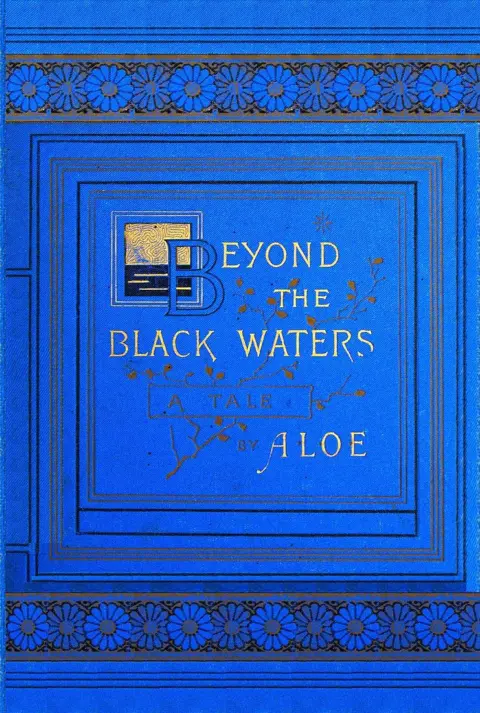
"Beyond the Black Waters" by A. L. O. E. is a novel written in the late 19th century. It explores themes of redemption and moral complexity through the lives of expatriates in Moulmein, including newlyweds Oscar and Io Coldstream, as they navigate cultural challenges and personal struggles. The backdrop of the Andaman Islands and the dark connotations of the "Black Waters" provide a haunting environment for the characters as they confront their pasts and their relationships. The opening of the story introduces us to Mr. Lawrence, the chaplain, and Dr. Pinfold, who discuss political changes in England against the backdrop of their life in Moulmein. Their conversation is interrupted by the mention of the Coldstreams, who have just arrived from England. We learn about Oscar Coldstream's troubling demeanor, suggesting a deeper issue that will affect his marriage to Io. As the narrative unfolds, it becomes apparent that personal crises intertwine with the missionary work and cultural complexities of the region, setting the stage for a deeper exploration of faith, love, and societal expectations.
Introduction adapted from the source catalogue; source summaries may be automatically generated.
Free to read · English · 57,465 words · No account needed
MAKE TIME FOR A GOOD BOOK
On by default. Untick to stop anonymous reading totals. Each page counts after 10 seconds in view. How this works.
Anonymous counting is on unless you have switched it off.
One day, after being for some time buried in thought, Thud raised his head with a kind of scientific inspiration, for a new theory had entered his brain.
“Champer,” said he to the porter, “how was the keeper cured who, as you told me, was bitten here by a snake?”
“He had ammonia rubbed in, and had ammonia mixed with water poured down his throat,” was Champers reply.
“And he recovered?” asked Thud.
“Yes, he recovered,” replied the man with a grin; “but the snake warn’t a poisonous un.”
“Still, its clear that ammonia is the antidote to a serpent’s poison.”
“Maybe it is, maybe it ain’t,” said the man.
“And no one can deny,” pursued Thud, “that with every evil under the sun the wise thing is to go to the fountain-head, the source.”
“The fountain-head, the source,” echoed Champer, without the slightest comprehension of what the oracle meant.
“Now, what is the source, the fountain-head of a serpent’s poison. Is it not the serpent’s fang?” cried Thud.
“Certainly, the serpent’s fang,” said the echo.
“Then my theory is, that if ammonia corrects poison in the blood of a bitten man, it would be far more effectual, and economical too, to introduce it, not into the wound, but into the jaws that might inflict such a wound. Is not this self-evident?” asked the philosopher, appealing to Champer.
“Self-evident,” repeated the echo, but with a very faint comprehension of the orator’s logic.
“You grant this,” said Thud. “Then the sure way to prevent deaths from snake-bites would be to pour ammonia on the fangs of the snakes.”
“If you could catch ’em,” suggested old Champer.
“We have four snakes in the case,” continued Thud. “No, I remember that two died yesterday; but we have the cobra still. From this little glass-stoppered bottle of ammonia I mean to pour some drops into his mouth, and so render his poison innocuous for ever.”
“If the cobra don’t object,” observed Champer, grinning again.
“Here’s the case with its strong wire-work covering,” said Thud. “I am going to prove the truth of my theory.”
Feeling like a second Jenner, Thucydides Thorn advanced to the case. The cobra looked sleepy, and averse to experiments being tried upon him. He would not be stirred up, even when Thud poked him with a straw introduced between the wires. The sulky snake would not open his jaws.
Thud dropped a little ammonia from the bottle through the wire cover; it fell on the cobra’s head and on one of its glittering eyes. The reptile was thoroughly roused, swelled out his hood, and twisted about in angry contortions.
Your reading position is saved on this browser. Take it to another device with a library code. Reading pages adapt to text, rather than matching a printed edition.
A. L. O. E.
A. L. O. E.
A. L. O. E.
A. L. O. E.
BEHIND THE BOOK
This eBook is for the use of anyone anywhere in the United States and most other parts of the world at no cost and with almost no restrictions whatsoever. You may copy it, give it away or re-use it under the terms of the Project Gutenberg License included with this eBook or online at www.gutenberg.org. If you are not located in the United States, you will have to check the laws of the country where you are located before using this eBook. Read the source licence.
The original source file, including credits and licence, is retained by this library. Request an original-format copy at no charge. Please include the book title and Project Gutenberg identifier #59619.
KEEP YOUR CURIOSITY GOING
Coulson Kernahan

Maurice Baring
Frances Wright
Cécile Tormay

Frederic Jesup Stimson

W. H. P. (William Henry Pope) Jarvis