THE CLASSIC COLLECTION✦An outlaw’s diary: the CommuneCLASSIC FREE BOOKS
An outlaw’s diary: the Commune
Cécile Tormay
THE CLASSIC COLLECTION · 1899
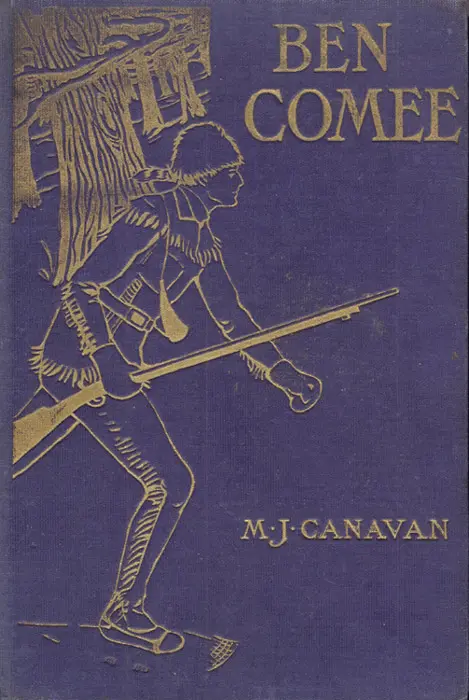
"Ben Comee" by M. J. Canavan is a historical novel written in the early 20th century. The narrative centers around the life and experiences of Ben Comee, starting from his origins in Lexington in the mid-18th century, as tensions grow in the lead-up to the American Revolutionary War. Through Ben's story, the book explores themes of youth, adventure, and the harsh realities of frontier life against the backdrop of early colonial America and the conflicts with French and Native American forces. At the start of the story, we are introduced to Ben Comee, who recounts his childhood in Lexington in 1737, detailing the village's culture and the historical events surrounding it. We learn about his family background, including tales of his great-grandfather's struggles and early conflicts with Native Americans. The opening chapters provide glimpses into Ben's friendships and experiences growing up, such as school life and the joys and challenges of trapping muskrats, showcasing the everyday life of a young boy on the brink of becoming a man amidst the looming dangers of war. As Ben becomes more embroiled in the conflicts of his time, readers are set up for an exploration of his eventual participation in the Rangers and the adventures that lie ahead.
Introduction adapted from the source catalogue; source summaries may be automatically generated.
Free to read · English · 48,029 words · No account needed
MAKE TIME FOR A GOOD BOOK
On by default. Untick to stop anonymous reading totals. Each page counts after 10 seconds in view. How this works.
Anonymous counting is on unless you have switched it off.
"Poor Ezra was killed at the first volley and scalped. An Indian hit me on the head with his tomahawk; but I have a good thick skull, and the blow glanced, and only stunned me.
"Some of our men ran to the fort, but my boy Gershom rallied the rest, and they fought the Indians, who were double their number. Both parties got behind trees, and tried to pick each other off.
"Old Poland, their chief, fired, and in reloading exposed himself, and
was shot. Then the Indians gave an infernal screech and ran over to
him.
"As they did so, our men shot two more of them, and they picked up their dead and carried them off."
"You had a narrow squeak of it, that time," said Rogers. "I never was scalped, but I've been near it times enough."
Hepzibah brought in more bowls of flip, and we watched John plunge the red-hot loggerheads in, till the foam arose, and the bitter-sweet smell filled the room.
We were passing the bowls round, and drinking the flip, when Matthew Mead, the tythingman, came in. He sat down and watched us. Then he went over to John Perry, and said: "Don't drink any more, John. You have had enough."
John let the bowl go by, for if he had disobeyed the warning of the tythingman, he would have been punished by the magistrate, or would have been reprimanded publicly in meeting.
"Oh, come now, Mr. Tythingman," said Rogers. "Don't spoil the sport. A little flip does no one any harm. Sit down and join us."
[Sidenote: THE TYTHINGMAN]
"There's no doubt," said Matthew, as they passed him the bowl, and he took a long swig at it, "that flip is a good drink. I like it, and so does neighbour John Perry. But it must be allowed that it's a most insinuating drink, sweet and treacherous. And neighbour John has had enough. But the rest of the company can drink a little longer. We have heard great stories of your adventures, captain, and would like to have you tell us some of them."
Then Rogers told us tales of hair-breadth escapes, and of encounters with the enemy, that made our hearts beat quick, as we listened to him. Of scouts through the woods, in which they inspect the enemy's forts and make plans of them. How they crept up close to the fort and captured a vedette within two gun-shots of the gate. How they hauled whaleboats over a mountain, embarked at the lower end of Lake Champlain, rowed down the lake at night, and after hiding in the daytime, attacked the enemy's boats, and sunk them.
Your reading position is saved on this browser. Take it to another device with a library code. Reading pages adapt to text, rather than matching a printed edition.
BEHIND THE BOOK
This eBook is for the use of anyone anywhere in the United States and most other parts of the world at no cost and with almost no restrictions whatsoever. You may copy it, give it away or re-use it under the terms of the Project Gutenberg License included with this eBook or online at www.gutenberg.org. If you are not located in the United States, you will have to check the laws of the country where you are located before using this eBook. Read the source licence.
The original source file, including credits and licence, is retained by this library. Request an original-format copy at no charge. Please include the book title and Project Gutenberg identifier #27920.
KEEP YOUR CURIOSITY GOING
Cécile Tormay

Moritz Busch
Coulson Kernahan
John L. Ransom

Maurice Baring
Frances Wright