THE CLASSIC COLLECTION✦An outlaw’s diary: the CommuneCLASSIC FREE BOOKS
An outlaw’s diary: the Commune
Cécile Tormay
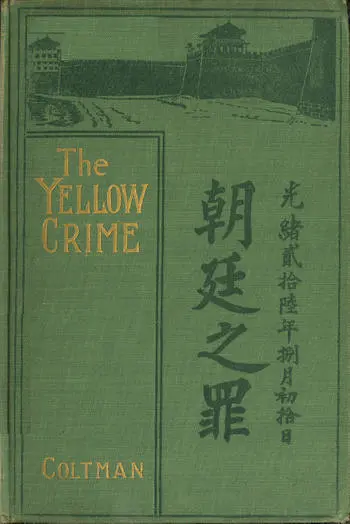
THE CLASSIC COLLECTION · 1901
"Beleaguered in Peking: The Boxer's War Against the Foreigner" by Robert Coltman, Jr. is a historical account written in the early 20th century. The book offers a detailed narrative of the Boxer Rebellion in China, focusing on the experiences and events surrounding the siege of the foreign legations in Beijing. Through the firsthand perspective of the author, who served as a surgeon during this tumultuous period, readers are introduced to the conflicts between foreign powers and the anti-foreign sentiment that intensified among the Chinese populace. The opening of the account sets the stage for the impending conflict by describing a riot at the Marco Polo Bridge, a pivotal moment that foreshadowed the violence to come. Coltman recounts his experience as a medical practitioner responding to injured individuals involved in the confrontation, showcasing the rising tensions marked by anti-foreign hostility. He presents the conflicting viewpoints of Chinese officials and foreign nationals, revealing the precarious political landscape that led to escalated violence and ultimately the siege. The author provides vivid descriptions of his encounters with both locals and military officials, effectively illustrating the precariousness of foreign lives in Beijing as the Boxer movement grew stronger.
Introduction adapted from the source catalogue; source summaries may be automatically generated.
Free to read · English · 46,296 words · No account needed
MAKE TIME FOR A GOOD BOOK
On by default. Untick to stop anonymous reading totals. Each page counts after 10 seconds in view. How this works.
Anonymous counting is on unless you have switched it off.
“I have been told two of your men have been wounded by one of the foreign engineers, and as I have a very skilful surgeon in my employ, who attends to all the people who are injured on the railway, I have brought him along to examine your men, and if you will permit him I am sure he can heal them.”
He then introduced me as Man Tai Fu, my Chinese title. They sullenly acknowledged my presence, for the first time, by a slight nod in my direction, and General Chang asked Hu if he had an interpreter who could converse with me.
“Oh, he doesn’t need an interpreter,” replied Hu; “he has lived in China fifteen years, has sons and daughters born here, and speaks our language like a native.”
Upon this, my nearest neighbor, Lieutenant-Colonel Wang, relaxed a little, and observed that he had never talked with a foreigner, and would be glad to make my acquaintance. I replied that it was a mutual pleasure, and asked his age, province, and personal name, which pleased him greatly.
As it was rapidly growing darker, however, and we had not yet seen the wounded men, Hu cut short our budding conversation by requesting General Chang to show them to me.
He curtly declared, “They are in camp half a mile away, and he can go and see them if he wants to.”
“Will you go?” inquired Hu.
“Yes, if you will go with me,” I replied, not caring to venture alone into the hostile camp, especially after what I had seen of the temper of their leaders; but I added, “I think it would be much better to have them brought here.”
“Yes, yes, that is better,” said Hu; but General Chang interrupted him
by saying:
“Impossible! they are too ill to be moved, and on this cold day would surely take cold and die.”
“Have them well wrapped up and brought quickly,” said Hu, without paying attention to the interruption, “for it is getting late, and although I have ordered the city gates not to close until our return to Peking, I am anxious to avoid keeping them open any later than necessary.”
General Chang then strode across the room to the door opening into the court, where upwards of three hundred of his men were standing packed like sardines, listening to everything we had been saying, as Chinese custom is, and shouted out:
“Bring the two wounded men in here.”
Your reading position is saved on this browser. Take it to another device with a library code. Reading pages adapt to text, rather than matching a printed edition.
BEHIND THE BOOK
This eBook is for the use of anyone anywhere in the United States and most other parts of the world at no cost and with almost no restrictions whatsoever. You may copy it, give it away or re-use it under the terms of the Project Gutenberg License included with this eBook or online at www.gutenberg.org. If you are not located in the United States, you will have to check the laws of the country where you are located before using this eBook. Read the source licence.
The original source file, including credits and licence, is retained by this library. Request an original-format copy at no charge. Please include the book title and Project Gutenberg identifier #49577.
KEEP YOUR CURIOSITY GOING
Cécile Tormay

Moritz Busch
John L. Ransom
Frances Wright
Cécile Tormay

Mabel Potter Daggett