THE CLASSIC COLLECTION✦Concerning Animals and Other MattersCLASSIC FREE BOOKS
Concerning Animals and Other Matters
Edward Hamilton Aitken
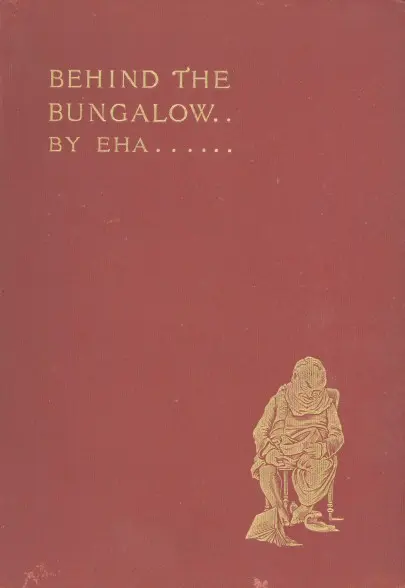
THE CLASSIC COLLECTION · 1889
"Behind the Bungalow" by Edward Hamilton Aitken is a collection of essays written during the late 19th century. The book explores the intricate roles, behaviors, and relationships of various types of domestic servants in colonial India, particularly focusing on the dynamics between British expatriates and their Indian staff. Aitken's observations likely provide a humorous yet insightful reflection on the differences in culture and social status, centering on the day-to-day experiences of these servants. The opening of the book sets the stage with a prelude discussing the author’s experiences with hiring a "Boy," his term for a servant or valet, amidst the humorous and often complicated dynamics between master and servant in Anglo-Indian households. Aitken reflects on the characteristics and peculiarities of potential candidates, humorously depicting the complexities of choosing a suitable servant, often highlighting the cultural misunderstandings and societal norms at play. Additionally, the segment introduces various types of servants and the amusing scenarios that arise from their interactions with both their masters and their peers, seamlessly integrating observations on their personalities and quirks, offering an engaging glimpse into life behind the bungalows of colonial India.
Introduction adapted from the source catalogue; source summaries may be automatically generated.
Free to read · English · 34,531 words · No account needed
MAKE TIME FOR A GOOD BOOK
On by default. Untick to stop anonymous reading totals. Each page counts after 10 seconds in view. How this works.
Anonymous counting is on unless you have switched it off.
[Picture: The Kalai-wallah] I have yielded to the claim of the doodwallah to be reckoned among the nowkers. His right is more than doubtful, and I will yield no further. Nevertheless, there is a cluster of petty dependents, a nebula of minor satellites, which have us for the focus of their orbit, and which cannot be left out of a comprehensive account of our system. Whence, for example, is that raucus stridulation which sets every tooth on edge and sends a rheumatic shiver up my spine? “It is only the Kalai-wallah,” says the boy, and points to a muscular black man, very nearly in the garb of a Grecian athlete, standing with both feet in one of my largest cooking pots. He grasps a post with both hands, and swings his whole frame fiercely from side to side with a circular motion, like the balance wheel of a watch. He seems to have a rough cloth and sand under his feet, so I suppose this is only his energetic way of scouring the pot preparatory to tinning it, for the Kalai-wallah is the “tin-man,” whose beneficent office it is to avert death by verdigris and salts of copper from you and your family. His assistant, a semi-nude, fleshless youth, has already extemporized a furnace of clay in the ground hard by, and is working a huge pair of clumsy bellows. Around him are all manner of copper kitchen utensils, handies, or deckshies, kettles, frying-pans, and what not, and there are also on the ground some rings of kalai, commonly called tin; but pure tin is an expensive metal, and I do not think it is any part of the Kalai-wallah’s care to see that you are not poisoned with lead. One notable peculiarity there is in this Kalai-wallah, or tin-man, which deserves record, namely, that he pays no dustooree to any man. I take it as sufficient evidence of this fact that, though even the matie could tell you that the pots ought to be tinned once a month, neither the butler nor the cook ever seems to remember when the day comes round. This is a matter which you must see to personally. Contrast with this the case of the Nalbund, the clink of whose hammer in the early morning tells that the 15th of the month has dawned. His portable anvil is already in the ground, and he is hammering the shoes into shape after a fashion; but he is not very particular about this, for if the shoe does not fit the hoof he can always cut the hoof to fit the shoe. This is an advantage which the maker of shoes for human feet does not enjoy, though I have heard of very fashionable ladies who secretly have one toe amputated that the rest may more easily be squeezed into that curious pointed thing, which, by some mysterious process of mind, is regarded as an elegant shoe. But this is by the way. To return to the Nalbund. His work is guaranteed to last one calendar month, and your faithful ghorawallah, who remembers nothing else, and scarcely knows the day of the week, bears in mind the exact date on which the horse has to be shod next, and if the careless Nalbund does not appear, promptly goes in search of him. Does not this speak volumes for the efficiency of that venerable and wonderful institution dustooree, by which the interests of all classes are cemented together and the wheels of the social system are oiled? The shoeing of the bullock is generally a distinct profession, I believe, from the shoeing of the horse, and is not considered such a high art. The poor byle is thrown, and, his feet being tied together, the assistant holds his nose to the ground, while the master nails a small slip of bad iron to each half of the hoof. I often stop on my way to contemplate this spectacle, which beautifully illustrates that cold patience, or natural thick-skinnedness, which fits the byle so admirably for his lot in this land. He is yoked to a creaking cart and prodded with a sharp nail to make him go, his female ancestry reviled to the third generation, his belly tickled with the driver’s toes, and his tail twisted till the joints crack, but he plods patiently on till he feels disposed to stop, and then he lies down and takes with an even mind such cudgelling as the enraged driver can inflict. At last a fire of straw is lighted under him, and then he gets up and goes on. He never grows restive or frets, as a horse would, and so he does not wear out. This is the reason why bullocks are used throughout India for all agricultural purposes. The horse does not suit the genius of the people. I wish horses in India could do without shoes. In sandy districts, like Guzerat, they can, and are much better unshod; but in the stony Deccan some protection is absolutely necessary, and the poor beast is often at the mercy of the village bullock Nalbund. It carries my thoughts to the days of our forefathers, when the blacksmith was also the dentist.
Your reading position is saved on this browser. Take it to another device with a library code. Reading pages adapt to text, rather than matching a printed edition.
BEHIND THE BOOK
This eBook is for the use of anyone anywhere in the United States and most other parts of the world at no cost and with almost no restrictions whatsoever. You may copy it, give it away or re-use it under the terms of the Project Gutenberg License included with this eBook or online at www.gutenberg.org. If you are not located in the United States, you will have to check the laws of the country where you are located before using this eBook. Read the source licence.
The original source file, including credits and licence, is retained by this library. Request an original-format copy at no charge. Please include the book title and Project Gutenberg identifier #7953.
KEEP YOUR CURIOSITY GOING

David Patterson (Spirit) Hatch

David Patterson (Spirit) Hatch

David Patterson (Spirit) Hatch
Cécile Tormay

Moritz Busch
John L. Ransom