THE CLASSIC COLLECTION✦Concerning Animals and Other MattersCLASSIC FREE BOOKS
Concerning Animals and Other Matters
Edward Hamilton Aitken
THE CLASSIC COLLECTION · 1889
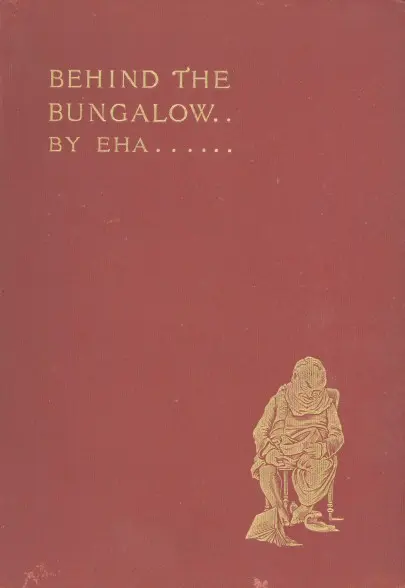
"Behind the Bungalow" by Edward Hamilton Aitken is a collection of essays written during the late 19th century. The book explores the intricate roles, behaviors, and relationships of various types of domestic servants in colonial India, particularly focusing on the dynamics between British expatriates and their Indian staff. Aitken's observations likely provide a humorous yet insightful reflection on the differences in culture and social status, centering on the day-to-day experiences of these servants. The opening of the book sets the stage with a prelude discussing the author’s experiences with hiring a "Boy," his term for a servant or valet, amidst the humorous and often complicated dynamics between master and servant in Anglo-Indian households. Aitken reflects on the characteristics and peculiarities of potential candidates, humorously depicting the complexities of choosing a suitable servant, often highlighting the cultural misunderstandings and societal norms at play. Additionally, the segment introduces various types of servants and the amusing scenarios that arise from their interactions with both their masters and their peers, seamlessly integrating observations on their personalities and quirks, offering an engaging glimpse into life behind the bungalows of colonial India.
Introduction adapted from the source catalogue; source summaries may be automatically generated.
Free to read · English · 34,531 words · No account needed
MAKE TIME FOR A GOOD BOOK
On by default. Untick to stop anonymous reading totals. Each page counts after 10 seconds in view. How this works.
Anonymous counting is on unless you have switched it off.
I have also stood watching Peelajee. He, too, is a gardener, called by his own people a Malee, and by us, familiarly, a Molly. He sits in an attitude not easy to describe, but familiar to all who have resided in the otiose East. You will get at it by sitting on your own heels and putting your knees into your armpits. In this position Peelajee can spend the day with much comfort, which is a wonderful provision of nature. At the present moment he also is engaged in the operation of weeding. In his right hand is a small species of sickle called a koorpee, with which he investigates the root of each weed as a snipe feels in the mud for worms; then with his left hand he pulls it out, gently shakes the earth off it, and contributes it to a small heap beside him. When he has cleared a little space round him, he moves on like a toad, without lifting himself. He enlivens his toil by exchanging remarks upon the weather as affecting the price of grain, the infirmity of my temper and other topics of personal interest, with an assistant, whom he persuaded me to engage by the day, pleading the laborious nature of this work of weeding. When two or three square yards have been cleared, they both go away, and return in half an hour with a very small basket, which one holds while the other fills it with the weeds. Then the assistant balances it on his head, and sets out at one mile an hour for the garden gate, where he empties it on the roadside. Then he returns at the same rate, with the empty basket on his head, to Peelajee, who is occupied sitting waiting for him.
It is clear that there may be two ways of doing the same thing. I have no doubt there is much to be said for both, but, upon the whole, the advantage seems to lie with the Malee. Otway does as much work in a day as Peelajee does in a week. But why should a day be better than a week? If you turn the thing round, and look at the other side of it, you will find that Otway costs three shillings a day and Peelajee two rupees a week. So, if you are in a hurry, you can employ half a dozen Peelajees, and feel that you are making six families in the world happy instead of only one. And I am sure the calm and peaceful air of Peelajee, as he moves about the garden, must be good for the soul and promote longevity. I hate bustle, and I can vouch for Peelajee that he never bustles. However, there is no need of odious comparisons. There is a time for everything under the sun, and a place. Here, in India, we have need of Peelajee. He is a necessary part of the machinery by which our exile life is made to be the graceful thing it often is. I pass by bungalow after bungalow, each in its own little paradise, and look upon the green lawn successfully defying an unkind climate, the islands of mingled foliage in profuse, confused beauty, the gay flower beds, the clean gravel paths with their trim borders, the grotto in a shady corner, where fern and moss mingle, all dripping as if from recent showers and make you feel cool in spite of all thermometers, and I say to myself, “Without the Malee all this would not be.” Neither with the Malee alone would this be, but something very different. I admit that. But is not this just one secret of the beneficent influence he has on us? Your “Scotch” gardener is altogether too good. He obliterates you—reduces you to a spectator. But keeping a Malee draws you out, for he compels you to look after him, and if you are to look after him, you must know something about his art, and if you do not know, you must learn. So we Anglo-Indians are gardeners almost to a man, and spend many pure, happy hours with the pruning shears and the budding knife, and this we owe to the Malee. When I say you must look after him, I do not disparage his skill; he is neat handed and knows many things; but his taste is elementary. He has an eye for symmetry, and can take delight in squares and circles and parallel lines; but the more subtle beauties of unsymmetrical figures and curves which seem to obey no law are hid from him. He loves bright tints especially red and yellow, with a boy’s love for sugar; he cannot have too much of them; but he has no organ for perceiving harmony in colour, and so the want of it does not pain him. The chief avenue, however, by which the delights of a gardener’s life reach him is the sense of smell. He revels in sweet odours; but here, too, he seeks for strength rather than what we call delicacy. In short, the enjoyment which he finds in the tones of his native tom-tom may be taken as typical of all his pleasures. I find however, that Peelajee understands the principles of toleration, and, recognising that he caters for my pleasure rather than his own, is quite willing to abandon his favourite yellow marigold and luscious jasmine for the pooteena and the beebeena and the fullax. But perhaps you do not know these flowers by their Indian names. We call them petunia, verbena, and phlox. This is, doubtless, another indication of our Aryan brotherhood.
Your reading position is saved on this browser. Take it to another device with a library code. Reading pages adapt to text, rather than matching a printed edition.
BEHIND THE BOOK
This eBook is for the use of anyone anywhere in the United States and most other parts of the world at no cost and with almost no restrictions whatsoever. You may copy it, give it away or re-use it under the terms of the Project Gutenberg License included with this eBook or online at www.gutenberg.org. If you are not located in the United States, you will have to check the laws of the country where you are located before using this eBook. Read the source licence.
The original source file, including credits and licence, is retained by this library. Request an original-format copy at no charge. Please include the book title and Project Gutenberg identifier #7953.
KEEP YOUR CURIOSITY GOING

David Patterson (Spirit) Hatch

David Patterson (Spirit) Hatch

David Patterson (Spirit) Hatch
Cécile Tormay

Moritz Busch
John L. Ransom