THE CLASSIC COLLECTION✦Concerning Animals and Other MattersCLASSIC FREE BOOKS
Concerning Animals and Other Matters
Edward Hamilton Aitken
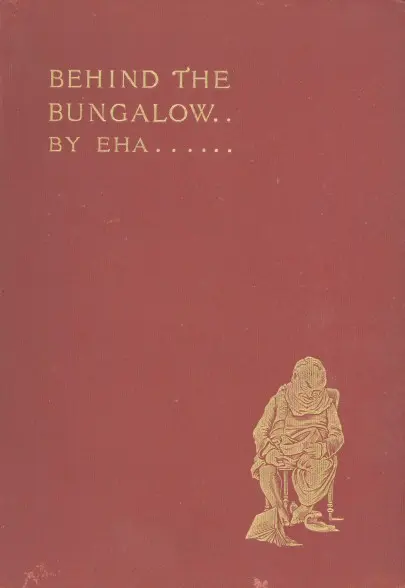
THE CLASSIC COLLECTION · 1889
"Behind the Bungalow" by Edward Hamilton Aitken is a collection of essays written during the late 19th century. The book explores the intricate roles, behaviors, and relationships of various types of domestic servants in colonial India, particularly focusing on the dynamics between British expatriates and their Indian staff. Aitken's observations likely provide a humorous yet insightful reflection on the differences in culture and social status, centering on the day-to-day experiences of these servants. The opening of the book sets the stage with a prelude discussing the author’s experiences with hiring a "Boy," his term for a servant or valet, amidst the humorous and often complicated dynamics between master and servant in Anglo-Indian households. Aitken reflects on the characteristics and peculiarities of potential candidates, humorously depicting the complexities of choosing a suitable servant, often highlighting the cultural misunderstandings and societal norms at play. Additionally, the segment introduces various types of servants and the amusing scenarios that arise from their interactions with both their masters and their peers, seamlessly integrating observations on their personalities and quirks, offering an engaging glimpse into life behind the bungalows of colonial India.
Introduction adapted from the source catalogue; source summaries may be automatically generated.
Free to read · English · 34,531 words · No account needed
MAKE TIME FOR A GOOD BOOK
On by default. Untick to stop anonymous reading totals. Each page counts after 10 seconds in view. How this works.
Anonymous counting is on unless you have switched it off.
I WAS roaming among the flower-beds and bowers of a “Peri’s Paradise,” known in Bombay as The Ladies Gymkhana, when I was startled by a voice like the sound of a passionate cart-wheel screaming for grease. “Lub ob my heart,” it cried, “my eshweet, don’t crei! don’t crei!” The owner of the voice was a woman with a negro type of countenance, as far as I remember, but her figure has remained with me better than her face. It was a portly figure, like that of a domestic duck in high condition, and her gait was, as Mr. Onoocool Chunder Mookerjee would say, “well quadrate” to the figure. Engulphed in her voluminous embrace was a little cherub, with golden curls and blue eyes dewy with passing tears—a pretty study of sunshine and shower. The great, bare arms of the pachyderm were loaded with bangles of silver and glass, which jingled with a warlike sound as she hugged her little charge and plastered its pretty cheeks with great gurgling kisses, which made one shudder and think involuntarily of the “slime which the aspic leaves upon the caves of Nile.” Many of us have been Anglo-Indian babies. Was there a time when we suffered caresses such as these? What a happy thing it is that Lethe flows over us as we emerge from infancy, and blots out all that was before. Another question has been stirring in my mind since that scene. What feeling or motive prompted those luscious blandishments? Was it simple hypocrisy? I do not think so. The pure hypocrite is much rarer than shallow people think, and, in any case, there was no inducement to make a display in my presence. What influence could I possibly exercise over the fortunes of that great female? A maternal hippopotamus in the Zoo would as soon think of hugging a young giraffe to propitiate the spectators. Of course you may take up the position that the hypocrisy is practised all day before her mistress, and that the mere momentum of habit carries it on at other times. This is plausible, but I suspect that such a case would rather come under the fundamental law that action and reaction are equal and opposite. Let us be charitable and look for better reasons. The mere milk of human kindness explains something, but not enough, and I am inclined to think that the Ayah is the subject of an indiscriminate maternal emotion, which runs where it can find a channel. The effect of culture is to specialise our affections and remove us further and further from the condition of the hen whose philoprogenitiveness embraces all chicks and ducklings; so it may well be that the poor Ayah, who has not had much culture, is better able than you or I to feel promiscuously parental towards babies in general, at least, if she can connect them in any way with herself. Towards babies in the care of another Ayah she has no charity; they are the brood of a rival hen and she would like to exterminate them. Again, we must love and hate, if we live at all. The Ayah’s horizon is not wide, her sentiments are neither numerous nor complex, and her affections are not trained to lay hold of the abstract or the historical. If you question her, you will find that her heart does not bleed for the poor negro, and she is not in the habit of regarding the Emperor Caligula with abhorrence. She has one or two brothers or sisters, but they are far away and have become almost as historical as Caligula. In these circumstances, if she could not feel motherly towards babies, what feeling would be left to her? And, perhaps, if we knew her story, baby has a charm to open up an old channel, long since dry and choked with the sands of a desert life, in which a gentle stream of tenderness once flowed, with “flowerets of Eden” on its banks, and fertilised her poor nature. But we do not know her story. She says her husband is a cook. More about him she does not say, but she hugs “Sunny Baba” to her breast and kisses him and says that nothing shall ever part her from him till he grows to be a great saheb, with plenty of pay, when he will pension her and take care of her in her old age. And her eyes get moist, for she means it more or less; but next day she catches a cold and refuses food, saying that all her bones ache and her head is revolving; then the horror of dying among strangers, “unhouseled, disappointed, unaneled,” proves too much for the faithful creature, and she disappears without notice, leaving her darling and its mother to look out for another Ayah.
Your reading position is saved on this browser. Take it to another device with a library code. Reading pages adapt to text, rather than matching a printed edition.
BEHIND THE BOOK
This eBook is for the use of anyone anywhere in the United States and most other parts of the world at no cost and with almost no restrictions whatsoever. You may copy it, give it away or re-use it under the terms of the Project Gutenberg License included with this eBook or online at www.gutenberg.org. If you are not located in the United States, you will have to check the laws of the country where you are located before using this eBook. Read the source licence.
The original source file, including credits and licence, is retained by this library. Request an original-format copy at no charge. Please include the book title and Project Gutenberg identifier #7953.
KEEP YOUR CURIOSITY GOING

David Patterson (Spirit) Hatch

David Patterson (Spirit) Hatch

David Patterson (Spirit) Hatch
Cécile Tormay

Moritz Busch
John L. Ransom