THE CLASSIC COLLECTION✦Concerning Animals and Other MattersCLASSIC FREE BOOKS
Concerning Animals and Other Matters
Edward Hamilton Aitken
THE CLASSIC COLLECTION · 1889
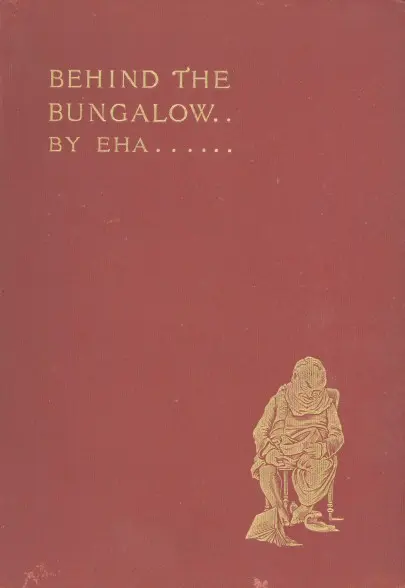
"Behind the Bungalow" by Edward Hamilton Aitken is a collection of essays written during the late 19th century. The book explores the intricate roles, behaviors, and relationships of various types of domestic servants in colonial India, particularly focusing on the dynamics between British expatriates and their Indian staff. Aitken's observations likely provide a humorous yet insightful reflection on the differences in culture and social status, centering on the day-to-day experiences of these servants. The opening of the book sets the stage with a prelude discussing the author’s experiences with hiring a "Boy," his term for a servant or valet, amidst the humorous and often complicated dynamics between master and servant in Anglo-Indian households. Aitken reflects on the characteristics and peculiarities of potential candidates, humorously depicting the complexities of choosing a suitable servant, often highlighting the cultural misunderstandings and societal norms at play. Additionally, the segment introduces various types of servants and the amusing scenarios that arise from their interactions with both their masters and their peers, seamlessly integrating observations on their personalities and quirks, offering an engaging glimpse into life behind the bungalows of colonial India.
Introduction adapted from the source catalogue; source summaries may be automatically generated.
Free to read · English · 34,531 words · No account needed
MAKE TIME FOR A GOOD BOOK
On by default. Untick to stop anonymous reading totals. Each page counts after 10 seconds in view. How this works.
Anonymous counting is on unless you have switched it off.
According to his lights Domingo is a religious man; that is to say, he wears a necklace of red beads, eats fish on Fridays, observes festivals and holidays, and gives pretty liberally to the church under pressure. So he maintains a placid condition of conscience while his monthly remittance to Goa exceeds the amount of his salary. He rises early on Sunday morning to go to confession, and I would give something to have the place, just one day, of the good father to whom he unbosoms himself. But perhaps I am wrong. I daresay he believes he has nothing to confess.
One story more to teach us to judge charitably of Domingo. A lady was inveighing to a friend against the whole race of Indian cooks as dirty, disorderly, and dishonest. She had managed to secure the services of a Chinese cook, and was much pleased with the contrast. Her friend did not altogether agree with her, and was sceptical about the immaculate Chinaman. “Put it to the test,” said the lady; “just let us pay a visit to your kitchen, and then come and see mine.” So they went together. What need to describe the Bobberjee-Khana? They glanced round, and hurried out, for it was too horrible to be endured long. When they went to the Chinaman’s kitchen, the contrast was indeed striking. The pots and pans shone like silver; the table was positively sweet; everything was in its proper place, and Chang himself, sitting on his box, was washing his feet in the soup tureen!
[Picture: The Mussaul] THE Mussaul’s name is Mukkun, which means butter, and of this commodity I believe he absorbs as much as he can honestly or dishonestly come by. How else does the surface of him acquire that glossy, oleaginous appearance, as if he would take fire easily and burn well? I wish we could do without him! The centre of his influence, a small room in the suburbs of the dining-room, which he calls the dispence, or dispence-khana, is a place of unwholesome sights and noisome odours, which it is good not to visit unless as Hercules visited the stables of Augeas. The instruments of his profession are there, a large handie full of very greasy water, with bits of lemon peel and fragments of broken victuals swimming in it, and a short, stout stick, with a little bunch of foul rag tied to one end of it. Here the Mussaul sits on the ice numda while we have our meals, and as each plate returns from the table, he takes charge of it, and transfers to his mouth whatever he finds on it, for he is of the omnivora, like the crow. Then he seizes his weapon of offence, and, dipping the rag end into the handie, gives the plate a masterly wipe, and lays it on the table upside down, or dries it with a damask table napkin. The butler encourages him for some reason to use up the table napkins in this way. I suppose it is because he does not like to waste the dhobie on anything before it is properly soiled. When the Mussaul has disposed of the breakfast things in this summary way, he betakes himself to the great work of the day, the polishing of the knives. He first plunges the ivory handles into boiling water, and leaves them to steep for a time, then he seats himself on the ice again, and, arranging a plank of wood in a sloping position, holds it fast with his toes, rubs it well with a piece of bath brick, and commences to polish with all the energy which he has saved by the neglect of other duties. Hour after hour the squeaky, squeaky, squeaky sound of that board plays upon your nerves, not the nerves of the ear, but the nerves of the mind, for there is more in it than the ear can convey. Every sight and every sound in this world comes to us inextricably woven into the warp which the mind supplies, and, as you listen to that baleful sound, you seem to feel with your finger points the back of each good, new knife getting sharper and sharper, and to watch its progress as it wears away at the point of greatest pressure, until the end of the blade is connected with the rest by a narrow neck, which eventually breaks, and the point falls off, leaving the knife in that condition so familiar to us all, when the blade, about three inches long, ends in a jagged, square point, the handle having, meanwhile, acquired a rich orange hue. Oh, those knives! those knives!
Your reading position is saved on this browser. Take it to another device with a library code. Reading pages adapt to text, rather than matching a printed edition.
BEHIND THE BOOK
This eBook is for the use of anyone anywhere in the United States and most other parts of the world at no cost and with almost no restrictions whatsoever. You may copy it, give it away or re-use it under the terms of the Project Gutenberg License included with this eBook or online at www.gutenberg.org. If you are not located in the United States, you will have to check the laws of the country where you are located before using this eBook. Read the source licence.
The original source file, including credits and licence, is retained by this library. Request an original-format copy at no charge. Please include the book title and Project Gutenberg identifier #7953.
KEEP YOUR CURIOSITY GOING

David Patterson (Spirit) Hatch

David Patterson (Spirit) Hatch

David Patterson (Spirit) Hatch
Cécile Tormay

Moritz Busch
John L. Ransom