THE CLASSIC COLLECTION✦Concerning Animals and Other MattersCLASSIC FREE BOOKS
Concerning Animals and Other Matters
Edward Hamilton Aitken
THE CLASSIC COLLECTION · 1889
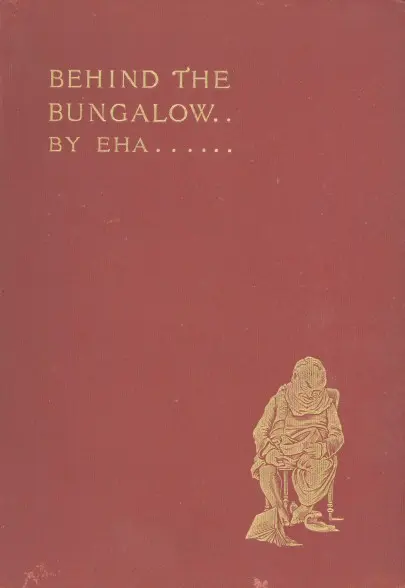
"Behind the Bungalow" by Edward Hamilton Aitken is a collection of essays written during the late 19th century. The book explores the intricate roles, behaviors, and relationships of various types of domestic servants in colonial India, particularly focusing on the dynamics between British expatriates and their Indian staff. Aitken's observations likely provide a humorous yet insightful reflection on the differences in culture and social status, centering on the day-to-day experiences of these servants. The opening of the book sets the stage with a prelude discussing the author’s experiences with hiring a "Boy," his term for a servant or valet, amidst the humorous and often complicated dynamics between master and servant in Anglo-Indian households. Aitken reflects on the characteristics and peculiarities of potential candidates, humorously depicting the complexities of choosing a suitable servant, often highlighting the cultural misunderstandings and societal norms at play. Additionally, the segment introduces various types of servants and the amusing scenarios that arise from their interactions with both their masters and their peers, seamlessly integrating observations on their personalities and quirks, offering an engaging glimpse into life behind the bungalows of colonial India.
Introduction adapted from the source catalogue; source summaries may be automatically generated.
Free to read · English · 34,531 words · No account needed
MAKE TIME FOR A GOOD BOOK
On by default. Untick to stop anonymous reading totals. Each page counts after 10 seconds in view. How this works.
Anonymous counting is on unless you have switched it off.
Even good Homer nods, and I confess I am still haunted by the memory of a day when my Chief was my guest, and the butler served up red herrings neatly done up in—The Times of India!
[Picture: The cook] I DO not remember who was the author of the observation that a great nation in a state of decay betakes itself to the fine arts. Perhaps no one has made the observation yet. It is certainly among the records of my brain, but I may possibly have put it there myself. If so, I make it now, for the possibilities of originality are getting scarce and will soon disappear from the face of the earth as completely as the mastodon. The present application of the saying is to the people of Goa, who, while they carry through the world patronymics which breathe of conquest and discovery, devote their energies rather to the violin and the art of cookery. The caviller may object to the application of the words “fine art” to culinary operations, but the objection rests on superficial thought. A deeper view will show that art is in the artist, not in his subject or his materials. Perusal of the Codes of the Financial Department showed me many years ago that the retrenchment of my pay and allowances could be elevated to a fine art by devotion of spirit, combined with a fine sense of law. And to Domingo the preparation of dinner is indeed a fine art. Trammel his genius, confine him within the limits of what is commonly called a “plain dinner,” and he cannot cook. He stews his meat before putting it into a pie, he thickens his custard with flour instead of eggs, he roasts a leg of mutton by boiling it first and doing “littlee brown” afterwards; in short, what does he not do? It is true of all his race. How loathsome were Pedro’s mutton chops, and Camilo could not boil potatoes decently for a dinner of less than four courses. But let him loose on a burra khana, give him carte blanche as to sauces and essences and spicery, and all his latent faculties and concealed accomplishments unfold themselves like a lotus flower in the morning. No one could have suspected that the shame-faced little man harboured such resources. If he has not always the subtlest perception of the harmonics of flavours, what a mastery he shows of strong effects and striking contrasts, what fecundity of invention, what a play of fancy in decoration, what manual dexterity, what rapidity and certainty in all his operations! And the marvel increases when we consider the simplicity of his implements and materials. His studio is fitted with half a dozen small fireplaces, and furnished with an assortment of copper pots, a chopper, two tin spoons—but he can do without these,—a ladle made of half a cocoanut shell at the end of a stick, and a slab of stone with a stone roller on it; also a rickety table; a very gloomy and ominous looking table, whose undulating surface is chopped and hacked and scarred, begrimed, besmeared, smoked, oiled, stained with juices of many substances. On this table he minces meat, chops onions, rolls pastry and sleeps; a very useful table. In the midst of these he hustles about, putting his face at intervals into one of his fires and blowing through a short bamboo tube, which is his bellows, such a potent blast that for a moment his whole head is enveloped in a cloud of ashes and cinders, which also descend copiously on the half-made tart and the soufflé and the custard. Then he takes up an egg, gives it three smart raps with the nail of his forefinger, and in half a second the yoke is in one vessel and the white in another. The fingers of his left hand are his strainer. Every second or third egg he tosses aside, having detected, as it passed through the said strainer that age had rendered it unsuitable for his purposes; sometimes he does not detect this. From eggs he proceeds to onions, then he is taking the stones out of raisins, or shelling peas. There is a standard English cookery book which commences most of its instructions with the formula, “wash your hands carefully, using a nail brush.” Domingo does not observe this ceremony, but he often wipes his fingers upon his pantaloons. It occurs to me, however, that I do not wisely pursue this theme; for the mysteries of Domingo’s craft are no fit subject for the gratification of an irreverent curiosity. Those words of the poet,
Your reading position is saved on this browser. Take it to another device with a library code. Reading pages adapt to text, rather than matching a printed edition.
BEHIND THE BOOK
This eBook is for the use of anyone anywhere in the United States and most other parts of the world at no cost and with almost no restrictions whatsoever. You may copy it, give it away or re-use it under the terms of the Project Gutenberg License included with this eBook or online at www.gutenberg.org. If you are not located in the United States, you will have to check the laws of the country where you are located before using this eBook. Read the source licence.
The original source file, including credits and licence, is retained by this library. Request an original-format copy at no charge. Please include the book title and Project Gutenberg identifier #7953.
KEEP YOUR CURIOSITY GOING

David Patterson (Spirit) Hatch

David Patterson (Spirit) Hatch

David Patterson (Spirit) Hatch
Cécile Tormay

Moritz Busch
John L. Ransom