THE CLASSIC COLLECTION✦Concerning Animals and Other MattersCLASSIC FREE BOOKS
Concerning Animals and Other Matters
Edward Hamilton Aitken
THE CLASSIC COLLECTION · 1889
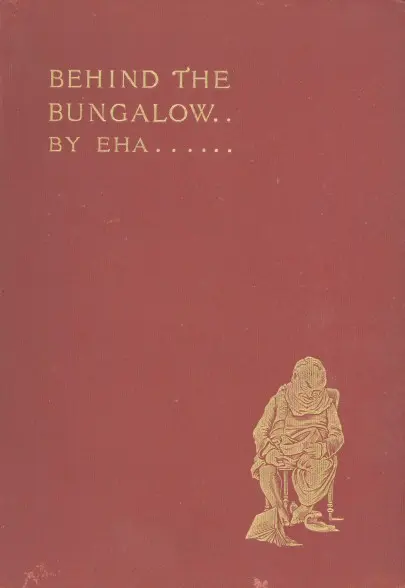
"Behind the Bungalow" by Edward Hamilton Aitken is a collection of essays written during the late 19th century. The book explores the intricate roles, behaviors, and relationships of various types of domestic servants in colonial India, particularly focusing on the dynamics between British expatriates and their Indian staff. Aitken's observations likely provide a humorous yet insightful reflection on the differences in culture and social status, centering on the day-to-day experiences of these servants. The opening of the book sets the stage with a prelude discussing the author’s experiences with hiring a "Boy," his term for a servant or valet, amidst the humorous and often complicated dynamics between master and servant in Anglo-Indian households. Aitken reflects on the characteristics and peculiarities of potential candidates, humorously depicting the complexities of choosing a suitable servant, often highlighting the cultural misunderstandings and societal norms at play. Additionally, the segment introduces various types of servants and the amusing scenarios that arise from their interactions with both their masters and their peers, seamlessly integrating observations on their personalities and quirks, offering an engaging glimpse into life behind the bungalows of colonial India.
Introduction adapted from the source catalogue; source summaries may be automatically generated.
Free to read · English · 34,531 words · No account needed
MAKE TIME FOR A GOOD BOOK
On by default. Untick to stop anonymous reading totals. Each page counts after 10 seconds in view. How this works.
Anonymous counting is on unless you have switched it off.
The Butler being commander-in-chief of the household forces, I find one quality to be indispensable in him, and that is what the natives call hookoomut, the faculty of so commanding that other men obey. He has to control a sneaking mussaul, an obstinate hamal, a quarrelsome, or perhaps a drunken cook, a wicked dog-boy, a proud coachman, and a few turbulent ghorawallas, while he must conciliate, or outwit, the opposition headed by the ayah. If he cannot do this there will be factions, seditions, open mutiny, ending in appeals to you, to which if you give ear, you will foster all manner of intrigue, and put a premium on lies and hypocrisy; and it will be strange if you do not end by punishing the innocent and filling the guilty with unholy joy. In this country there is only one way of dealing with the squabbles of domestics and dependents, and that is the method of Gallio, who was a great man.
Besides the general responsibilities of his position as C.-in-C., the Butler has certain specific duties, such as to stand with arms folded behind you at meal time, to clean the silver, and to go to the bazaar in the morning. The last seems to be quite as much a prerogative as a duty, and the cook wants to go to law about it, regarding the Butler as an unlawful usurper. He asserts his claim by spoiling the meat which the Butler brings. Of course, there must be some reason why this duty, or privilege, is so highly valued, and no doubt that reason is connected with the great Oriental principle, that of everything a man handles or controls, somewhat should adhere to his palm; but if you ask how this principle is applied or worked out, I can only reply that that is a matter on which I believe not one of us has any information, though for the most part we hold very emphatic opinions on the subject. I am quite certain that it may be laid down for a general rule that the Butler prefers indirect to direct taxation. He certainly would not reduce salt and customs duties to pave the way for an income tax. Neither would a Viceroy, perhaps, if he had to stay and reap the fruit of his works, instead of leaving that to his successor—but that is political reflection which has no business here. The Butler, I say, wisely prefers indirect taxation and prospers. How, then, are you to checkmate him? Don’t! A wise man never attempts what cannot be accomplished. I work on the assumption that my Butler is, like Brutus, an honourable man, treating him with consideration, and fostering his self-respect, even at the cost, perhaps, of a little hypocrisy. It is a gracious form of hypocrisy, and one that often justifies itself in the end, for the man tends to become what you assume that he is. For myself, I confess that I yield to the butler’s claim to go to market, albeit I am assured that he derives unjust advantages therefrom, more easily than I reconcile myself to that other privilege of standing, with arms folded, behind me while I breakfast, or tiffin, or dine. I can endure the suspicion that he is growing rich while I am growing poor, but that argus supervision over my necessary food is like a canker, and his indefatigable attentiveness would ruin the healthiest appetite. After removing the cover from the “beefysteak” and raising one end of the dish that I may get at the gravy more easily, he offers me potatoes, and I try to overcome an instinctive repugnance to the large and mealy tuber under which he has adjusted the spoon in order to lighten my labour. After the potatoes there are vegetables. Then he moves the salt a little nearer me and I help myself. Next he presses the cruet-stand on my attention, putting the spoon into the mustard pot and taking the stopper out of the sauce bottle. I submit in the hope that I may now be allowed to begin; but he has salad or tomatoes or something else requiring attention. I submit once more and then assume my knife and fork. He watches his opportunity and insinuates a pickle bottle, holding the fork in his right hand. I feel that it is time to make a stand, so I give him one unspeakable look and proceed with my meal, whereupon he retreats and I breathe a little more freely. But no; he is at my left hand again with bread. To do him justice, he is quite willing to save me annoyance by impaling a slice on the knife and transferring it to my plate, but I prefer to help myself, which encourages him to return to the charge with butter and then jam. This looks like the end, but his resources are infinite. His eye falls on the sugar basin standing beside my teacup, and he immediately takes it up and, coming round to my left side, holds it to my nose. All this time sit I, like Tantalus, with the savoriest of Domingo’s “beefysteaks” before me and am not allowed to taste it. But I know that in every operation he is animated by an exalted sense of blended duty and prerogative, and if I could really open his mind to the thought that the least of his attentions was dispensable, his whole nature would be demoralized at once; so I endure and grow lean. Another thing which works towards the same result is a practice that he has of studying my tastes, and when he thinks he has detected a preference for a particular dish, plying me with that until the very sight of it becomes nauseous. At one time he fed me with “broon custard” pudding for about six months, until in desperation I interdicted that preparation for evermore, and he fell back upon “lemol custard.” Thus my luxuries are cut off one after another and there is little left that I can eat.
Your reading position is saved on this browser. Take it to another device with a library code. Reading pages adapt to text, rather than matching a printed edition.
BEHIND THE BOOK
This eBook is for the use of anyone anywhere in the United States and most other parts of the world at no cost and with almost no restrictions whatsoever. You may copy it, give it away or re-use it under the terms of the Project Gutenberg License included with this eBook or online at www.gutenberg.org. If you are not located in the United States, you will have to check the laws of the country where you are located before using this eBook. Read the source licence.
The original source file, including credits and licence, is retained by this library. Request an original-format copy at no charge. Please include the book title and Project Gutenberg identifier #7953.
KEEP YOUR CURIOSITY GOING

David Patterson (Spirit) Hatch

David Patterson (Spirit) Hatch

David Patterson (Spirit) Hatch
Cécile Tormay

Moritz Busch
John L. Ransom