THE CLASSIC COLLECTION✦Concerning Animals and Other MattersCLASSIC FREE BOOKS
Concerning Animals and Other Matters
Edward Hamilton Aitken
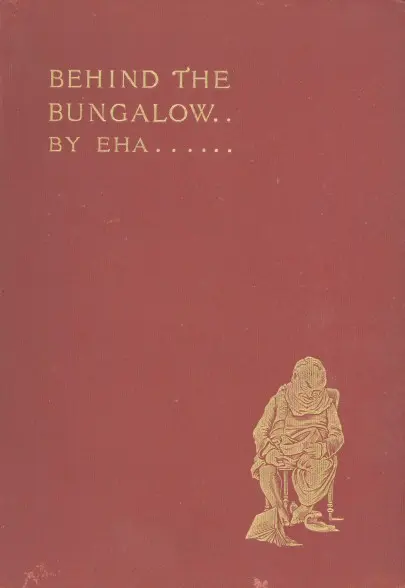
THE CLASSIC COLLECTION · 1889
"Behind the Bungalow" by Edward Hamilton Aitken is a collection of essays written during the late 19th century. The book explores the intricate roles, behaviors, and relationships of various types of domestic servants in colonial India, particularly focusing on the dynamics between British expatriates and their Indian staff. Aitken's observations likely provide a humorous yet insightful reflection on the differences in culture and social status, centering on the day-to-day experiences of these servants. The opening of the book sets the stage with a prelude discussing the author’s experiences with hiring a "Boy," his term for a servant or valet, amidst the humorous and often complicated dynamics between master and servant in Anglo-Indian households. Aitken reflects on the characteristics and peculiarities of potential candidates, humorously depicting the complexities of choosing a suitable servant, often highlighting the cultural misunderstandings and societal norms at play. Additionally, the segment introduces various types of servants and the amusing scenarios that arise from their interactions with both their masters and their peers, seamlessly integrating observations on their personalities and quirks, offering an engaging glimpse into life behind the bungalows of colonial India.
Introduction adapted from the source catalogue; source summaries may be automatically generated.
Free to read · English · 34,531 words · No account needed
MAKE TIME FOR A GOOD BOOK
On by default. Untick to stop anonymous reading totals. Each page counts after 10 seconds in view. How this works.
Anonymous counting is on unless you have switched it off.
The first symptom of him is an indent for certain articles which he asserts to be absolutely necessary before he can enter on his professional duties. These are a jhule, baldee, tobra, mora, booroos, bagdoor, agadee, peechadee, curraree, hathalee, &c. It is not very rational to be angry, for most of the articles, if not all, are really required. Several of them, indeed, are only ropes, for the Ghorawalla, or syce, as they call him on the other side of India, gives every bit of cordage about his beast a separate name, as a sailor describes the rigging of a ship. But the fact remains that there is something peculiarly irritating in this first indent. Perhaps one feels, after buying and paying for a whole horse, that he might in decency have been allowed to breathe before being asked to pay again. If this is it, the sooner the delusion is dissipated the better. You will never have respite from payments while an active-minded syce remains on your staff. You think you have fitted him out with everything the heart of syce can desire, and he goes away seemingly happy, and commences work at once, hissing like twenty biscobras as he throws himself against the horse, and works his arms from wrist to elbow into its ribs. It looks as if it would like to turn round and take a small piece out of his hinder parts with its teeth, but its nose is tied up to the roof of the stable, and its hind feet are pulled out and tied to a peg behind it, so that it can only writhe and cultivate that amiable temper which characterizes so many horses in this country. And the syce is happy; but his happiness needs constant sustenance. Next morning he is at the door with a request for an anna to buy oil. Horses in this country cannot sleep without a night-light. They are afraid of rats, I suppose, like ladies. However, it is a small demand; all the syce’s demands are small, so are mosquitoes. Next day he again wants an anna for oil, but this has nothing to do with the other. Yesterday’s was one sort of oil for burning, this is another sort of oil for cleaning the bits. To-morrow he will require a third sort of oil for softening the leather nose-bag, and the oils of the country will not be exhausted then. Among the varied street-cries of Bombay, the “I-scream” man, the tala-chavee-walla, the botlee-walla, the vendors of greasy sweetmeats and bawlee-sugah, the legion of borahs, and that abominable little imp who issues from the newspaper offices, and walks the streets, yelling “Telleecram! tellee-c-r-a-a-m!” among them all there is one voice so penetrating, and so awakening where it penetrates, that—that I cannot find a fitting conclusion to this sentence. Who of us has not started at that shrill squeal of pain, “Nee-ee-ee-ttile!” The Ghorawalla watches for it, and stopping the good-natured woman, brings her in and submits a request for a bottle of neat’s foot oil, for want of which your harness is going to destruction. She has blacking as well as oil, but he will call her in for that afterwards. He never concludes two transactions in one day. When he has succeeded in reducing you to such a state of irritability that it is not safe to mention money in your presence, he stops at once and changes tactics. He brings the horse to the door with a thick layer of dust on the saddle and awaits your onset with the intrepid inquiry, “Can a saddle be kept clean without soap?” I suppose a time will come when he will have got every article he can possibly use, and it is natural to hope that he will then be obliged to leave you. But this also is a delusion. On the contrary, his resources only begin to develop themselves when he has got all he wants. First one of the leather things on the horse’s hind feet gives way and has to be cobbled, then a rope wears out and must be replaced, then a buckle gets loose and wants a stitch. But his chief reliance is on the headstall and the nose-bag. When these have got well into use, one or other of them may be counted on to give way about every other day, and when nothing of the original article is left, the patches of which it is composed keep on giving way. Each repair costs from one to three pice, and it puzzles one to conceive what benefit a well-paid groom can derive from being the broker in such petty transactions. But all the details of life in this country are microscopical, not only among the poor, but among those whose business is conducted in lakhs. I have been told of a certain well-known, wealthy mill-owner who, when a water Brahmin at a railway station had supplied him and all his attendants with drinking-water, was seen to fumble in his waistband, and reward the useful man with one copper pie. A pie at present rates of exchange is worth about 47/128 of a farthing, and it is instructive to note that emergency, when it came, found this Crœsus provided with such a coin.
Your reading position is saved on this browser. Take it to another device with a library code. Reading pages adapt to text, rather than matching a printed edition.
BEHIND THE BOOK
This eBook is for the use of anyone anywhere in the United States and most other parts of the world at no cost and with almost no restrictions whatsoever. You may copy it, give it away or re-use it under the terms of the Project Gutenberg License included with this eBook or online at www.gutenberg.org. If you are not located in the United States, you will have to check the laws of the country where you are located before using this eBook. Read the source licence.
The original source file, including credits and licence, is retained by this library. Request an original-format copy at no charge. Please include the book title and Project Gutenberg identifier #7953.
KEEP YOUR CURIOSITY GOING

David Patterson (Spirit) Hatch

David Patterson (Spirit) Hatch

David Patterson (Spirit) Hatch
Cécile Tormay

Moritz Busch
John L. Ransom