
The Sun of Saratoga: A Romance of Burgoyne’s Surrender
Joseph A. (Joseph Alexander) Altsheler
THE CLASSIC COLLECTION · 1903
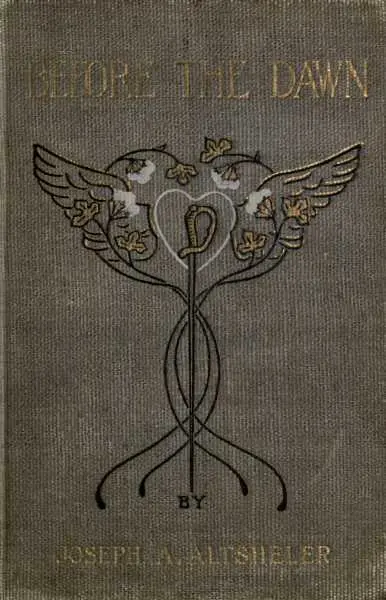
"Before the Dawn: A Story of the Fall of Richmond" by Joseph A. Altsheler is a historical novel written in the early 20th century. This work draws readers into the tumultuous backdrop of the American Civil War, specifically focusing on the significant events surrounding the fall of Richmond, the capital of the Confederacy. The narrative follows the young soldier Prescott, who is returning from the frontlines to Richmond, highlighting themes of war, homecoming, and personal connections amidst a nation in crisis. At the start of the novel, Prescott finds himself on a train to Richmond, where he observes a varied cast of characters, including a mysterious woman in a brown cloak. His journey reflects the divided atmosphere of the city filled with both hope and despair due to the ongoing war. As Prescott arrives, he feels a mix of nostalgia and longing for a sense of normalcy, immediately seeking out familiar places and people. The bustling life of Richmond contrasts sharply with his experiences in the army, and he begins to forge new friendships, notably with the charming and spirited Helen Harley, who is navigating her own challenges as the war continues to alter the fabric of Southern society.
Introduction adapted from the source catalogue; source summaries may be automatically generated.
Free to read · English · 123,449 words · No account needed
MAKE TIME FOR A GOOD BOOK
On by default. Untick to stop anonymous reading totals. Each page counts after 10 seconds in view. How this works.
Anonymous counting is on unless you have switched it off.
Spring rushed on with soft, warm winds and an April day broke up in rain. The night was black, and Prescott, lost in the woods, seeking somewhere a shelter, heard a sound which he knew to be the rumble of a train. Hope sprang up; where there was a train there was a railroad, and a railroad meant life. He pushed on in the direction whence the sound came, cowering before the wind and the rain, and at last saw a light. It might be Yankees or it might not be Yankees, but Prescott now did not care which, intent as he was upon food and shelter.
The light led him at last to an unpainted, one-room shanty in the woods by the railroad track, a telegraph station. Prescott stared in at the window and at the lone operator, a lank youth of twenty, who started back when he saw the unshorn and ghastly face at the window. But he recovered his coolness in a moment and said:
"Come in, stranger; I guess you're a hungry Reb."
Prescott entered, and the lank youth, without a word, took down some crackers and hard cheese from a shelf.
"Eat it all," he said; "you're welcome."
Prescott ate voraciously and dried his clothing before the fire in a
little stove.
The telegraph instrument on a table in a corner kept up a monotonous ticking, to which the operator paid no attention. But it was a soothing sound to Prescott, and with the food and the heat and the restful atmosphere he began to feel sleepy. The lank youth said nothing, but watched his guest languidly and apparently without curiosity.
Presently the clicking of the telegraph instrument increased in rapidity and emphasis and the operator went to the table. The rapid tick aroused Prescott from the sleep into which he was falling.
"Tick-tack, tick-tack, tick-tack," went the instrument. A look of interest appeared on the face of the lank youth.
"That instrument seems to be talking to you," said Prescott.
"Yes, it's saying a few words," replied the operator.
"Tick-tack, tick-tack, tick-tack!" went the instrument.
"It's a friend of mine farther up the line," said the boy. "Would you like to hear what he's saying?"
"If you don't mind," replied Prescott.
It was very warm in the room and he was still drowsy. The boy began in a mechanical voice as of one who reads:
"General Lee surrendered to General Grant to-day----"
"What's that?" exclaimed Prescott, springing to his feet. But the boy
went on:
"General Lee surrendered to General Grant to-day at Appomattox Court House. The Army of Northern Virginia has laid down its arms and the war is over."
Your reading position is saved on this browser. Take it to another device with a library code. Reading pages adapt to text, rather than matching a printed edition.
Joseph A. (Joseph Alexander) Altsheler
Joseph A. (Joseph Alexander) Altsheler
Joseph A. (Joseph Alexander) Altsheler
Joseph A. (Joseph Alexander) Altsheler
BEHIND THE BOOK
This eBook is for the use of anyone anywhere in the United States and most other parts of the world at no cost and with almost no restrictions whatsoever. You may copy it, give it away or re-use it under the terms of the Project Gutenberg License included with this eBook or online at www.gutenberg.org. If you are not located in the United States, you will have to check the laws of the country where you are located before using this eBook. Read the source licence.
The original source file, including credits and licence, is retained by this library. Request an original-format copy at no charge. Please include the book title and Project Gutenberg identifier #21321.
KEEP YOUR CURIOSITY GOING
Cécile Tormay

Moritz Busch
Coulson Kernahan
John L. Ransom

Maurice Baring
Frances Wright