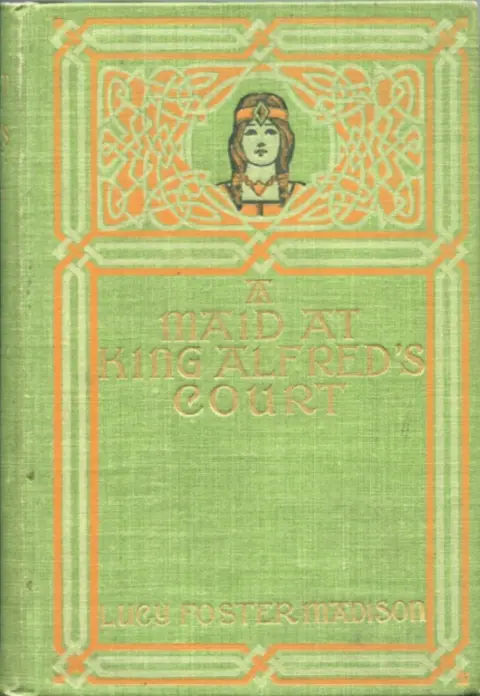
A Maid at King Alfred’s Court: A Story for Girls
Lucy Foster Madison
THE CLASSIC COLLECTION · 1913
"Bee and Butterfly: A Tale of Two Cousins" by Lucy Foster Madison is a fictional work written in the early 20th century. The story centers on Beatrice Raymond, a girl who has grown up without her father, who has been abroad for ten years collecting butterfly specimens. The narrative begins with Beatrice's anticipation and excitement as her father is set to return, alongside her struggle with feelings of inadequacy compared to her cousin, Adele, who is considered beautiful and charming. At the start of the book, the reader is introduced to Beatrice's world and the dynamic between her and her cousin Adele. Beatrice is depicted as an intelligent, nature-loving girl who feels overshadowed by Adele's beauty, igniting her insecurities, especially in light of her father's imminent return. As she wrestles with her identity and the judgments imposed by society, she attempts drastic measures, like altering her appearance to gain her father's affection. This opening portion sets the stage for themes of self-acceptance, the complexities of familial love, and the societal pressures concerning beauty and worth.
Introduction adapted from the source catalogue; source summaries may be automatically generated.
Free to read · English · 56,613 words · No account needed
MAKE TIME FOR A GOOD BOOK
On by default. Untick to stop anonymous reading totals. Each page counts after 10 seconds in view. How this works.
Anonymous counting is on unless you have switched it off.
"That is what I'm not going to do," declared the boy obstinately. "You ought not to be, you know. I'll tell you what: come over, and let me play to you. That will drive all your troubles away."
"If I go over for a little while to listen to you, will you let me come home alone? I don't wish to be rude, Percival, but I am very unhappy."
"If you will come over for a time you may do anything you please," said the lad earnestly. "I am sorry if I seem to bother, but when I am troubled music puts everything all right. It's the same with mamma, and with old Heinrich, and with lots of people. I just believe that it will help you too, or I should not insist. Now, come, Butterfly."
"You are very nice to me, Percival," said Beatrice, touched. "Nicer than you ought to be, because I have not been good to you this morning. But I just can't be pleasant to any one."
"I know." The boy nodded his head sagaciously. "I feel that way too,
sometimes."
"And, Percival, you must not call me Butterfly. Butterflies are pretty and only good-looking people should be called so. I have a cousin who is very beautiful. We always called her that, but they call me Bee."
"And bees make honey, don't they? I like honey, and I like bees. I think I like them better than I do butterflies. They have a sting, too, don't they?"
"Yes," answered the girl.
"You have too. That is, you can say some sharp things. I think bee suits you better than the other because you do things. I am going to call you Beefly. Butterflies never do anything, do they?"
"They don't need to do anything," sighed Bee. "It's only homely insects
that need to work."
Percival made no answer, and silently they went through the orchard and across the field, and through the hedge into the garden beyond. Mrs. Medulla greeted them pleasantly, as they entered.
"Good morning, Beatrice," she said, noting the girl's paleness instantly. "You have made quite a conquest of my son. He has never taken so to a girl before."
"She's different," spoke Percival sententiously, adjusting the music on the rack, and picking up his violin. "Other girls don't think of anything but dresses and things to wear. She doesn't tag after a fellow either. I like her. You must not talk any more, mamma. She is troubled, and I'm going to play to make her feel better."
"Very well," said the lady, with a faint smile. "Sit here by me, my dear," she added kindly to Beatrice.
Your reading position is saved on this browser. Take it to another device with a library code. Reading pages adapt to text, rather than matching a printed edition.
Lucy Foster Madison
Lucy Foster Madison
Lucy Foster Madison
BEHIND THE BOOK
This eBook is for the use of anyone anywhere in the United States and most other parts of the world at no cost and with almost no restrictions whatsoever. You may copy it, give it away or re-use it under the terms of the Project Gutenberg License included with this eBook or online at www.gutenberg.org. If you are not located in the United States, you will have to check the laws of the country where you are located before using this eBook. Read the source licence.
The original source file, including credits and licence, is retained by this library. Request an original-format copy at no charge. Please include the book title and Project Gutenberg identifier #33407.
KEEP YOUR CURIOSITY GOING
Coulson Kernahan

Maurice Baring
Frances Wright
Cécile Tormay

Frederic Jesup Stimson

W. H. P. (William Henry Pope) Jarvis