
Letters to a Friend, Written to Mrs. Ezra S. Carr, 1866-1879
John Muir
THE CLASSIC COLLECTION · 1881
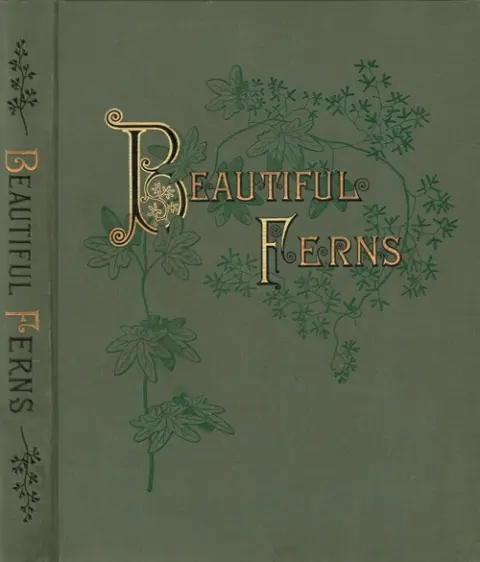
"Beautiful Ferns" by Daniel Cady Eaton is a scientific publication written in the late 19th century. This work focuses on describing a wide variety of ferns, showcasing original water-color drawings, and providing detailed botanical descriptions alongside the illustrated species. The book serves as both a reference guide for ferns found in North America and a visual celebration of their beauty. The opening of the book introduces the reader to a selection of ferns, beginning with the American Maiden-Hair, which is characterized by its graceful fronds and growing habitat in rich, moist woods. Eaton provides a thorough botanical description, including the fern's root structure, frond characteristics, and geographical distribution. The text emphasizes both the aesthetic appeal and the scientific importance of these plants, which are illustrated in vibrant watercolors, undergoing meticulous descriptions that highlight their unique features and natural environments.
Introduction adapted from the source catalogue; source summaries may be automatically generated.
Free to read · English · 15,100 words · No account needed
MAKE TIME FOR A GOOD BOOK
On by default. Untick to stop anonymous reading totals. Each page counts after 10 seconds in view. How this works.
Anonymous counting is on unless you have switched it off.
Aspidium fragrans:—Root-stock short and stout, very chaffy, with ample bright-brown glossy scales, which also abound on the short clustered stalks, and extend, diminishing in size, nearly to the top of the frond; fronds rigid-membranaceous, glandular, aromatic, four to ten inches long, six to twenty-four lines wide, lanceolate, acuminate, narrowed from the middle to the base, bipinnate; pinnæ numerous, oblong-lanceolate; pinnules many, one to two lines long, oblong, obtuse, adnate by a decurrent base, pinnately incised with very minute crenated teeth, or in smaller fronds nearly entire, the back nearly hidden by the large thin imbricating indusia, which are orbicular with a narrow sinus, and more or less toothed and glandular around the margin.
Aspidium fragrans, Swartz, Syn. Fil., p. 51.—Willdenow, Sp. Pl., v., p. 253.—Hooker, in “Parry’s 2d Voy., App., p. 410;” Fl. Bor. Am., p. 410.—Ruprecht, Distr. Crypt. Vasc. Imp. Ross., p. 35.—Mettenius, Aspid., p. 56.—Gray, Manual, ed. 2, p. 598.—Milde, Fil. Eur. et Atlant., p. 117.
Polypodium fragrans, Linnæus, Sp. Pl., p. 1550.
Polystichum fragrans, Ledebour, “Fl. Ross., iv., p. 514.”—Maximowicz, Prim. Fl. Amur., p. 339.
Dryopteris fragrans, Schott, Gen. Fil., Observ. sub Polysticho.
Nephrodium fragrans, Richardson, “App. to Frankl. Journ., p. 753.”—Hooker & Greville, Ic. Fil., t. lxx.—Hooker, Sp. Fil., iv., p. 122.—Hooker & Baker, Syn. Fil., p. 275.
Dryopteris rubum idæum spirans, Ammann, “Ruth., p. 251.”
Hab.—In crevices of shaded cliffs, and on mossy rocks, especially near cascades and rivulets, from Northern New England to Wisconsin, and northward to Arctic America. Also in the Caucasus, and in Siberia, Mantchooria, and Kamtschatka. Special American localities are Mount Kineo, Maine, A. H. and C. E. Smith; at Berlin Falls, the “Alpine Cascade,” and the “Gulch,” all near the White Mountains, H. Willey; Mount Mansfield, Vermont, C. G. Pringle; Lake Avalanche, Adirondack Mountains, New York, C. H. Peck; Falls of St. Croix, Wisconsin, C. C. Parry, and on the Penokee Iron Range, in the same State, Lapham; Saguenay River, Canada, D. A. Watt. It is apparently more common farther north: Sitka, Iliuliuk, Unalaska, Arakamtchetchene, Kotzebue Bay, Igloolik, Rittenbenk in Greenland, and several other places, are recorded as stations for it.
Your reading position is saved on this browser. Take it to another device with a library code. Reading pages adapt to text, rather than matching a printed edition.
BEHIND THE BOOK
This eBook is for the use of anyone anywhere in the United States and most other parts of the world at no cost and with almost no restrictions whatsoever. You may copy it, give it away or re-use it under the terms of the Project Gutenberg License included with this eBook or online at www.gutenberg.org. If you are not located in the United States, you will have to check the laws of the country where you are located before using this eBook. Read the source licence.
The original source file, including credits and licence, is retained by this library. Request an original-format copy at no charge. Please include the book title and Project Gutenberg identifier #45110.
KEEP YOUR CURIOSITY GOING
John Muir

Asa Gray
Asa Gray

Florence Nightingale
Elizabeth Robins Pennell
Denison Olmsted