
Letters to a Friend, Written to Mrs. Ezra S. Carr, 1866-1879
John Muir
THE CLASSIC COLLECTION · 1881
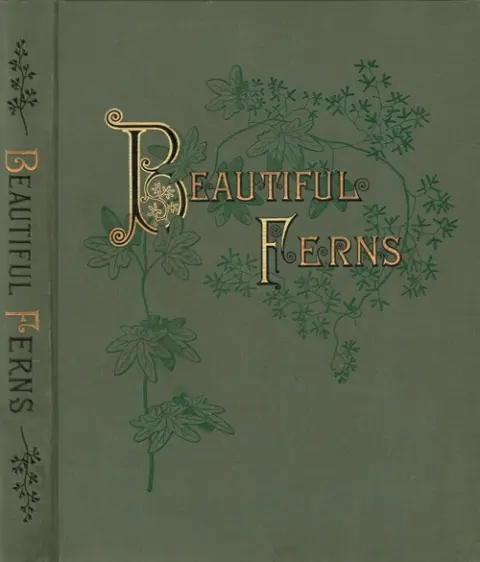
"Beautiful Ferns" by Daniel Cady Eaton is a scientific publication written in the late 19th century. This work focuses on describing a wide variety of ferns, showcasing original water-color drawings, and providing detailed botanical descriptions alongside the illustrated species. The book serves as both a reference guide for ferns found in North America and a visual celebration of their beauty. The opening of the book introduces the reader to a selection of ferns, beginning with the American Maiden-Hair, which is characterized by its graceful fronds and growing habitat in rich, moist woods. Eaton provides a thorough botanical description, including the fern's root structure, frond characteristics, and geographical distribution. The text emphasizes both the aesthetic appeal and the scientific importance of these plants, which are illustrated in vibrant watercolors, undergoing meticulous descriptions that highlight their unique features and natural environments.
Introduction adapted from the source catalogue; source summaries may be automatically generated.
Free to read · English · 15,100 words · No account needed
MAKE TIME FOR A GOOD BOOK
On by default. Untick to stop anonymous reading totals. Each page counts after 10 seconds in view. How this works.
Anonymous counting is on unless you have switched it off.
Probably the earliest notice of the walking-leaf is in Ray’s “Historia Plantarum,” vol. ii., p. 1927, published in 1688. It is there called “Phyllitis parva saxatilis per summitates folii prolifera.” Other early accounts may be found in the “Species Plantarum” of Linnæus and of Willdenow, and in the second edition of Gronovius’s “Flora Virginica.” In the latter work it may be seen that Gov. Colden long ago described the auricles as being “also often acuminate.”
A second species, with membranaceous fronds acute at the base (C. Sibiricus), occurs in Northern Asia, but is apparently very rare.
ASPLENIUM PINNATIFIDUM, Nuttall.
Pinnatifid Spleenwort.
Asplenium pinnatifidum:—Root-stock short, creeping, branched; stalks numerous, clustered, brownish near the base, green higher up; fronds six to nine inches high, herbaceous or sub-coriaceous, mostly erect, lanceolate-acuminate from a broad and sub-hastate base, pinnatifid; lower lobes roundish-ovate or rarely caudate, sometimes distinct, the margin crenated, the upper ones gradually smaller and more and more adnate to the winged midrib; the uppermost very short, and passing into the sinuous-margined long acumination of the frond; veins dichotomous or sub-pinnate and forking, free; sori few on the lower lobes, solitary on the uppermost, those next the midrib occasionally diplazioid.
Asplenium pinnatifidum, Nuttall, Genera of N. Amer. Plants, ii., p. 251.—Kunze, in Sill. Journ., July, 1848, p. 85.—Gray, Manual.—Eaton, in Chapman’s Flora of Southern U. S., p. 592.—Hooker, Icones Plantarum, t. 927; Sp. Fil., iii., p. 91.—Mettenius, Fil. Hort. Lips., p. 72, t. 10, figs. 1, 2; Asplenium, p. 126.—Hooker & Baker, Syn. Fil., p. 194.
Asplenium rhizophyllum, var. pinnatifidum, Muhlenberg, Catalogus Plant. Am. Sept., ed. ii., p. 102.—Barton, Compendium Floræ Philad., ii., p. 210.—Eaton,[3] Manual of Botany, ed. iii., p. 188, etc.—Torrey, Compendium, p. 383.
Hab.—Discovered by Thomas Nuttall in crevices of rocks along the Schuylkill River, near Philadelphia; also found along the Wissahickon Creek in the same vicinity. Lancaster County, Pennsylvania, Prof. Thomas C. Porter. On moist cliffs of sandstone in the Cumberland Mountains, East Tennessee, Prof. F. H. Bradley. Hancock County, Alabama, Hon. T. M. Peters. Mine-la-Motte, Southern Missouri, on sandstone rocks, Dr. Engelmann.
Your reading position is saved on this browser. Take it to another device with a library code. Reading pages adapt to text, rather than matching a printed edition.
BEHIND THE BOOK
This eBook is for the use of anyone anywhere in the United States and most other parts of the world at no cost and with almost no restrictions whatsoever. You may copy it, give it away or re-use it under the terms of the Project Gutenberg License included with this eBook or online at www.gutenberg.org. If you are not located in the United States, you will have to check the laws of the country where you are located before using this eBook. Read the source licence.
The original source file, including credits and licence, is retained by this library. Request an original-format copy at no charge. Please include the book title and Project Gutenberg identifier #45110.
KEEP YOUR CURIOSITY GOING
John Muir

Asa Gray
Asa Gray

Florence Nightingale
Elizabeth Robins Pennell
Denison Olmsted