
Letters to a Friend, Written to Mrs. Ezra S. Carr, 1866-1879
John Muir
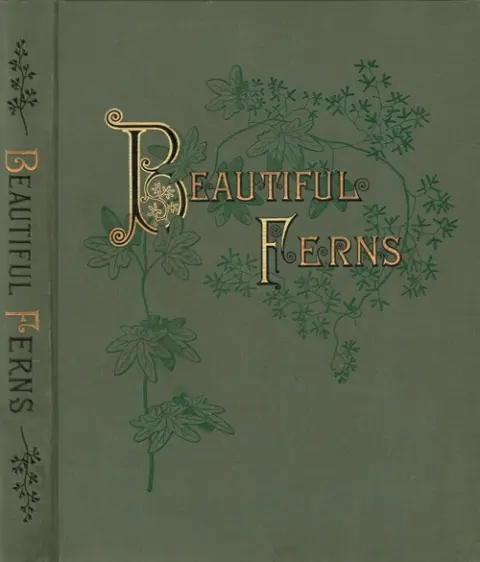
THE CLASSIC COLLECTION · 1881
"Beautiful Ferns" by Daniel Cady Eaton is a scientific publication written in the late 19th century. This work focuses on describing a wide variety of ferns, showcasing original water-color drawings, and providing detailed botanical descriptions alongside the illustrated species. The book serves as both a reference guide for ferns found in North America and a visual celebration of their beauty. The opening of the book introduces the reader to a selection of ferns, beginning with the American Maiden-Hair, which is characterized by its graceful fronds and growing habitat in rich, moist woods. Eaton provides a thorough botanical description, including the fern's root structure, frond characteristics, and geographical distribution. The text emphasizes both the aesthetic appeal and the scientific importance of these plants, which are illustrated in vibrant watercolors, undergoing meticulous descriptions that highlight their unique features and natural environments.
Introduction adapted from the source catalogue; source summaries may be automatically generated.
Free to read · English · 15,100 words · No account needed
MAKE TIME FOR A GOOD BOOK
On by default. Untick to stop anonymous reading totals. Each page counts after 10 seconds in view. How this works.
Anonymous counting is on unless you have switched it off.
Cheilanthes tomentosa:—Root-stock short, chaffy with glossy subulate scales; stalks tufted, four to eight inches long, erect, rather stout, clothed with soft woolly pale-ferruginous hairs, intermixed with others which are flattened and decidedly paleaceous; fronds eight to fifteen inches long, oblong-lanceolate, webby-tomentose with slender brownish-white obscurely articulated hairs, especially beneath, tripinnate; primary and secondary pinnæ oblong or ovate-oblong; ultimate pinnules closely placed, but distinct, roundish-obovate, sessile, or adnate to the tertiary rachis, one-half to three-fourths of a line long, the terminal ones twice longer; involucres whitish, continuous round the pinnule and very narrow.
Cheilanthes tomentosa, Link, “Hort. Berol., ii., p. 42.”—Fil. Hort. Berol., p. 65.—Kunze, in Sill. Journ., July, 1848, p. 87; in Linnæa, xxiii., p. 245.—Gray, Manual, ed. ii., p. 592.—Mettenius, Fil. Hort. Lips., p. 50; Cheilanthes, p. 37.—Eaton, in Chapman’s Flora, p. 590; Ferns of the South-West, p. 314.—Baker, Syn. Fil., p. 140.—Williamson, Ferns of Kentucky, p. 49, t. xi.
Myriopteris tomentosa, Fée, Gen. Fil., p. 149, t. xii., A., f. 2 (a pinnule).—Fournier, Pl. Mex., Crypt., p. 125 (species exclusa).
Notholæna tomentosa, J. Smith.
Cheilanthes Bradburii, Hooker, Sp. Fil., ii., p. 97, t. cix., B.—Mettenius, Cheilanthes, p. 37.
Hab.—Sandstone rocks along the French Broad River, in North Carolina and Eastern Tennessee, Professor Gray, Mr. Canby, Rev. D. R. Shoop, Professor Bradley, etc. Texas, Lindheimer, No. 743. Mountains of Virginia (?) and Kentucky, according to Gray’s Manual, but Mr. Williamson has hitherto failed to find it in the last named State. The Kew herbarium contains, besides Lindheimer’s plant, a very imperfect specimen marked “Manitou Rocks, 250 miles up the Missouri, Bradbury,” and good specimens from Texas collected by Drummond. Kunze states that it was raised [at the Leipzig garden?] from Mexican spores, and that Rugel collected a few specimens in North Carolina; but Fournier rejects it as a Mexican species.
Description:—This is decidedly the largest plant among all our North American species of Cheilanthes, some of the tallest specimens measuring nearly two feet in total length. The root-stock is short, and disposed to branch. It is thickly clad with fine subulate chaff, many of the scales with a dark and rigid midnerve, and others lighter-colored and without midnerve. The plant evidently grows in dense masses. The stalks are clustered, each root-stock sending up a large number of them. They are rigid, wiry, terete and covered with grayish-tawny spreading soft woolly hairs, intermixed with a few which are broader and decidedly paleaceous, especially towards the base. The section is round, and shows a firm exterior sclerenchymatous sheath, within which is a broad circle of brownish parenchyma, and in the middle a single fibro-vascular bundle obtusely triangular in shape, but with the sides slightly hollowed in.
Your reading position is saved on this browser. Take it to another device with a library code. Reading pages adapt to text, rather than matching a printed edition.
BEHIND THE BOOK
This eBook is for the use of anyone anywhere in the United States and most other parts of the world at no cost and with almost no restrictions whatsoever. You may copy it, give it away or re-use it under the terms of the Project Gutenberg License included with this eBook or online at www.gutenberg.org. If you are not located in the United States, you will have to check the laws of the country where you are located before using this eBook. Read the source licence.
The original source file, including credits and licence, is retained by this library. Request an original-format copy at no charge. Please include the book title and Project Gutenberg identifier #45110.
KEEP YOUR CURIOSITY GOING
John Muir

Asa Gray
Asa Gray

Florence Nightingale
Elizabeth Robins Pennell
Denison Olmsted