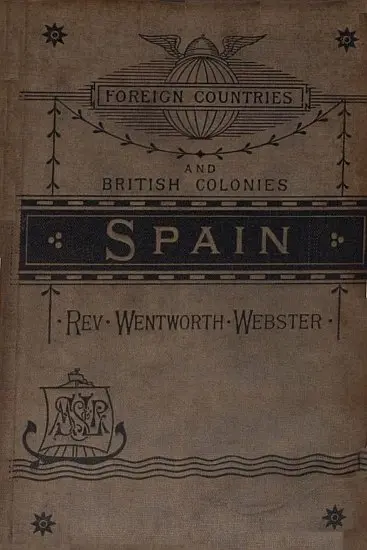
Spain
Wentworth Webster
THE CLASSIC COLLECTION · 1877
"Basque Legends; With an Essay on the Basque Language" by Wentworth Webster is a collection of traditional tales and folklore from the Basque region, written in the late 19th century. The book explores the unique mythology and cultural narratives of the Basques, including legendary creatures such as the Tartaro and the Heren-Suge, as well as various animal fables. It offers an intriguing look into the Basque societal values and linguistic elements, making it a valuable resource for anthropology and folklore enthusiasts. At the start of the work, the introduction emphasizes the significance of studying comparative mythology and highlights the Basque people’s distinct cultural heritage, characterized by their unwritten language and rich oral traditions. The opening portion sets the stage for the stories to come, revealing how these legends—believed to represent ancient truths—are recounted by Basque peasants during communal activities. The narratives intertwine historical influences and local beliefs, depicting characters like the one-eyed Tartaro and heroic figures enmeshed in quests and adventures, illustrating themes of cleverness, survival, and the interplay of the familiar with the supernatural.
Introduction adapted from the source catalogue; source summaries may be automatically generated.
Free to read · English · 96,186 words · No account needed
MAKE TIME FOR A GOOD BOOK
On by default. Untick to stop anonymous reading totals. Each page counts after 10 seconds in view. How this works.
Anonymous counting is on unless you have switched it off.
"I, too, must see this spinster that you have there." And he began
to go there.
And his mother said to him,
"But why must you see her?"
"I wish to see her."
He went to the kitchen, and in his presence she used her silk
handkerchief.
He said to her,
"Show me that."
She said to him,
"It is too dirty to put into your hands, sir."
The gentleman says to her,
"I wish to see it, and show it to me."
(Then) he recognised the young girl. She showed him (too) the distaff
and spindle.
At table, when everybody was engaged telling stories, this king said:
"I also have a story to tell."
Everybody was silent, and turned to look at him, and he said:
"Formerly, I had a key to a chest of drawers, and I lost it, and had a new one made. (After that, I found the old one.)"
And he turned to his wife:
"Should I use the old one or the new one?"
And she replied:
"If the first was a good one, why should you make use of the new one?"
Then he gave her this answer:
"Formerly, I had a wife, and now I have taken you. I leave you, and take the former one. Do you go off, then, to your own house."
Gagna-haurra Hirigaray.
(Learnt at Guethary.)
For the version of the Heren-Suge tales which most closely approaches the Gaelic, see below, "Keltic Legends," "The Fisherman and his Sons," p. 87.
We give two stories as specimens of animal tales, which are neither allegories, nor fables, and still less satires. The reader must remember the phrase, "This happened when animals and all things could talk." So thoroughly is this believed, that the first tale of this class recited to us completely puzzled us. The animals are in them placed so fully on a footing with human beings--not in the least as our "poor relations," but rather as sharper-witted, and quite as happy and well off as ourselves--that it is difficult at times to determine whether it is the beast or the man who is the speaker.
Of the latter part of our first story we have heard many variations. In one given by M. Cerquand, p. 29, note, [36] the fox is represented by Basa-Jauna; in a version from Baigorry, by the Tartaro; but in three others, from separate localities, he is a fox. The first two truths are the same in all the versions. In that here given, the fun is heightened by the fox talking and lisping throughout like a little child. All these versions we take to be merely fragments of a much longer story.
Your reading position is saved on this browser. Take it to another device with a library code. Reading pages adapt to text, rather than matching a printed edition.
Wentworth Webster
BEHIND THE BOOK
This eBook is for the use of anyone anywhere in the United States and most other parts of the world at no cost and with almost no restrictions whatsoever. You may copy it, give it away or re-use it under the terms of the Project Gutenberg License included with this eBook or online at www.gutenberg.org. If you are not located in the United States, you will have to check the laws of the country where you are located before using this eBook. Read the source licence.
The original source file, including credits and licence, is retained by this library. Request an original-format copy at no charge. Please include the book title and Project Gutenberg identifier #34902.
KEEP YOUR CURIOSITY GOING

Maurice Baring
Francis Greenleaf Allinson & Anne C. E. (Anne Crosby Emery) Allinson
Stuart Dodgson Collingwood
Percy Keese Fitzhugh
Mary Macleod & Edmund Spenser

Cooke Don-Carlos