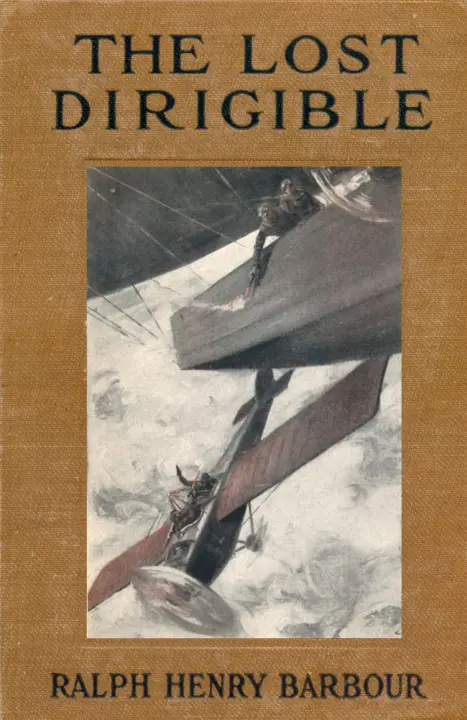
The lost dirigible
Ralph Henry Barbour
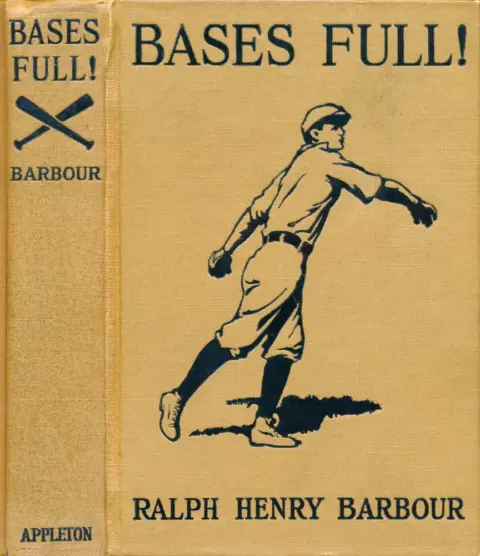
THE CLASSIC COLLECTION · 1925
"Bases full!" by Ralph Henry Barbour is a young adult sports novel written in the early 20th century. Set at the prep school of Wyndham, it follows three friends—Clif Bingham, Tom Kemble, and the wheelchair-using Loring Deane—through a season that pivots from a fierce hockey rivalry with Wolcott to the trials of making the baseball team. The focus is on teamwork, perseverance, and school spirit, with coaches, tryouts, and friendships shaping the boys’ fortunes on and off the field. The opening of the novel plunges into a tied hockey finale against Wolcott, where substitute wing Clif is sent in, shadows the star Houston, and scrambles in the winning goal. It then introduces the “Triumvirate”—Clif, brash Tom, and bright, resilient Loring (assisted by his dignified attendant, Wattles)—and shifts to early baseball preparations: Coach Connover and Captain Hurry Leland set standards, a tough schedule looms, and indoor drills give way to chilly outdoor work. A second team forms under the sharp-eyed “Tusks” Wadleigh as Clif and Tom battle for spots, struggle with batting form, and learn fundamentals; a quiet scene with Clif’s visiting father and a glimpse of a Mr. Cooper add texture. Tom later confides his absent-father past, and Loring rallies the trio with a “work and will” pact to will their way onto the team, as the first nine splits its first games and the boys’ baseball quest truly begins.
Introduction adapted from the source catalogue; source summaries may be automatically generated.
Free to read · English · 67,073 words · No account needed
MAKE TIME FOR A GOOD BOOK
On by default. Untick to stop anonymous reading totals. Each page counts after 10 seconds in view. How this works.
Anonymous counting is on unless you have switched it off.
“I’ll say I don’t,” concurred Tom heartily. “Of course some of the old-timers weren’t so punk. That guy Dumas, for instance. And Shakespeare. Shakespeare’s stuff has a lot of punch generally, but you’ve got to buckle down to it. Gosh, they must have had a heap of time in those days, the way they spread the words around!”
“Probably got paid by the word,” suggested Clif.
“Some of them must have made a pile of dough, then! Alick would have been rich, too, if he’d lived in Shakespeare’s time. I’ll bet that, at five cents a word, he touched me for a hundred dollars this afternoon!”
“Why don’t you study your English Lit,” asked Clif, “and not have to listen to Mr. Wyatt’s homilies?”
“Study! Heck, I do study! I read all the stuff he tells us to, but it doesn’t mean anything. I had a hunch the first time I set eyes on that chap that I wasn’t going to like him.”
“That’s a whopper,” said Clif. “You do like him, Tom. What you don’t like is his line.”
“Same thing,” grumbled Tom. “I wish I’d been born a Frenchman or a Slovak or――or something so I wouldn’t have to dig through all this rot.”
“Well, you take my advice, Tom, and get cozy with Alick before you try baseball. Remember what happened last November!”
“I’m not likely to forget,” answered the other moodily. “That doddering Ancient Mariner almost queered me for football. If it hadn’t been for you fellows――” Tom stopped and shook his head eloquently. “That experience absolutely soured me on sailors, and I’ve never been able to cheer for the president since.”
“The president?” asked Loring, puzzled.
“He’s got the name wrong,” laughed Clif. “Coleridge, Tom, and not Coolidge wrote The Ancient Mariner.”
“Coleridge? Well, I guess it’s the same name, only spelled differently.”
“What I don’t understand,” said Clif, “is how you manage to get good marks in your other courses and fall down flat in English.”
“Because there’s some sense to the other stuff, you poor prune! Any one can see that he’s got to know math and history and――well, yes, even Latin, although I’m not strong for it. But, man to man, Loring, what’s it going to get me to know about a loony old guy like that ‘Ancient Mariner’ or read this Sketch Book twaddle by Irving? Why didn’t he stick to acting instead of――”
“Tom, you’ll be the death of me yet!” gasped Clif.
Your reading position is saved on this browser. Take it to another device with a library code. Reading pages adapt to text, rather than matching a printed edition.
Ralph Henry Barbour
Ralph Henry Barbour
Ralph Henry Barbour
Ralph Henry Barbour
BEHIND THE BOOK
This eBook is for the use of anyone anywhere in the United States and most other parts of the world at no cost and with almost no restrictions whatsoever. You may copy it, give it away or re-use it under the terms of the Project Gutenberg License included with this eBook or online at www.gutenberg.org. If you are not located in the United States, you will have to check the laws of the country where you are located before using this eBook. Read the source licence.
The original source file, including credits and licence, is retained by this library. Request an original-format copy at no charge. Please include the book title and Project Gutenberg identifier #76800.
KEEP YOUR CURIOSITY GOING
Coulson Kernahan

Maurice Baring
Frances Wright
Cécile Tormay

Frederic Jesup Stimson

W. H. P. (William Henry Pope) Jarvis