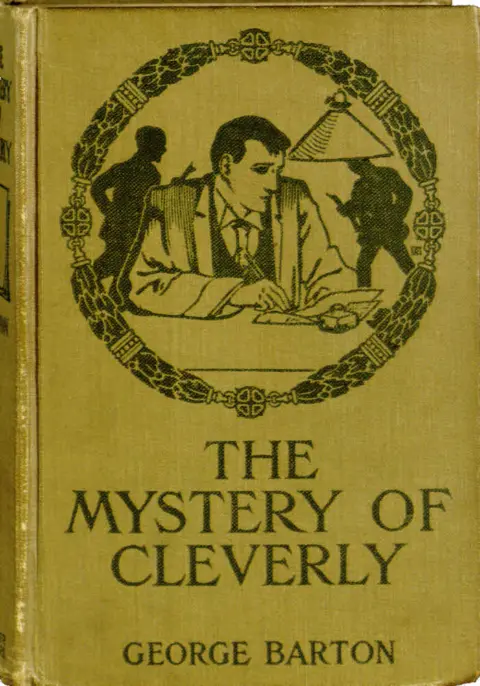
The Mystery of Cleverly: A Story for Boys
George Barton
THE CLASSIC COLLECTION · 1912
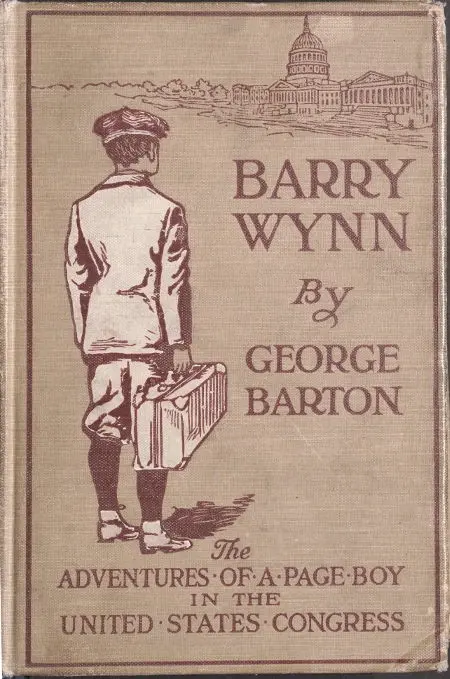
"Barry Wynn; Or, The Adventures of a Page Boy in the United States Congress" by George Barton is a novel written in the early 20th century. The story revolves around a young boy named Barry Wynn, who has just been appointed as a page in the U.S. House of Representatives and is brimming with excitement and ambition as he steps into the world of politics and governance. The book explores Barry's experiences in Washington, including his interactions with political figures and the challenges he faces as he learns the workings of congress. The opening of the novel introduces Barry as he embarks on his journey to Washington, filled with anticipation and naivety. He receives an important package to deliver to Congressman Carlton and begins to understand the significance of his new role. Upon arriving in the Capitol, Barry is struck by the grandeur of the building and its history, but he also faces the realities of being a page boy, including moments of embarrassment and the need to navigate a new environment. His initial encounters with other pages and Congressman Carlton set the foundation for his development and the adventures that lie ahead in the bustling political landscape.
Introduction adapted from the source catalogue; source summaries may be automatically generated.
Free to read · English · 56,288 words · No account needed
MAKE TIME FOR A GOOD BOOK
On by default. Untick to stop anonymous reading totals. Each page counts after 10 seconds in view. How this works.
Anonymous counting is on unless you have switched it off.
But the Congressman was already out of sight. Before noon that day a statement appeared, over the signature of Mr. Hartman, in which he disclaimed all further interest in the legislation affecting Green Island. This added fuel to the fire. Before the Committee met that afternoon nearly everyone in and around the Capitol appeared to be interested in the fight over the Naval Repair Station.
Carlton was on hand very early. Prior to the meeting he held several whispered conversations with Felix Conway. He was here, there and everywhere. There was an air of aggressiveness about him that boded no good for the opposition.
"He seems ready for the battle," suggested one of the Committeemen to
another.
"Yes," was the reply. "He's ready to fight at the drop of the hat."
The Committee was called to order, and the clerk read the Green Island amendment as offered by Congressman Collins. The moment he finished Jesse Hudson got the floor:
"I move that the amendment be adopted," he said.
Carlton was on his feet instantly.
"I think," he said, in purring tones, "that the gentleman has not had the opportunity of reading the articles that appeared in this morning's newspapers, otherwise I'm sure he would not favor this legislation."
"I've no time to read sensational newspapers," snapped Hudson.
"Then I'll have to enlighten the gentleman," said Carlton, still very
polite.
"How?"
Instead of answering Hudson, the man from Maine looked about him
inquiringly:
"Is Mr. William Douglass in the room?" he called.
In response a square-jawed man advanced to the desk of the Chairman.
"Gentlemen," said Carlton, looking about him smilingly, "Mr. Douglass lives on Green Island, and with your permission I want to ask him one or two questions about the Green Island site."
"This seems irregular," protested Hudson.
"It may seem irregular," was the retort, "but you'll find it will be all
right."
"What do you hope to demonstrate through Mr. Douglass?" asked the
Chairman.
"That this whole Green Island proposition is a land speculation scheme," retorted the Congressman sternly.
The members all looked up at this grave statement. Everyone was paying
the closest attention.
"Now, Mr. Douglass," said Carlton, "you're well acquainted with this
property, are you not?"
"I know every inch of the ground."
"Do you know the owners of it?"
"I did know the old owners."
"What do you mean by the old owners?"
"I mean that the entire property has changed hands during the last few
months."
"Since it first became known that the Government intended to build a
Naval Repair Station?"
"Exactly."
Your reading position is saved on this browser. Take it to another device with a library code. Reading pages adapt to text, rather than matching a printed edition.
George Barton
George Barton
George Barton
BEHIND THE BOOK
This eBook is for the use of anyone anywhere in the United States and most other parts of the world at no cost and with almost no restrictions whatsoever. You may copy it, give it away or re-use it under the terms of the Project Gutenberg License included with this eBook or online at www.gutenberg.org. If you are not located in the United States, you will have to check the laws of the country where you are located before using this eBook. Read the source licence.
The original source file, including credits and licence, is retained by this library. Request an original-format copy at no charge. Please include the book title and Project Gutenberg identifier #57137.
KEEP YOUR CURIOSITY GOING
Coulson Kernahan

Maurice Baring
Frances Wright
Cécile Tormay

Frederic Jesup Stimson

W. H. P. (William Henry Pope) Jarvis