The Book of the Native
Charles G. D., Sir Roberts
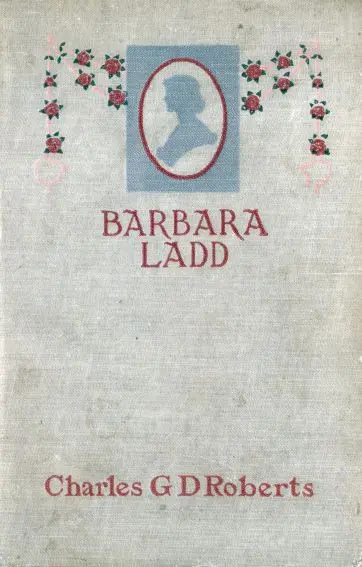
THE CLASSIC COLLECTION · 1902
"Barbara Ladd" by Charles G. D. Roberts is a coming-of-age novel written in the late 19th century. The story revolves around a spirited fourteen-year-old girl named Barbara Ladd, who, feeling misunderstood and constrained by her strict aunt in Second Westings, decides to run away to her more adventurous uncle in Stratford. Through her journey, the novel explores themes of individuality, freedom, and the struggle against societal expectations. The opening of the novel introduces readers to Barbara as she prepares to escape the confines of her home. The narrative paints a vivid picture of dawn as she navigates through nature, carrying her cherished kittens in a basket and a soft bundle in her arms. Her sense of adventure is palpable; she interacts with her environment and her dog, Keep, imbued with a combination of excitement and apprehension. With a detailed description of her surroundings and her emotional state, the scene sets the tone for Barbara's audacious venture, establishing her character as a bold and emotionally complex young girl determined to seek her own path.
Introduction adapted from the source catalogue; source summaries may be automatically generated.
Free to read · English · 83,764 words · No account needed
MAKE TIME FOR A GOOD BOOK
On by default. Untick to stop anonymous reading totals. Each page counts after 10 seconds in view. How this works.
Anonymous counting is on unless you have switched it off.
"You know all about those," she cried, reproachfully, "because you have taken the trouble to learn about them, so you can kill them!"
"It does seem a pity to kill such lovely, interesting creatures," acknowledged the lad, thoughtfully. "But what can we do? Surely they were given to us for our use. Providence intended them for our food. It must be right for us to kill them!"
"Of course," assented Barbara, unequipped with any philosophy which might have enabled her to combat this argument. "Of course, it is right for us to eat them. But you, Robert, you take pleasure in killing them. I don't quite like you for that!"
Robert's face grew more and more thoughtful, for this was to him a hard saying, indeed, and he had no answer ready. He was a skilled shot and a keen huntsman.
"I could not understand a man not taking pleasure in the chase," said he, "but I suppose if he got to know the wild things intimately, and love them, as you do, he could no longer bear to kill them, sweet lady!"
"I'm going to teach you to love them all, Robert," said Barbara, easily
confident in her powers.
"I am taught already," he began, with the little elaborate air which Barbara liked. Then he changed his mind quickly. "No, I don't mean that at all! I shall need a great many lessons; but I shall learn at last, if you teach me faithfully!"
Barbara laughed, a clear, ringing laugh, that astonished the lurking weasel and made the red squirrel highly indignant.
"You don't mean anything at all you say, Robert. You just like to say
pretty things!"
Which was wantonly unjust, as Barbara knew, and as her very gracious
glance acknowledged.
A few rods farther on, Barbara suddenly drew rein, wheeled her horse about, and held out her hand.
"Now I must go home, Robert. I think I can trust you to find the rest of the way alone! Don't forget what I've told you. And don't forget to come and see Uncle Bob, the very first of next week. And thank you so much for bringing back the canoe."
Robert had promptly taken the little brown hand, and kissed it with somewhat more fervour than form required, till Barbara, without any sign of displeasure, snatched it away. Then, instead of saying good-bye, he wheeled his big sorrel. "You must allow me the honour of riding back with you, Mistress Barbara," said he.
"No, indeed!" cried the girl. "I cannot think of letting you do any
such thing. It will be late enough as it is when you get to Gault
House!"
Your reading position is saved on this browser. Take it to another device with a library code. Reading pages adapt to text, rather than matching a printed edition.
Charles G. D., Sir Roberts
Charles G. D., Sir Roberts
Charles G. D., Sir Roberts
Charles G. D., Sir Roberts
BEHIND THE BOOK
This eBook is for the use of anyone anywhere in the United States and most other parts of the world at no cost and with almost no restrictions whatsoever. You may copy it, give it away or re-use it under the terms of the Project Gutenberg License included with this eBook or online at www.gutenberg.org. If you are not located in the United States, you will have to check the laws of the country where you are located before using this eBook. Read the source licence.
The original source file, including credits and licence, is retained by this library. Request an original-format copy at no charge. Please include the book title and Project Gutenberg identifier #34270.
KEEP YOUR CURIOSITY GOING
Cécile Tormay

Moritz Busch
Coulson Kernahan
John L. Ransom

Maurice Baring
Frances Wright