The Book of the Native
Charles G. D., Sir Roberts
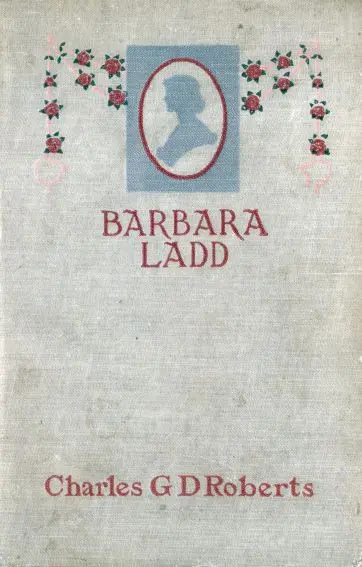
THE CLASSIC COLLECTION · 1902
"Barbara Ladd" by Charles G. D. Roberts is a coming-of-age novel written in the late 19th century. The story revolves around a spirited fourteen-year-old girl named Barbara Ladd, who, feeling misunderstood and constrained by her strict aunt in Second Westings, decides to run away to her more adventurous uncle in Stratford. Through her journey, the novel explores themes of individuality, freedom, and the struggle against societal expectations. The opening of the novel introduces readers to Barbara as she prepares to escape the confines of her home. The narrative paints a vivid picture of dawn as she navigates through nature, carrying her cherished kittens in a basket and a soft bundle in her arms. Her sense of adventure is palpable; she interacts with her environment and her dog, Keep, imbued with a combination of excitement and apprehension. With a detailed description of her surroundings and her emotional state, the scene sets the tone for Barbara's audacious venture, establishing her character as a bold and emotionally complex young girl determined to seek her own path.
Introduction adapted from the source catalogue; source summaries may be automatically generated.
Free to read · English · 83,764 words · No account needed
MAKE TIME FOR A GOOD BOOK
On by default. Untick to stop anonymous reading totals. Each page counts after 10 seconds in view. How this works.
Anonymous counting is on unless you have switched it off.
"Your niece,
"BARBARA LADD."
She looked up, proud, but a little anxious, and eager for commendation. Old Debby rose to the circumstances.
"Law, how you kin write, Miss Barby," she said, with a nod and chuckle. "The parson nor Doctor Jim couldn't 'a' done no better. I reckon Aunt Hitty'll understand ye now, a sight better'n she's given to understand folks as don't jest think as she do. Give me the letter!"
Barbara's face flashed radiantly. With a sudden impulse she sprang up, skipped ashore, thrust the letter into the old woman's hand, and cried in a high key:
"Oh, I'm so hungry, Debby! I can't stop a minute, but do give me some breakfast, there's a dear. I was too excited to eat before I left. And do give my kittens a drop of milk. I've got nothing but cold meat for them to eat on the journey, poor babies!"
Without waiting for a reply, she skipped back to the canoe, grabbed up the covered basket, and flew up the path to the cottage; while the old woman limped after her with astonishing speed, chuckling and wheezing out a disjointed invitation. She followed Barbara into the cabin, shutting the door to keep out the puppy, who whined in an injured voice upon the stoop. Then, thinking of the kittens first,--and thereby showing her deep knowledge of the kittens' mistress,--she set down a bowl of milk in the middle of the floor; and Barbara, uncovering the basket, lovingly lifted out three plump, moon-faced little cats, a yellow-and-white, a black-and-white, and a gray-and-white. While the three, with happy tails erect, lapped at the milk, Barbara made haste to devour thick slices of brown bread and butter, spread to a luscious depth with moist, sweet-scented maple sugar. She had no time to talk. She sat on the edge of the big four-post bed, swinging her slim legs, and kicking her heels against the dingy, gay patchwork quilt whose ample folds hung to the floor. The hidden space under the bed was a place of piquant mystery to Barbara, containing, as it did, boxes on boxes of many-coloured rags, out of which, earlier in the season, old Debby would bring forth precious goose-eggs, duck-eggs, turkey-eggs, and the specially prized eggs of certain pet and prolific hens, gathered against the time of setting. While Barbara broke her fast, old Debby refrained from questions, having shrewdly grasped the whole situation. She knew that Mr. Robert Glenowen, Barbara's uncle, had lately come north on an errand which nobody seemed to understand, and had taken a house at Stratford. Of a nomadic spirit in her younger days, Debby had moved much here and there throughout her native Connecticut, and over the bordering counties of New York and Massachusetts; and she had not only a rough idea of the distance from Second Westings to Stratford, but a very vivid realisation of the perils of the journey which Barbara, in her innocence, had so confidently undertaken. Till she saw that the appetites of Barbara and the kittens were nearing satisfaction, she talked with a sort of casual enthusiasm of her luck with the chickens, the goslings, the young turkeys, and depicted the prowess of an old speckled hen which had engaged and defeated a marauding hawk. Then, when at last Barbara sprang up, bundled the satiated kittens into the basket, and turned to her for a fond and final good-bye, the crafty old dame broke into passionate farewells. She kissed the child, and even wept over her, till Barbara's self-centred exaltation was very near collapse.
Your reading position is saved on this browser. Take it to another device with a library code. Reading pages adapt to text, rather than matching a printed edition.
Charles G. D., Sir Roberts
Charles G. D., Sir Roberts
Charles G. D., Sir Roberts
Charles G. D., Sir Roberts
BEHIND THE BOOK
This eBook is for the use of anyone anywhere in the United States and most other parts of the world at no cost and with almost no restrictions whatsoever. You may copy it, give it away or re-use it under the terms of the Project Gutenberg License included with this eBook or online at www.gutenberg.org. If you are not located in the United States, you will have to check the laws of the country where you are located before using this eBook. Read the source licence.
The original source file, including credits and licence, is retained by this library. Request an original-format copy at no charge. Please include the book title and Project Gutenberg identifier #34270.
KEEP YOUR CURIOSITY GOING
Cécile Tormay

Moritz Busch
Coulson Kernahan
John L. Ransom

Maurice Baring
Frances Wright