The Book of the Native
Charles G. D., Sir Roberts
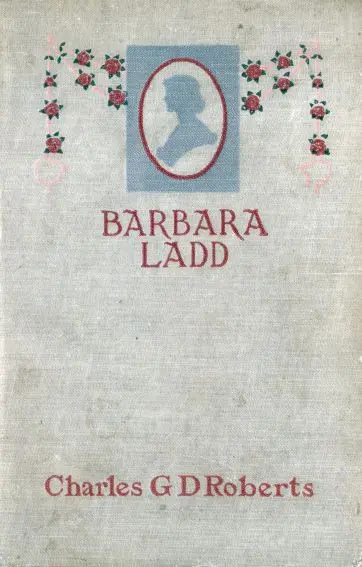
THE CLASSIC COLLECTION · 1902
"Barbara Ladd" by Charles G. D. Roberts is a coming-of-age novel written in the late 19th century. The story revolves around a spirited fourteen-year-old girl named Barbara Ladd, who, feeling misunderstood and constrained by her strict aunt in Second Westings, decides to run away to her more adventurous uncle in Stratford. Through her journey, the novel explores themes of individuality, freedom, and the struggle against societal expectations. The opening of the novel introduces readers to Barbara as she prepares to escape the confines of her home. The narrative paints a vivid picture of dawn as she navigates through nature, carrying her cherished kittens in a basket and a soft bundle in her arms. Her sense of adventure is palpable; she interacts with her environment and her dog, Keep, imbued with a combination of excitement and apprehension. With a detailed description of her surroundings and her emotional state, the scene sets the tone for Barbara's audacious venture, establishing her character as a bold and emotionally complex young girl determined to seek her own path.
Introduction adapted from the source catalogue; source summaries may be automatically generated.
Free to read · English · 83,764 words · No account needed
MAKE TIME FOR A GOOD BOOK
On by default. Untick to stop anonymous reading totals. Each page counts after 10 seconds in view. How this works.
Anonymous counting is on unless you have switched it off.
"Of course, I'll always trust you now, Aunt Hitty, since I've seen your lovely heart!" exclaimed Barbara, with flattering fervour.
"I have failed to realise," continued Mistress Mehitable, "that you are no longer a little girl, but very nearly a grown woman. Many girls are grown women at your age, Barbara, so that I have decided on something that will surprise you. From this time forward, I shift my responsibility for you largely to your own shoulders, and shall hope to be more your friend than your guardian. I hand you over to yourself, Barbara. You must learn to discipline yourself!"
Barbara slipped down to the floor, and leaned against her aunt's knee, her dark, small face grown very thoughtful.
"All I dare say, Aunt Hitty," she said, slowly, weighing her words with unwonted care, "is that I'll try with all my might. But I warn you that you are leaving me in very bad hands. I want to be good, but sometimes I can't help being bad!"
"Well," said Mistress Mehitable, with a curious reflex of Doctor John's humour, "you'll have to punish yourself after this. I warn you that you must not look to me for punishment after this!"
Barbara's eyes got very wide, and danced; and she gave a little shriek of delight, such as that with which she was wont to greet Doctor John's whimsical sallies.
"Why, Aunt Hitty," she cried, clapping her hands, "you said that just
like Doctor John!"
Mistress Mehitable flushed faintly, and laughed like a girl. She stooped over and kissed Barbara fairly on the mouth. Then she arose rather hurriedly.
"I have often wished I could make myself in many ways more like those two great-hearted gentlemen!" she said.
Barbara remained sitting upon the floor. Her eyes narrowed thoughtfully as she stared out of the window.
"They are perfectly dear," she agreed, without reservation, "Isn't it splendid that they love us so, Aunt Hitty?"
"I'm going to the still-room now," said Mistress Mehitable, moving toward the door. "I put in the bergamot just before breakfast."
"I'll come and help you in a little while,--dear!" said Barbara, suddenly realising the changed relations, and suddenly making practical application of it. That caressing, equal, half-protecting "dear" sounded strange to Mistress Mehitable. It gave her something of a shock, yet she was not sure she didn't like it. It made her feel less alone than of old. She appeared not to notice it, however, merely saying before she vanished:
Your reading position is saved on this browser. Take it to another device with a library code. Reading pages adapt to text, rather than matching a printed edition.
Charles G. D., Sir Roberts
Charles G. D., Sir Roberts
Charles G. D., Sir Roberts
Charles G. D., Sir Roberts
BEHIND THE BOOK
This eBook is for the use of anyone anywhere in the United States and most other parts of the world at no cost and with almost no restrictions whatsoever. You may copy it, give it away or re-use it under the terms of the Project Gutenberg License included with this eBook or online at www.gutenberg.org. If you are not located in the United States, you will have to check the laws of the country where you are located before using this eBook. Read the source licence.
The original source file, including credits and licence, is retained by this library. Request an original-format copy at no charge. Please include the book title and Project Gutenberg identifier #34270.
KEEP YOUR CURIOSITY GOING
Cécile Tormay

Moritz Busch
Coulson Kernahan
John L. Ransom

Maurice Baring
Frances Wright