The Book of the Native
Charles G. D., Sir Roberts
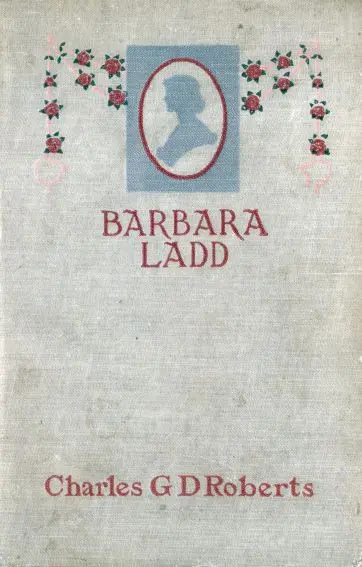
THE CLASSIC COLLECTION · 1902
"Barbara Ladd" by Charles G. D. Roberts is a coming-of-age novel written in the late 19th century. The story revolves around a spirited fourteen-year-old girl named Barbara Ladd, who, feeling misunderstood and constrained by her strict aunt in Second Westings, decides to run away to her more adventurous uncle in Stratford. Through her journey, the novel explores themes of individuality, freedom, and the struggle against societal expectations. The opening of the novel introduces readers to Barbara as she prepares to escape the confines of her home. The narrative paints a vivid picture of dawn as she navigates through nature, carrying her cherished kittens in a basket and a soft bundle in her arms. Her sense of adventure is palpable; she interacts with her environment and her dog, Keep, imbued with a combination of excitement and apprehension. With a detailed description of her surroundings and her emotional state, the scene sets the tone for Barbara's audacious venture, establishing her character as a bold and emotionally complex young girl determined to seek her own path.
Introduction adapted from the source catalogue; source summaries may be automatically generated.
Free to read · English · 83,764 words · No account needed
MAKE TIME FOR A GOOD BOOK
On by default. Untick to stop anonymous reading totals. Each page counts after 10 seconds in view. How this works.
Anonymous counting is on unless you have switched it off.
"Go on paddling," commanded Barbara. "Did you not promise you would obey me? I know what it means!" And she laughed, half maliciously. The boy looked worried,--and it was great fun to bring that worried look to his face.
He resumed his paddling, though much less vigorously, while she evaded his gaze, and a wilful smile clung about her lips. The current was swift, and they had soon left the imposing white columns of Gault House far behind. A tremendous sense of responsibility came over the boy, and again he stopped paddling.
"Oh, perhaps you are tired!" suggested Barbara, coolly. "Give me the paddle, and I'll set you ashore right here."
"I said just now it was none of my business," said he, gravely, appealingly, "but, do you know, I think perhaps it ought to be my business! I ought to ask!"
He retained the paddle, but turned the canoe's head up-stream and held
it steady.
"What do you mean?" demanded Barbara, angrily. "Give me the paddle at
once!"
Still he made no motion to obey.
"Do you realise," he asked, "that it's now near sundown,--that it will take till dark to work back against the current to where I met you,--that there's no place near here where a lady can rest for the night--"
"I don't care," interrupted Barbara hotly, ready to cry with anger and anxiety; "I'm going to travel all night. I'm going to the sea--to my uncle at Stratford! I just don't want you to interfere. Let me put you ashore at once!"
Robert was struck dumb with amazement. To the sea! This small girl, all alone! And evidently quite unacquainted with the perils of the river. It was superb pluck,--but it was wild, impossible folly. He did not know what to do. He turned the canoe toward shore, and presently found himself in quieter water, out of the current.
Observing his ready obedience, Barbara was mollified; but at the same time she was conscious of a sinking of the heart because he was going to leave her alone, when it would soon be dark. She had not considered, hitherto, this necessity of travelling in the dark. She made up her mind to tell the nice boy everything, and get him to advise her as to where she could stay for the night.
"I'm running away, you know, Master Gault," she said, sweetly, as if it were the most ordinary thing in the world.
"Are you at all acquainted with the river?" he asked, gently, without a trace of resentment for the way she had spoken to him a moment before.
"No!" confessed Barbara, in a very small voice, deprecatingly.
Your reading position is saved on this browser. Take it to another device with a library code. Reading pages adapt to text, rather than matching a printed edition.
Charles G. D., Sir Roberts
Charles G. D., Sir Roberts
Charles G. D., Sir Roberts
Charles G. D., Sir Roberts
BEHIND THE BOOK
This eBook is for the use of anyone anywhere in the United States and most other parts of the world at no cost and with almost no restrictions whatsoever. You may copy it, give it away or re-use it under the terms of the Project Gutenberg License included with this eBook or online at www.gutenberg.org. If you are not located in the United States, you will have to check the laws of the country where you are located before using this eBook. Read the source licence.
The original source file, including credits and licence, is retained by this library. Request an original-format copy at no charge. Please include the book title and Project Gutenberg identifier #34270.
KEEP YOUR CURIOSITY GOING
Cécile Tormay

Moritz Busch
Coulson Kernahan
John L. Ransom

Maurice Baring
Frances Wright