THE CLASSIC COLLECTION✦Nigeria and its tin fieldsCLASSIC FREE BOOKS
Nigeria and its tin fields
Albert Frederick Calvert
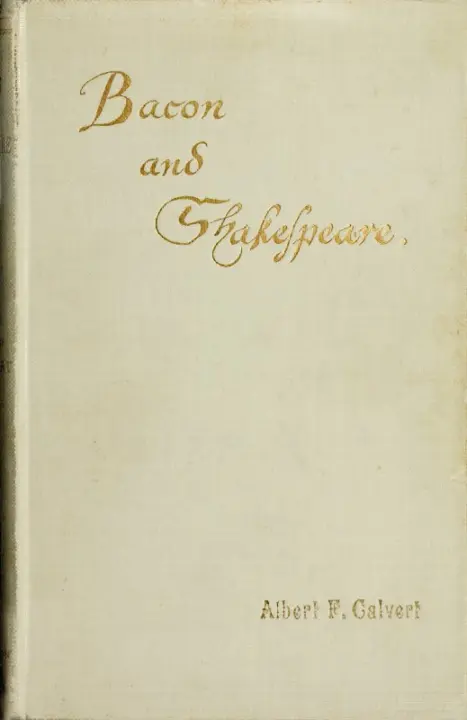
THE CLASSIC COLLECTION · 1902
"Bacon and Shakespeare" by Albert Frederick Calvert is a historical account written in the early 20th century. The work explores the controversial debate surrounding the authorship of William Shakespeare's plays and whether they were actually written by Francis Bacon. The book aims to challenge the claims made by supporters of Baconian theories and to reaffirm Shakespeare's position as the true author of the plays. The opening of the book sets the stage for a detailed examination of the Bacon-Shakespeare authorship controversy. Calvert expresses his skepticism about Baconianism, suggesting that it is based on misunderstandings and misrepresentations of both figures. He indicates that the book will offer evidence and arguments against the notion that Bacon wrote Shakespeare's works, portraying Bacon's character and actions as unworthy of the authorship attributed to him. Through this initial exposition, Calvert intends to equip readers with a clearer understanding of the nuances involved in this literary debate, emphasizing the distinct qualities that characterize both Bacon and Shakespeare.
Introduction adapted from the source catalogue; source summaries may be automatically generated.
Free to read · English · 37,416 words · No account needed
MAKE TIME FOR A GOOD BOOK
On by default. Untick to stop anonymous reading totals. Each page counts after 10 seconds in view. How this works.
Anonymous counting is on unless you have switched it off.
“So I were out of prison and kept sheep,
I should be merry as the day is long;
And so I should be here, but that I doubt
That Cecil practices more harm to me:
He is afraid of me, and I of him.”
But it is more than a surprise to learn that this hardy man of war is to be compelled by Bacon (Shakespeare aiding) to play young Arthur to the bitter end. After being surfeited with Francis Bacon’s choicest philosophy, the Lord Keeper arrives with a commission to deliver Essex to the jailers: “I will not reason what is meant thereby!”
It is impossible, without quoting the whole of this culminating passage, to convey a correct impression of the ludicrousness of the finale to this “marvel of literature,”--this play of “most thrilling interest and historical value.”
[Exit Keeper.]
First Jailer. Oh, he is bold, and blushes not at death.
Essex. Avaunt thou hateful villain, get thee gone!
First Jailer. There’s the great traitor.
Second Jailer. Ingrateful fox, ’tis he.
First Jailer. Bind fast his corky arms.
Essex. Help,--help,--help,--help! Here’s a man would murder me. Help,--help,--help! I will not struggle, I will stand stone still.
First Jailer. Bind him, I say.
Second Jailer. Hard, hard! O filthy traitor!
First Jailer. Give me the iron, I say, and bind him here: To this chair bind him.
Essex. Let me not be bound:
Alas, why need you be so boistrous rough?
O I am undone, O I am undone!
Do me no foul play, friend!
First Jailer. Read here, traitor.
Can you not read it? Is it not writ fair?
Essex. How now, foolish rheume; Must you, with hot irons, burn out both mine eyes? O Heaven, that there were but a moth in yours, A grain, a dust, a gnat, a wandering hair, Any annoyance in that precious sense: Then feeling what small things are boisterous there, Your vile intents must needs seem horrible. O spare mine eyes, though to no use but still to look on you! Lo, by my troth, the instrument is cold, And would not harm me--O men, if you will, Cut out my tongue, so that I may still keep Both mine eyes to see.
First Jailer. To see some mischief! See shall thou never: (fellow, hold the chair:) Upon these eyes of thine I’ll set my foot!
Essex. He that will think to live till he be old, Give me some help! O save me,--save me!--help! (They tear out one of his eyes.) Oh cruel! Oh God,--O God,--O God! my eyes are out! Oh, I am slain!
Your reading position is saved on this browser. Take it to another device with a library code. Reading pages adapt to text, rather than matching a printed edition.
Albert Frederick Calvert
Albert Frederick Calvert
Albert Frederick Calvert
Albert Frederick Calvert
BEHIND THE BOOK
This eBook is for the use of anyone anywhere in the United States and most other parts of the world at no cost and with almost no restrictions whatsoever. You may copy it, give it away or re-use it under the terms of the Project Gutenberg License included with this eBook or online at www.gutenberg.org. If you are not located in the United States, you will have to check the laws of the country where you are located before using this eBook. Read the source licence.
The original source file, including credits and licence, is retained by this library. Request an original-format copy at no charge. Please include the book title and Project Gutenberg identifier #49516.
KEEP YOUR CURIOSITY GOING
Cécile Tormay

Moritz Busch
John L. Ransom
Frances Wright
Cécile Tormay

Mabel Potter Daggett