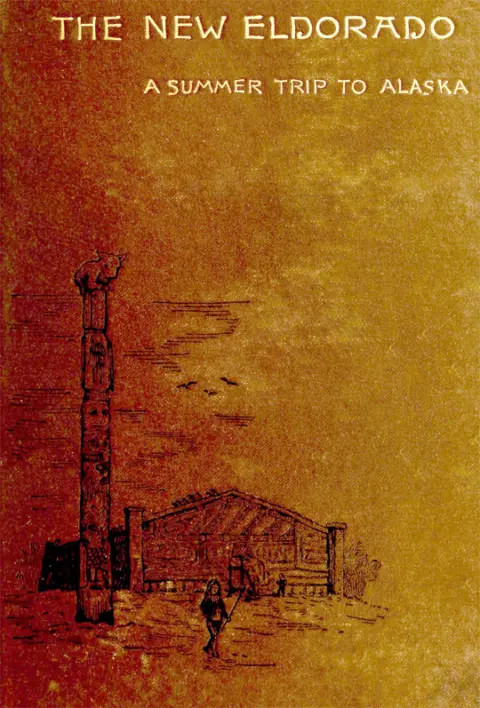
The New Eldorado: A Summer Journey to Alaska
Maturin M. (Maturin Murray) Ballou
THE CLASSIC COLLECTION · 1890
"Aztec Land" by Maturin M. Ballou is a travelogue written in the late 19th century. This work details the author's journey through Mexico, referred to as Aztec Land, exploring its rich history, culture, and landscapes. The book is likely aimed at readers interested in travel, history, and the complexities surrounding early Mexican civilization and its relation to European colonization. At the start of "Aztec Land," the author declares his intention to visit Mexico and describes his preparations for the journey, highlighting the organized travel experience he encounters with a group of fellow travelers. This journey promises to offer not just leisure but also a chance to explore the beautiful but complex narrative of Mexican history, moving through various significant locations and reflections on the Aztec civilization. Ballou emphasizes the rich cultural and historical fabric of Mexico, revealing a land steeped in tradition yet misunderstood by outsiders, laying the groundwork for his observations of the local people, geography, and sociopolitical issues encountered along the way.
Introduction adapted from the source catalogue; source summaries may be automatically generated.
Free to read · English · 94,619 words · No account needed
MAKE TIME FOR A GOOD BOOK
On by default. Untick to stop anonymous reading totals. Each page counts after 10 seconds in view. How this works.
Anonymous counting is on unless you have switched it off.
One never wearies of sitting upon the well-arranged benches of the paseo in the afternoon, and watching the motley throng of people driving, riding on horseback, or promenading: the ladies with piercing black eyes and glossy dark hair shrouded by lace mantillas; the dashing equestrians exhibiting all the gay paraphernalia of a Mexican horseman; stately vehicles drawn by two snow-white mules; tally-ho coaches conveying merry parties of American or English people; youthful aristocrats bestriding Lilliputian horses, followed by liveried servants; while here and there a mounted policeman in fancy uniform moves slowly by. In the line of pedestrians are well-dressed gentlemen in black broadcloth suits, wearing silk hats and sporting button-hole bouquets, mingled with whom are a more common class of the people in picturesque national costumes. The women of the middle class add gayety of color by their red and blue rebosas, sometimes partly covering the head, at others thrown carelessly over the shoulders, or tied across the chest securing an infant to the back. The general effect of the constantly moving throng is kaleidoscopic, while the mingled groupings are delightfully entertaining. Nothing more peculiar and striking in its line is to be seen this side of the Maidan, Calcutta. Here, as in that Asiatic Champs Elysees, now and again one sees a light American trotting wagon or a heavy-wheeled English dog cart, with a dude at the reins and a liveried flunky behind holding a flaring bouquet!
The carriages go out towards Chapultepec on one side and return on the other, during the popular hours for driving, leaving the central portion of the roadway exclusively for equestrians. Every man who can afford it owns a saddle horse in this city, and the men are universally good riders. The horses are broken to a certain easy gait called the passo, a sort of half run, very easy for the rider, scarcely moving him in the seat. These horses average about fifteen hands in height, and are taught to stop, or turn back, at the least touch of the bit. They are both fast and enduring, with plenty of spirit, and yet are perfectly tractable. The enormous spurs worn by the riders, with rowels an inch long, are more for show than for use. Mexican or Spanish ladies are hardly ever seen on horseback, though both English and American ladies are often met in the saddle, dashing gallantly through the throng upon the paseo at the fashionable hour. Something of oriental exclusiveness and privacy is observed by Mexican ladies of the upper class, who drive on the paseo even in close carriages, not in open barouches, like those of European cities. In shopping excursions they do not enter the stores; but the goods are brought to the door of the vehicle, in which they retain their seat while examining the articles which are offered. It is a Sunday scene which we are describing; but it is all the gayer for that reason. The pulque shops drive a lucrative business; the billiard saloons are all open. Children ride hither and thither in little fancy carriages drawn by goats; donkeys covered with glittering ornaments are ridden by small boys, and led by their owners; clouds of highly-colored toy balloons float in the air, tied to the wrists of itinerant venders; gambling stands do much abound; while candy-sellers, with long white aprons and snow-white paper caps, offer candy and preserved fruits on all sides. The class of women whom we meet as pedestrians are quite Parisian in the free use of rouge for lips and cheeks, not forgetting indigo-blue with which to shade about their dreamy-looking eyes. Ladies belonging to the aristocratic class are rarely, if ever, seen walking in the streets. They only drive in the paseo. For a couple of hours in the closing part of the day, the paseo is a bright, giddy, alluring scene. A military band performs on Sundays, adding life and spirit to the surroundings. The wholesome influence of these out-of-door concerts upon the masses of the people is doubtless fully realized by the government. A love of music is natural to all classes here. Groups of half-clothed men and women, bareheaded and barefooted, always take places modestly in some corner and quietly listen during the performance of the bands, never speaking while the music lasts. To such these out-door concerts are a real boon. To the higher classes they are simply an addition to a long list of other pleasures. Another boulevard, known as the Paseo de la Viga, runs along the banks of the canal of the same name, and leads out to the Lake Xachimilco; but, since the new paseo was completed this has ceased to be the favorite resort for driving. It is situated in the southern suburb of the city, and seems to be rather deserted, though as we view it there passes a typical horseman, a description of whom shall be literal.
Your reading position is saved on this browser. Take it to another device with a library code. Reading pages adapt to text, rather than matching a printed edition.
Maturin M. (Maturin Murray) Ballou
Maturin M. (Maturin Murray) Ballou
Maturin M. (Maturin Murray) Ballou
Maturin M. (Maturin Murray) Ballou
BEHIND THE BOOK
This eBook is for the use of anyone anywhere in the United States and most other parts of the world at no cost and with almost no restrictions whatsoever. You may copy it, give it away or re-use it under the terms of the Project Gutenberg License included with this eBook or online at www.gutenberg.org. If you are not located in the United States, you will have to check the laws of the country where you are located before using this eBook. Read the source licence.
The original source file, including credits and licence, is retained by this library. Request an original-format copy at no charge. Please include the book title and Project Gutenberg identifier #29747.
KEEP YOUR CURIOSITY GOING
Wilfrid Scawen Blunt
Wilfrid Scawen Blunt

E. W. (Edgar Watson) Howe
Cécile Tormay

Moritz Busch
John L. Ransom