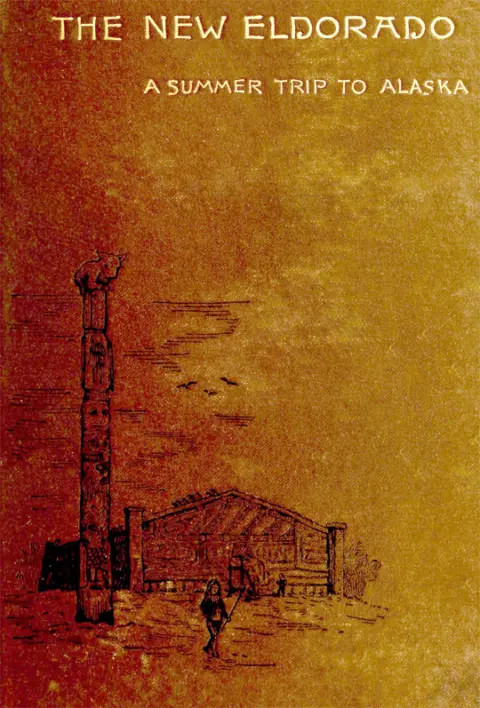
The New Eldorado: A Summer Journey to Alaska
Maturin M. (Maturin Murray) Ballou
THE CLASSIC COLLECTION · 1890
"Aztec Land" by Maturin M. Ballou is a travelogue written in the late 19th century. This work details the author's journey through Mexico, referred to as Aztec Land, exploring its rich history, culture, and landscapes. The book is likely aimed at readers interested in travel, history, and the complexities surrounding early Mexican civilization and its relation to European colonization. At the start of "Aztec Land," the author declares his intention to visit Mexico and describes his preparations for the journey, highlighting the organized travel experience he encounters with a group of fellow travelers. This journey promises to offer not just leisure but also a chance to explore the beautiful but complex narrative of Mexican history, moving through various significant locations and reflections on the Aztec civilization. Ballou emphasizes the rich cultural and historical fabric of Mexico, revealing a land steeped in tradition yet misunderstood by outsiders, laying the groundwork for his observations of the local people, geography, and sociopolitical issues encountered along the way.
Introduction adapted from the source catalogue; source summaries may be automatically generated.
Free to read · English · 94,619 words · No account needed
MAKE TIME FOR A GOOD BOOK
On by default. Untick to stop anonymous reading totals. Each page counts after 10 seconds in view. How this works.
Anonymous counting is on unless you have switched it off.
Rain falls at Castano only for three weeks, or so, during the year, about the early part of May; the dust is consequently very deep and fills the air at the slightest atmospheric movement. The general view is broken now and again by the Spanish bayonet tree, ten or twelve feet in height, and by broad clusters of grotesque cactus plants, which thrive so wonderfully in spite of drought, hanging like vines along the base of the adobe cabins and creeping up their low sides, the leaves edged here and there by a dainty ruffle of scentless yellow flowers. Beside a very lowly mud cabin was a tall oleander, branches and leaves hidden in gorgeous bloom, imparting a cheerful, joyous aspect even amid all this squalor and poverty. Close at hand upon the adobe wall hung a willow cage imprisoning a tropical bird of gaudy plumage; but the feathered beauty did not seem to have any spare notes with which to greet us. From another cabin came the pleasant sound of a guitar, accompanied by a human voice. So this people love birds, flowers, and music. The half-effaced image of God must be still upon their hearts! The little town has four or five broad, unpaved streets, and is as primitive as nature herself in all its domestic surroundings.
Except on the immediate line of the railways, one may travel thirty or forty miles in almost any part of Mexico without seeing a dwelling-house. The people live mostly in towns and cities, and are very little dispersed over the country, that is, compared with our own land. Occasional haciendas or large farmhouses, built of adobe and stone, are seen; but isolated dwellings are not common. On these estates there is usually less farming or raising of cereals carried on than there is of stock raising, which seems to pay better. Large droves of cattle are seen grazing, sheep, burros, and mules roam at large, and all seem to be getting food from most unpromising land, such as produces in its normal condition cactus only. It is the true climate and soil for this species of vegetation, of which there are hundreds of varieties, flat, ribbed, and cylindrical. No matter how dry and arid the region, the cacti thrive, and are themselves full of moisture. Even these haciendas, rectangular structures forming the headquarters of large landed estates, are semi-fortifications, capable of a stout defense against roving banditti, who have long been the dread and curse of the country and are not yet obliterated. These structures are sometimes surrounded by a moat, the angles being protected by turrets pierced for musketry. As in continental Spain, the population live mostly in villages for mutual protection, being compelled to walk long distances to work in the fields at seed time and harvest. The owners of the large haciendas, we were told, seldom live upon them. Like the landlords of Ireland, they are a body of absentees, mostly wealthy men who make their homes with their families in the city of Mexico, some even living in Europe, entrusting the management of their large estates to well-paid superintendents. There are not a few Americans thus employed by Mexican owners, who are prompt to recognize good executive ability in such a position, and value their estates only for the amount of income they can realize from them. A hacienda ten or fifteen miles square is not considered extraordinary as to size, and there are many twice as large. The proprietorship of these haciendas dates back to the old Spanish times when Mexico was under the viceroys. Little can be hoped for as to improvement in the condition of the poor peons of the country, until these immense estates are broken up and divided into small available farms, which may be owned and operated by them for their sole benefit. No lesson is more clearly or forcibly taught us by the light of experience than that the ownership of the soil by its cultivator is the only way to insure successful and profitable agriculture. There is nothing to induce emigration to Mexico now. Foreigners prefer to seek a country where they can purchase the land cheaply, and, when they have improved it, be certain that their title is good and secure. At present there is virtually no immigration at all into the republic, though the climate in many places is perhaps the most desirable known to man. The Mexican government not long since made an effort to encourage immigration, offering a bonus of fifty dollars a head for bona fide immigrants, and even partial support until occupation was secured. Many Italians availed themselves of this offer; but it was found that the criminal class was too largely represented in the ranks of these immigrants, and other abuses became so manifest that the government abandoned the purpose.
Your reading position is saved on this browser. Take it to another device with a library code. Reading pages adapt to text, rather than matching a printed edition.
Maturin M. (Maturin Murray) Ballou
Maturin M. (Maturin Murray) Ballou
Maturin M. (Maturin Murray) Ballou
Maturin M. (Maturin Murray) Ballou
BEHIND THE BOOK
This eBook is for the use of anyone anywhere in the United States and most other parts of the world at no cost and with almost no restrictions whatsoever. You may copy it, give it away or re-use it under the terms of the Project Gutenberg License included with this eBook or online at www.gutenberg.org. If you are not located in the United States, you will have to check the laws of the country where you are located before using this eBook. Read the source licence.
The original source file, including credits and licence, is retained by this library. Request an original-format copy at no charge. Please include the book title and Project Gutenberg identifier #29747.
KEEP YOUR CURIOSITY GOING
Wilfrid Scawen Blunt
Wilfrid Scawen Blunt

E. W. (Edgar Watson) Howe
Cécile Tormay

Moritz Busch
John L. Ransom