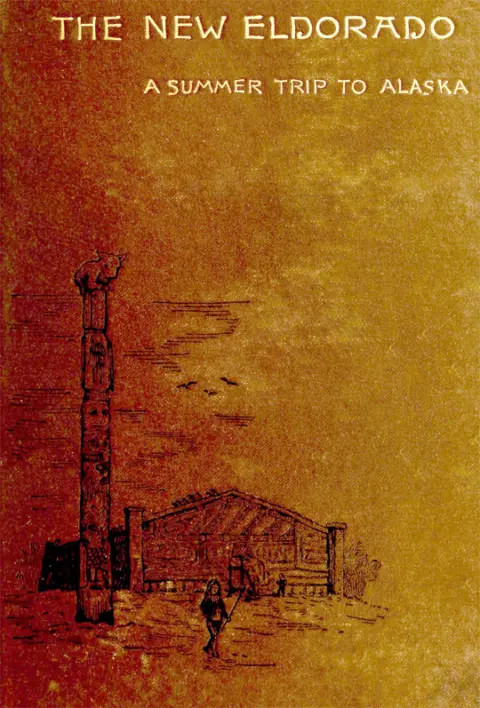
The New Eldorado: A Summer Journey to Alaska
Maturin M. (Maturin Murray) Ballou
THE CLASSIC COLLECTION · 1890
"Aztec Land" by Maturin M. Ballou is a travelogue written in the late 19th century. This work details the author's journey through Mexico, referred to as Aztec Land, exploring its rich history, culture, and landscapes. The book is likely aimed at readers interested in travel, history, and the complexities surrounding early Mexican civilization and its relation to European colonization. At the start of "Aztec Land," the author declares his intention to visit Mexico and describes his preparations for the journey, highlighting the organized travel experience he encounters with a group of fellow travelers. This journey promises to offer not just leisure but also a chance to explore the beautiful but complex narrative of Mexican history, moving through various significant locations and reflections on the Aztec civilization. Ballou emphasizes the rich cultural and historical fabric of Mexico, revealing a land steeped in tradition yet misunderstood by outsiders, laying the groundwork for his observations of the local people, geography, and sociopolitical issues encountered along the way.
Introduction adapted from the source catalogue; source summaries may be automatically generated.
Free to read · English · 94,619 words · No account needed
MAKE TIME FOR A GOOD BOOK
On by default. Untick to stop anonymous reading totals. Each page counts after 10 seconds in view. How this works.
Anonymous counting is on unless you have switched it off.
Relative to the early peopling of our continent, Bancroft says: "It is shown pretty conclusively that the American people and the American civilization, if not indigenous to the New World, were introduced from the Old at a period long preceding any to which we are carried, by the traditional or monumental annals of either continent. We have found no evidence of any populating or civilizing migration across the ocean from east to west, north or south, within historic times. Nothing approaching identity has been discovered between any two nations separated by the Atlantic or Pacific. No positive record appears even of communication between America and the Old World,--intentionally by commercial, exploring, or warlike expeditions, or accidentally by shipwreck,--previous to the voyages of the Northmen in the tenth century; yet that such communication did take place, in many instances and at different periods, is extremely probable."
The emigrants of whom we have spoken are supposed to have been nomadic, to have first built cities in the north,--that is, the present United States; it is not improbable that they were the mound-builders of Ohio and the Mississippi valleys, and that they afterward migrated southward into Mexico. These pioneers were called Toltecs, and were settled south of the Rio Grande a thousand years ago, more or less, their capital being what is known to-day as the city of Tula, forty miles northwest of the present capital of Mexico, where many antique and curious remains still interest the traveler. The names of the nine Toltec kings who ruled up to A. D. 1097 are well ascertained. It was the fourth king, if we may believe the chroniclers, who built the city of Teotihuacan, that is, "the habitation of the gods," the only visible remains of which are the two earth pyramids of the sun and the moon. Of these we shall have occasion to treat more at length in a future chapter. In speaking of the most ancient remains at Tula and elsewhere in Mexico, Wilson pronounces them to be clearly Egyptian. It is made plain by authentic writers upon the subject that this people enjoyed a large degree of civilization; the ruins of temples supposed to have been built by them in various parts of the country, especially in Yucatan, also prove this. Humboldt says that in 648 A. D. the Toltecs had a solar year more perfect than that of the Greeks and Romans. Other-writers tell us that they were a worthy people, averse to war, allied to virtue, to cleanliness, and good manners, detesting falsehood and treachery. They introduced the cultivation of maize and cotton, constructed extensive irrigating ditches, built roads, and were a progressive race. "But where is the country," asks Humboldt, "from which the Toltecs and Mexicans issued?" They were well housed, and even elegantly clothed, maintained public schools, and commemorated passing events by elaborate sculpture and by picture-writing. So complete was their system of hieroglyphics that they wrote upon religion, history, geography, and the arts. These records were nearly all destroyed by the malicious and bigoted iniquity of a Spanish priest named Zumarrage, who made it his business to seek for and burn all tokens, great and small, which related to the history of this extremely interesting people. A few of these curious records, in the form of pictorial writing, yet remain in Mexico, principally in the National Museum at the capital, and some have found their way across the ocean to adorn the shelves of European libraries. One of these documents, still extant, represents the country as having first been settled by a race who came out of a great cave and traveled over the realm on the backs of turtles, founding cities and towns wherever they went. This will show that the traditions of the aborigines are so fabulous as scarcely to deserve mention. Touching the vandal act of the Catholic priest Zumarrage, Prescott says: "We contemplate with indignation the cruelties inflicted by the early conquerors. But indignation is qualified with contempt when we see them thus ruthlessly trampling out the sparks of knowledge, the common boon and property of all mankind. We may well doubt which has the strongest claim to civilization, the victor or the vanquished." We know that the early inhabitants reared palaces, temples, and pyramids, that they constructed a grand system of aqueducts for irrigating purposes, and for the liberal promotion of agriculture, being in many respects in advance of the Mexicans of to-day in the cultivation of the soil, as well as in some productions of art.
Your reading position is saved on this browser. Take it to another device with a library code. Reading pages adapt to text, rather than matching a printed edition.
Maturin M. (Maturin Murray) Ballou
Maturin M. (Maturin Murray) Ballou
Maturin M. (Maturin Murray) Ballou
Maturin M. (Maturin Murray) Ballou
BEHIND THE BOOK
This eBook is for the use of anyone anywhere in the United States and most other parts of the world at no cost and with almost no restrictions whatsoever. You may copy it, give it away or re-use it under the terms of the Project Gutenberg License included with this eBook or online at www.gutenberg.org. If you are not located in the United States, you will have to check the laws of the country where you are located before using this eBook. Read the source licence.
The original source file, including credits and licence, is retained by this library. Request an original-format copy at no charge. Please include the book title and Project Gutenberg identifier #29747.
KEEP YOUR CURIOSITY GOING
Wilfrid Scawen Blunt
Wilfrid Scawen Blunt

E. W. (Edgar Watson) Howe
Cécile Tormay

Moritz Busch
John L. Ransom