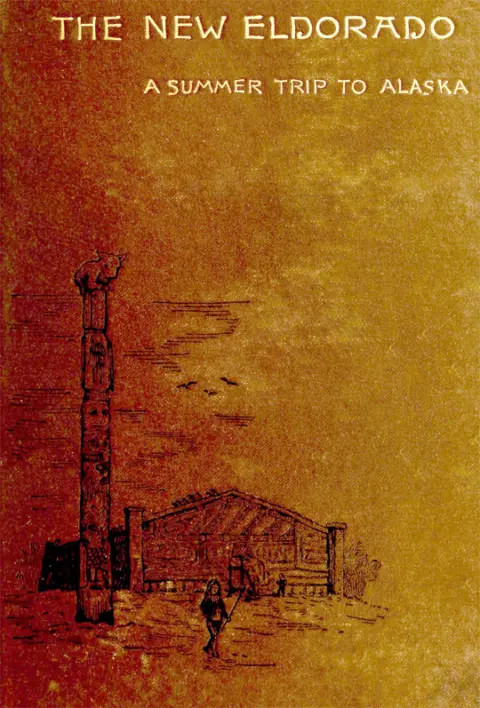
The New Eldorado: A Summer Journey to Alaska
Maturin M. (Maturin Murray) Ballou
THE CLASSIC COLLECTION · 1890
"Aztec Land" by Maturin M. Ballou is a travelogue written in the late 19th century. This work details the author's journey through Mexico, referred to as Aztec Land, exploring its rich history, culture, and landscapes. The book is likely aimed at readers interested in travel, history, and the complexities surrounding early Mexican civilization and its relation to European colonization. At the start of "Aztec Land," the author declares his intention to visit Mexico and describes his preparations for the journey, highlighting the organized travel experience he encounters with a group of fellow travelers. This journey promises to offer not just leisure but also a chance to explore the beautiful but complex narrative of Mexican history, moving through various significant locations and reflections on the Aztec civilization. Ballou emphasizes the rich cultural and historical fabric of Mexico, revealing a land steeped in tradition yet misunderstood by outsiders, laying the groundwork for his observations of the local people, geography, and sociopolitical issues encountered along the way.
Introduction adapted from the source catalogue; source summaries may be automatically generated.
Free to read · English · 94,619 words · No account needed
MAKE TIME FOR A GOOD BOOK
On by default. Untick to stop anonymous reading totals. Each page counts after 10 seconds in view. How this works.
Anonymous counting is on unless you have switched it off.
One is apt to speculate mentally, while gazing upon it, as to the possibility of this sleeping volcano one day awaking to destructive action. That it still lives is clearly seen by the smoke and sulphurous breath which it exhales, and the occasional significant earthquakes which occur about its widespread base. There are seventeen or eighteen mountains in the republic which rise more than ten thousand feet above the level of the sea, four of which are over fifteen thousand feet in height, Popocatepetl being the loftiest of them all. Parties ascend on horseback to the snow line, and from thence the distance to the summit is accomplished on foot. Some adventurous people make the descent into the crater by means of the bucket and windlass used by the sulphur-gatherers, but the most inquisitive can see all that they desire from the northerly edge of the cone. The expeditions for the ascent are made up at Amecameca. The time necessarily occupied is about three days, and the cost is twenty-five dollars for each person. It is a very exhausting excursion, and few persons undertake it.
The city of Mexico is famous for its large numbers of scientific, literary, and charitable institutions, its many schools, primary and advanced, and its several well-appointed hospitals. The national palace covers the whole eastern side of the Plaza Mayor, having a frontage of nearly seven hundred feet, and occupies the site of the royal residence of the Montezumas, if we may credit tradition. The present edifice was erected in 1693, in place of one which Cortez and the Spanish viceroys had occupied until it was destroyed by fire in 1692. Though the palace is only two stories in height, yet the central tower over the main entrance and the finish on each side of it give it all necessary prominence. It contains the President's suite of rooms, and those devoted to the various departments of the state officials. The hall of ambassadors, a very long, narrow apartment, is interesting on account of its life-size portraits of Mexican rulers from the period of independence, a majority of whom either endured exile or public execution! At the extreme end of this hall is a very good full-length portrait of our Washington. Here, also, is a pretentious battle-piece by a native artist, representing the battle of Puebla, when the French were so completely defeated. The picture is entitled "Cinco de Mayo," the date of the conflict. It is not a fine specimen of art, but it is certainly a very effective picture. This battle of the 5th of May was another Waterloo for the French. An apartment known as Maximilian's room is shown to the visitor, situated in the corner of the palace, having two windows at right angles and thus commanding a view in two directions, one window overlooking the plaza, the other the business streets leading to the market. A room called the hall of Iturbide is hung in rich crimson damask, displaying the eagle and serpent, which form the arms of Mexico. The edifice contains also the General Post-office and the National Museum. In the armory of the palace there was pointed out to us the stand of arms with which the Archduke Maximilian and his two faithful officers were shot at Queretaro. In the grounds which form the patio of the palace, a small botanical garden is maintained, containing many exotics, choice trees and plants, besides a collection of those indigenous to the country. The curiosities in the department of antiquity of the museum are of intense interest. In an historical point of view they are invaluable. A great amount of money and intelligent labor has been expended upon the collection with highly satisfactory results. It is of engaging interest to the merest museum frequenter, but to the archaeologist it is valuable beyond expression. Here are also deposited the extensive solid silver table-service imported for his own use by Maximilian, and also the ridiculously gilded and bedizened state carriage brought hither from Europe, built after the English style of the seventeenth century. The body of the vehicle is painted red, the wheels are gilded, and the interior is lined with white silk brocade, heavily trimmed with silver and gold thread. It surpasses in elegance and cost any royal vehicle to be seen in Europe, not excepting the magnificent carriages in the royal stables of Vienna and St. Petersburg. Among the personal relics seen in the museum is the coat of mail worn by Cortez during his battles from Vera Cruz to the capital, also the silk banner which was borne in all his fights. This small flag bears a remarkably lovely face of the Madonna, which must have been the work of a master hand. The shield of Montezuma is also exhibited, with many arms, jewels, and picture writings, these last relating to historic matters, both Toltec and Aztec. The great sacrificial stone of the aborigines, placed on the ground floor of the museum, is, in all its detail, a study to occupy one for days. It is of basalt, elaborately chiseled, measuring nine feet in diameter and three feet in height. On this stone the lives of thousands of human beings, we are told, were offered up annually. The municipal palace is on the south side of the plaza, nearly opposite to which is a block of buildings resting upon arcades like those of the Rue Rivoli in Paris. Let us not forget to mention that in the garden of the national palace the visitor is shown a remarkable floral curiosity called the hand-tree, covered with bright scarlet flowers, almost exactly in the shape of the human hand. This is the Cheirostemon platanifolium of the botanists, an extremely rare plant, three specimens of which only are known to exist in Mexico.
Your reading position is saved on this browser. Take it to another device with a library code. Reading pages adapt to text, rather than matching a printed edition.
Maturin M. (Maturin Murray) Ballou
Maturin M. (Maturin Murray) Ballou
Maturin M. (Maturin Murray) Ballou
Maturin M. (Maturin Murray) Ballou
BEHIND THE BOOK
This eBook is for the use of anyone anywhere in the United States and most other parts of the world at no cost and with almost no restrictions whatsoever. You may copy it, give it away or re-use it under the terms of the Project Gutenberg License included with this eBook or online at www.gutenberg.org. If you are not located in the United States, you will have to check the laws of the country where you are located before using this eBook. Read the source licence.
The original source file, including credits and licence, is retained by this library. Request an original-format copy at no charge. Please include the book title and Project Gutenberg identifier #29747.
KEEP YOUR CURIOSITY GOING
Wilfrid Scawen Blunt
Wilfrid Scawen Blunt

E. W. (Edgar Watson) Howe
Cécile Tormay

Moritz Busch
John L. Ransom