
Letters to a Friend, Written to Mrs. Ezra S. Carr, 1866-1879
John Muir
THE CLASSIC COLLECTION · 1914
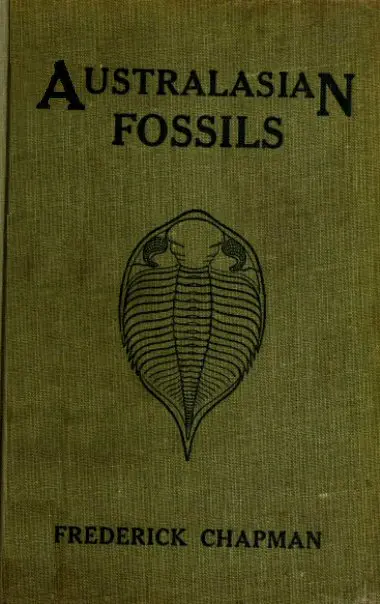
"Australasian Fossils: A Students' Manual of Palaeontology" by Frederick Chapman is a scientific publication written in the early 20th century. This manual aims to fill the gap in literature on fossils discovered in the Southern Hemisphere, specifically in Australasia, offering students an accessible overview of palaeontology. The book discusses a variety of topics, including fossil classification, geological epochs, and methods for finding and preserving fossils, catering to the needs of natural history and palaeontology students. The opening portion of the manual introduces its context and purpose, emphasizing the scarcity of resources concerning region-specific fossils in existing geological literature. It articulates the importance of studying fossils for understanding Earth's history, evolution, and the distribution of ancient life forms. Chapman underscores the manual’s intent to provide a foundational framework for students, alongside practical advice for fossil collectors, encouraging exploration and a deeper appreciation for the field of palaeontology.
Introduction adapted from the source catalogue; source summaries may be automatically generated.
Free to read · English · 61,198 words · No account needed
MAKE TIME FOR A GOOD BOOK
On by default. Untick to stop anonymous reading totals. Each page counts after 10 seconds in view. How this works.
Anonymous counting is on unless you have switched it off.
Many of the Cainozoic fossils from the shelly sands and clays are extremely delicate, owing in some cases to their being imperfectly preserved, seeing that they frequently contain in their shell-structure layers of the unstable form of carbonate of lime called aragonite. Fossils containing aragonite are:--Calcareous Sponges; Corals; Bivalved shells, except Oysters, Pectens, and the outer layer of Spondylus, Pinna, and Mytilus; Gasteropods (with a few exceptions); and Cephalopods. In some of these, however, a transformation of the aragonite into calcite enables the fossil to be permanently preserved. The delicate fossils referred to should be dipped in weak glue or gelatine and left to dry; after which their final cleaning can be done with the aid of a little warm water and a soft brush.
Certain of the clays and mudstones, both of Cainozoic and Jurassic ages which show remains of plants, such as leaves and fern fronds, are often best treated with a thin surface layer of paper varnish, before they lose the natural moisture of the rock; for when they become perfectly dry the thin carbonaceous film representing the original leaf-substance peels off, and the fossil is consequently destroyed. A method of treatment for Cainozoic leaves, by dipping them in warm vaseline and brushing off the superfluous material, has been described by Mr. H. Deane.
=Storing Fossils for Reference.--=
Fossils specimens are generally best displayed in cardboard trays; or if thin wooden paper-covered tablets are used, say of about 3-16in. thickness and cut to proportionate sizes, the fossils should be held in place by pins for easy removal, unless more than one example can be shown together, exhibiting all aspects, when they can be secured to the tablet by a touch of seccotine. The smaller shells may be displayed in glass topped boxes, which in turn may be stuck down to tablets or placed in trays.
Aboriginal implements, 303
Aborigines, probable origin of, 302
Acanthias, 270
Acanthodes, 261
Acanthosphaera, 103
Acanthothyris, 166, 167
Acentrophorus, 263
Acrolepis, 263
Actaeon, 197
Actinoceras, 205, 207
Actinocrinus, 136
Actinodesma, 178, 179
Actinopteria, 178, 179
Actinostroma, 121, 122
Adeona, 158
Aechmina, 237
Aeschna, 250
Aetheolepis, 267
Agathiceras, 207
AGNATHA, 258
Agnostus, 227
Allodesma, 176
Ambonychia, 177
Ammodiscus, 96, 97
Ammonites, 204, 209, 210
AMMONOIDEA, 205
Amoeba, 36, 95
AMPHIBIA, structure of, 272
Amphistegina, 100
Amplexus, 117
Ampyx, 229
Amusium, 185
Anas, 283
Anchura, 197
Ancilla, 198, 199, 202
Ancyloceras, 209, 210
ANGIOSPERMEAE, characters of, 40
ANNELIDA, 152
Anomalina, 98
Anomalopteryx, 283
Antedon, 138
ANTHOZOA, 64, 113
Antiquity of man in Australia, 304
Aparchites, 237
Apateolepis, 262
Aphnelepis, 267
Apocynophyllum, 91
Aptornis, 283
Aptychopsis, 246
Arabellites, 153
Arachnoides, 146
Araucarioxylon, 68
Araucarites, 89
Arca, 184, 186, 188
Archaeocidaris, 144
Archaeocyathina, 113
ARCHAEOCYATHINAE, 112
Archaeomaene, 267
Archaeopteryx, 280
Arctocephalus, 299
Arenicolites, 153
Argillaceous rocks, 69
Argilloecia, 237
?Argiope, 166
Argonauta, 205
ARTHROPODA, structure and subdivisions of, 38, 220
Asaphus, 227, 228
Aspidorhynchus, 267
Astarte, 182
Asteracanthus, 269, 271
ASTEROIDEA, 139
Asterolepis, 258
Astralium, 198, 200
Astropecten, 141
Athyris, 161, 162, 165
Atrypa, 158, 160, 162
Aturia, 210
Atys, 204
Aucella, 183
Aulopora, 116
Australian fossiliferous strata, 45-48.
AVES, 280
Aviculopecten, 179, 180
Axopora, 119
Your reading position is saved on this browser. Take it to another device with a library code. Reading pages adapt to text, rather than matching a printed edition.
BEHIND THE BOOK
This eBook is for the use of anyone anywhere in the United States and most other parts of the world at no cost and with almost no restrictions whatsoever. You may copy it, give it away or re-use it under the terms of the Project Gutenberg License included with this eBook or online at www.gutenberg.org. If you are not located in the United States, you will have to check the laws of the country where you are located before using this eBook. Read the source licence.
The original source file, including credits and licence, is retained by this library. Request an original-format copy at no charge. Please include the book title and Project Gutenberg identifier #59074.
KEEP YOUR CURIOSITY GOING
John Muir

Asa Gray
Asa Gray

Florence Nightingale
Elizabeth Robins Pennell
Denison Olmsted