THE CLASSIC COLLECTION✦My diaries, being a personal narrative of events 1888-1914, Part 2 (1900-1914)CLASSIC FREE BOOKS
My diaries, being a personal narrative of events 1888-1914, Part 2 (1900-1914)
Wilfrid Scawen Blunt
THE CLASSIC COLLECTION · 1905
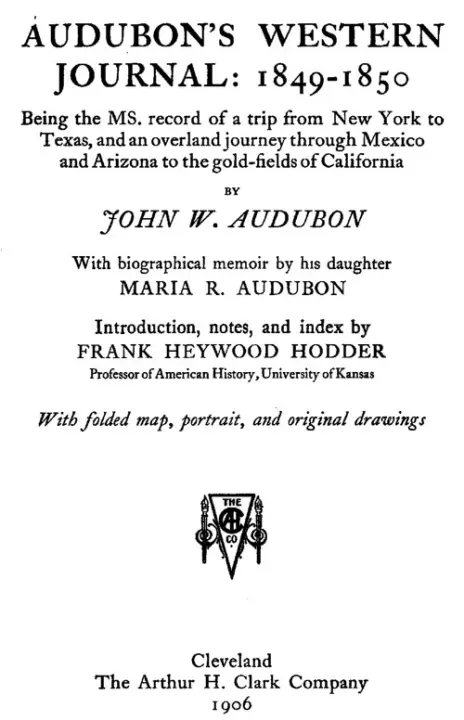
"Audubon's Western Journal: 1849-1850" by John Woodhouse Audubon is a historical account written in the early 20th century, detailing the author's journey from New York to Texas and onward to California during the Gold Rush era. The work serves as both a personal travel journal and a naturalist's observations, reflecting the social conditions, landscapes, and wildlife encountered along the way. It gives readers insight into the challenging aspects of overland travel during a significant period of American expansion. The opening portion of the journey chronicles the excitement and trepidation that Audubon feels as he prepares for his expedition amid the feverish rumors of California's gold discoveries. Starting in February 1849, he recounts his departure from New York, describing the emotional farewells exchanged with loved ones and the diverse reactions of his companions as they embark on their venture. Audubon details their route through cities like Philadelphia and New Orleans and the growing sense of urgency as they encounter obstacles, including illness and conflict among their party. This segment sets the stage for the ensuing hardships and adventures faced by Audubon and his companions in their quest for fortune.
Introduction adapted from the source catalogue; source summaries may be automatically generated.
Free to read · English · 56,543 words · No account needed
MAKE TIME FOR A GOOD BOOK
On by default. Untick to stop anonymous reading totals. Each page counts after 10 seconds in view. How this works.
Anonymous counting is on unless you have switched it off.
Trees:
Cedars, 239;
cottonwoods, 178, 181;
dogwood, 239;
elm, 239;
hemlocks, 240;
laurel, 206;
maples, 239;
mesquite, 54;
oaks, 178, 185, 206, 227, 230, 233, 238;
oak, live, 200, 230;
oak, post, 200, 201, 218, 223, 224;
oak, swamp, 200;
oak, white, 239;
pines, 201, 206, 210, 238, 239, 240;
redwoods, 196, 206;
sycamores, 178, 206.
Trinidad, 133-134.
Tulare valley, 16, 179, 182.
Tuolumne, 202, 209, 217, 218, 224.
Ures, 16, 139-141.
Valentine, Charles, 243.
Valentine, Matthias B., 243.
Valentine, Thomas B., 243.
Van Buren, George T., 195, 243.
Walnut Springs, 85.
Walsh, Nicholas J., 33, 59, 61, 66, 70, 126-127, 168, 169, 195,
204, 243.
Warner, James, 243.
Watkinson, Joseph S., 114, 174, 195, 243.
Webb, Edward C., 243.
Webb, Col. Henry L., 14, 15, 31, 42, 47, 48, 53, 55, 58, 60, 61, 73, 74, 76, 79, 80, 81, 82, 83, 203, 241.
Webb, Watson, 243.
Weed, George, 91, 157, 169, 195, 243.
West, settlement of, 12.
Whipple, Lieut. Amiel W., 162, 164.
Whittlesey, Edward, 63.
Whittlesey, Gilbert B., 243.
Whittlesey, William, 243.
Williamson, Isaac H., 243.
Winthrop, Francis B., 243.
Wislizenus, Dr. A., 84, 142.
Wood's Creek, 214.
Wood's Diggings, 210, 215, 216, 217.
Yaqui River, 137.
Yorktown, 215.
Yuma Indians, 161, 162, 213.
[1] An experiment with camels was tried and proved a failure.
[2] John Porter McCown resigned his commission in 1861 to join the Confederate army, in which he served through the war as a major general.—F. H. H.
[3] Frenchtown was the western terminus of the New Castle and Frenchtown Railroad, one of the first railroads built in the United States and a part of the early route between the East and the West. With the passing of the road, the town entirely disappeared. It was located at the head of the Elk River branch of Chesapeake Bay, below the present site of Elkton.
[4] Mrs. Alexander Gordon.—M. R. A.
[5] William Warren Chapman was brevetted major for gallant conduct in the battle of Buena Vista, and died in 1859.
[6] Travels in the Interior of North America, by Maximilian, Prince of Wied-Neuwied (London, 1843). Reprinted in Thwaites's Early Western Travels, 1748-1846 (Cleveland, 1905).
[7] Major Benjamin William Brice served through the Civil War
in the paymaster's department and became a major general at
its close.
[8] The mesquit or mesquite is a tree, resembling the locust, of which there are several species in Mexico and the southwestern part of the United States.
[9] Camp Ringgold was an American military post below Rio Grande City. Davis's rancho, mentioned later, was half a mile above Camp Ringgold.
[10] Joseph Hatch La Motte, brevetted a major for gallant
conduct at Monterey, resigned from the service in 1846 and
died in 1888.
[11] China is located on the Rio San Juan about fifty miles
from the Rio Grande.
[12] Maguey is the Spanish name for the century plant.
[13] Col. John C. Hays, the Texas ranger and Indian fighter, who won a national reputation at the siege of Monterey. He went to California in 1849, became first sheriff of San Francisco and afterward United States surveyor-general for California.
Your reading position is saved on this browser. Take it to another device with a library code. Reading pages adapt to text, rather than matching a printed edition.
BEHIND THE BOOK
This eBook is for the use of anyone anywhere in the United States and most other parts of the world at no cost and with almost no restrictions whatsoever. You may copy it, give it away or re-use it under the terms of the Project Gutenberg License included with this eBook or online at www.gutenberg.org. If you are not located in the United States, you will have to check the laws of the country where you are located before using this eBook. Read the source licence.
The original source file, including credits and licence, is retained by this library. Request an original-format copy at no charge. Please include the book title and Project Gutenberg identifier #58575.
KEEP YOUR CURIOSITY GOING
Wilfrid Scawen Blunt
Wilfrid Scawen Blunt

E. W. (Edgar Watson) Howe
Cécile Tormay

Moritz Busch
John L. Ransom