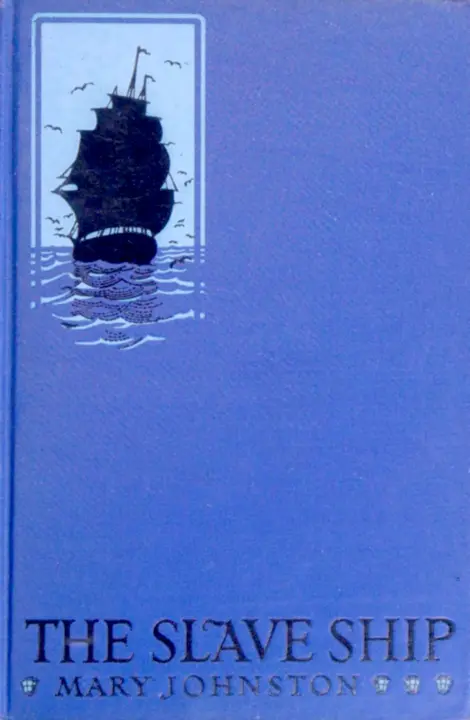
The slave ship
Mary Johnston
THE CLASSIC COLLECTION · 1901
"Audrey" by Mary Johnston is a historical novel likely written in the early 20th century. The book is set in a time marked by exploration and the settlement of America, following the lives of early colonists as they navigate the wilderness and their relationships. The central character appears to be a young girl named Audrey, who finds herself amidst a world of adventure, danger, and the complexities of human interaction, particularly highlighted by the dramatic circumstances surrounding her family. The beginning of "Audrey" introduces readers to an idyllic valley scene in the wilderness where a pioneer family lives in a cabin, described with rich, evocative imagery. The narrative shifts quickly as the tranquility is interrupted by the arrival of a well-armed group of gentlemen, led by the Governor, eager for adventure. The initial harmony of nature is contrasted with the foreboding presence of potential danger, foreshadowing tumultuous events ahead. Soon, an attack from Native Americans leads to tragedy for the family, which brings young Audrey to the forefront as she survives and faces a new perilous reality, setting the stage for her journey and the challenges she must confront in this unforgiving world.
Introduction adapted from the source catalogue; source summaries may be automatically generated.
Free to read · English · 122,227 words · No account needed
MAKE TIME FOR A GOOD BOOK
On by default. Untick to stop anonymous reading totals. Each page counts after 10 seconds in view. How this works.
Anonymous counting is on unless you have switched it off.
“What must I do?” said Audrey to herself. “Pain is hard to bear.”
“That night at the ball,” continued Evelyn, “when, coming down the stair, I saw you standing beside him ... and after that, the music, and the lights, and you dancing with him, in your dark beauty, with the flowers in your hair ... and after that, you and I in my coach and his face at the window!... Oh, I can tell you what he said! He said: ‘Good-by, sweetheart.... The violets are for you; but the great white blossoms, and the boughs of rosy mist, and all the trees that wave in the wind are for Audrey.’”
“For me!” cried Audrey,--“for me an hour in Bruton church next morning!”
A silence followed her words. Evelyn, sitting in the great chair, rested her cheek upon her hand and gazed steadfastly at her guest of a day. The sunshine had stolen from the room, but dwelt upon and caressed the world without the window. Faint, tinkling notes of a harpsichord floated up from the parlor below, followed by young Madam Byrd’s voice singing to the perturbed Colonel:--
“‘O Love! they wrong thee much,
That say thy sweet is bitter,
When thy rich fruit is such
As nothing can be sweeter.
Fair house of joy and bliss’”--
The song came to an end, but after a pause the harpsichord sounded again, and the singer’s voice rang out:--
“‘Under the greenwood tree,
Who loves to lie with me’”--
Audrey gave an involuntary cry; then, with her lip between her teeth, strove for courage, failed, and with another strangled cry sank upon her knees before a chair and buried her face in its cushions.
When a little time had passed, Evelyn arose and went to her. “Fate has played with us both,” she said, in a voice that strove for calmness. “If there was great bitterness in my heart toward you then, I hope it is not so now; if, on that night, I spoke harshly, unkindly, ungenerously, I--I am sorry. I thought what others thought. I--I cared not to touch you.... But now I am told that ’t was not you that did unworthily. Mr. Haward has written to me; days ago I had this letter.” It was in her hand, and she held it out to the kneeling girl. “Yes, yes, you must read; it concerns you.” Her voice, low and broken, was yet imperious. Audrey raised her head, took and read the letter. There were but a few unsteady lines, written from Marot’s ordinary at Williamsburgh. The writer was too weak as yet for many words; few words were best, perhaps. His was all the blame for the occurrence at the Palace, for all besides. That which, upon his recovery, he must strive to teach his acquaintance at large he prayed Evelyn to believe at once and forever. She whom, against her will and in the madness of his fever, he had taken to the Governor’s house was most innocent,--guiltless of all save a childlike affection for the writer, a misplaced confidence, born of old days, and now shattered by his own hand. Before that night she had never guessed his passion, never known the use that had been made of her name. This upon the honor of a gentleman. For the rest, as soon as his strength was regained, he purposed traveling to Westover. There, if Mistress Evelyn Byrd would receive him for an hour, he might in some measure explain, excuse. For much, he knew, there was no excuse,--only pardon to be asked.
Your reading position is saved on this browser. Take it to another device with a library code. Reading pages adapt to text, rather than matching a printed edition.
Mary Johnston
Mary Johnston
Mary Johnston
Mary Johnston
BEHIND THE BOOK
This eBook is for the use of anyone anywhere in the United States and most other parts of the world at no cost and with almost no restrictions whatsoever. You may copy it, give it away or re-use it under the terms of the Project Gutenberg License included with this eBook or online at www.gutenberg.org. If you are not located in the United States, you will have to check the laws of the country where you are located before using this eBook. Read the source licence.
The original source file, including credits and licence, is retained by this library. Request an original-format copy at no charge. Please include the book title and Project Gutenberg identifier #14513.
KEEP YOUR CURIOSITY GOING
Cécile Tormay

Moritz Busch
Coulson Kernahan
John L. Ransom

Maurice Baring
Frances Wright