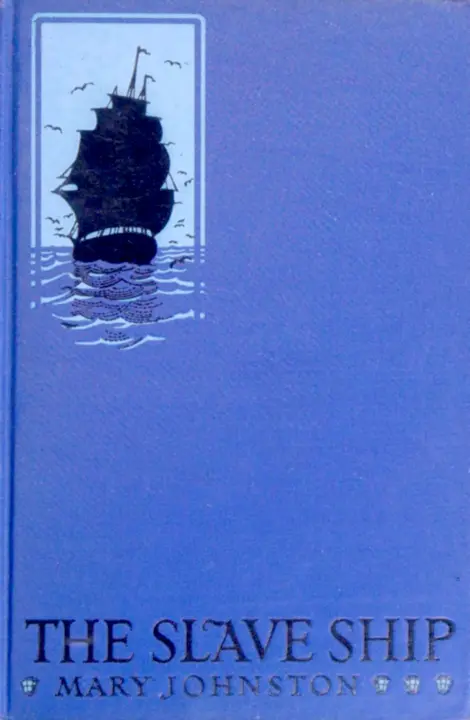
The slave ship
Mary Johnston
THE CLASSIC COLLECTION · 1901
"Audrey" by Mary Johnston is a historical novel likely written in the early 20th century. The book is set in a time marked by exploration and the settlement of America, following the lives of early colonists as they navigate the wilderness and their relationships. The central character appears to be a young girl named Audrey, who finds herself amidst a world of adventure, danger, and the complexities of human interaction, particularly highlighted by the dramatic circumstances surrounding her family. The beginning of "Audrey" introduces readers to an idyllic valley scene in the wilderness where a pioneer family lives in a cabin, described with rich, evocative imagery. The narrative shifts quickly as the tranquility is interrupted by the arrival of a well-armed group of gentlemen, led by the Governor, eager for adventure. The initial harmony of nature is contrasted with the foreboding presence of potential danger, foreshadowing tumultuous events ahead. Soon, an attack from Native Americans leads to tragedy for the family, which brings young Audrey to the forefront as she survives and faces a new perilous reality, setting the stage for her journey and the challenges she must confront in this unforgiving world.
Introduction adapted from the source catalogue; source summaries may be automatically generated.
Free to read · English · 122,227 words · No account needed
MAKE TIME FOR A GOOD BOOK
On by default. Untick to stop anonymous reading totals. Each page counts after 10 seconds in view. How this works.
Anonymous counting is on unless you have switched it off.
The man with the musket sent his voice before him as he approached the group upon the doorstep: “Alce, woman! What’s amiss? I see naught wrong!”
His wife stepped forward to meet him. “There’s naught to see, William. It’s to hear. There was a noise. Molly and I heard it, and then we lost it. There it is again!”
Fronting the cabin, beyond the maize field and the rich green grass and the placid stream, rose two hills, steep and thickly wooded, and between them ran a narrow, winding, and rocky pass. Down this gorge, to the listening pioneer, now came a confused and trampling sound.
“It is iron striking against the rocks!” he announced. “The hoofs of
horses”--
“Iron!” cried his wife. “The horses in Virginia go unshod! And what should a troop of horse do here, beyond the frontier, where even the rangers never come?”
The man shook his head, a frown of perplexity upon his bronzed and bearded face. “It is the sound of the hoofs of horses,” he said, “and they are coming through the pass. Hark!”
A trumpet blew, and there came a noise of laughter. The child pressed close to her brother’s side. “Oh, Robin, maybe ’t is the fairies!”
Out from the gloom of the pass into the sunshine of the valley, splashing through the stream, trampling the long grass, laughing, and calling one rider to the other, burst a company of fifty horsemen. The trumpet blew again, and the entire party, drawing rein, stared at the unexpected maize field, the cabin, and the people about the door.
Between the intruders and the lonely folk, whose nearest neighbors were twenty miles away, was only a strip of sunny grass, dotted over with the stumps of trees that had been felled lest they afford cover for attacking savages. A man, riding at the head of the invading party, beckoned, somewhat imperiously, to the pioneer; and the latter, still with his musket in the hollow of his arm, strode across the greensward, and finding himself in the midst, not of rude traders and rangers, but of easy, smiling, periwigged gentlemen, handsomely dressed and accoutred, dropped the butt of his gun upon the ground, and took off his squirrel-skin cap.
“You are deep in the wilderness, good fellow,” said the man who had beckoned, and who was possessed of a stately figure, a martial countenance, and an air of great authority. “How far is it to the mountains?”
The pioneer stared at the long blue range, cloudlike in the distance. “I don’t know,” he answered. “I hunt to the eastward. Twenty miles, maybe. You’re never going to climb them?”
Your reading position is saved on this browser. Take it to another device with a library code. Reading pages adapt to text, rather than matching a printed edition.
Mary Johnston
Mary Johnston
Mary Johnston
Mary Johnston
BEHIND THE BOOK
This eBook is for the use of anyone anywhere in the United States and most other parts of the world at no cost and with almost no restrictions whatsoever. You may copy it, give it away or re-use it under the terms of the Project Gutenberg License included with this eBook or online at www.gutenberg.org. If you are not located in the United States, you will have to check the laws of the country where you are located before using this eBook. Read the source licence.
The original source file, including credits and licence, is retained by this library. Request an original-format copy at no charge. Please include the book title and Project Gutenberg identifier #14513.
KEEP YOUR CURIOSITY GOING
Cécile Tormay

Moritz Busch
Coulson Kernahan
John L. Ransom

Maurice Baring
Frances Wright