The Making of a Prig
Evelyn Sharp
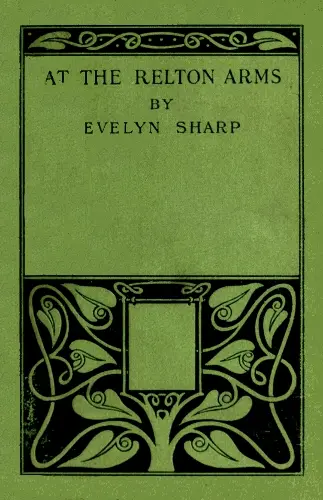
THE CLASSIC COLLECTION · 1895
"At the Relton Arms" by Evelyn Sharp is a novel written in the late 19th century. The narrative begins with a reception in a musician's studio attended by a mix of socially obligated guests and his devoted pupils. Central to the unfolding drama are characters such as the passionate musician Digby Raleigh and the unconventional Lady Joan Relton, whose interactions set the stage for themes of love, artistic aspiration, and societal expectations. At the start of the story, we are introduced to a crowded reception where the musician captivates his remaining students with his theories and compositions, while the restless Lady Joan challenges traditional ideas and boldly engages with Digby. Their playful banter reveals contrasting views on art, life, and the looming presence of societal norms. As the evening progresses, the tension between personal desires and external expectations becomes palpable, highlighted by the arrival of new characters and their complex interconnected relationships. This initial chapter lays the groundwork for the numerous emotional entanglements and moral dilemmas that will be explored throughout the novel.
Introduction adapted from the source catalogue; source summaries may be automatically generated.
Free to read · English · 36,716 words · No account needed
MAKE TIME FOR A GOOD BOOK
On by default. Untick to stop anonymous reading totals. Each page counts after 10 seconds in view. How this works.
Anonymous counting is on unless you have switched it off.
In the brougham, she leaned back and closed her eyes, and wished the fog did not make them smart, and that she had managed to evade her companion after all, in spite of the exquisite annoyance he had enabled her to inflict on Mrs. Reginald. But Jack guessed nothing of her thoughts, and plodded on with his own instead, which all related to her and to a certain desire that filled his mind at that moment; he could only think about one thing at a time.
"I say, you--you didn't rightly mean what you said just now, did you?" he began slowly, as they stopped in the Circus in a dead block of omnibuses and traffic.
"What did I say? I've forgotten long ago. You promised not to bother," returned Lady Joan, shortly, which was not encouraging.
But Jack was not easily snubbed.
"You said that marriage was tommy rot, don't you know," he pursued
steadily.
She opened her eyes wide and stared at him.
"I didn't say so. But it is. Why?"
"Oh, well, you know, because I don't think it is exactly. At least I mean I don't see why it should be, don't you know."
"Then perhaps it isn't. It doesn't matter, does it? Oh, why don't we go
on?"
"I say, how jolly smart you are to-day," he said crossly, and dropped
the drawl.
"Why? Because I don't wish to discuss the marriage question? I am so sick of it. If that is all you want, go and read Björnson and all the others. Modern fiction is crammed with it, so is the modern drama. Your brother can lend you crowds of books about the marriage question--he won't want them for a year or two." She ended with a little hard laugh.
"You know I don't care a hang for the marriage question," he said
sulkily.
"No more do I," she said cheerfully, "so we'll let it drop. I am so glad you are not modern. Do you know, the first night I saw you--"
"Yes?" he said eagerly, as she stopped. It is a sure sign of comradeship when two people begin comparing notes about their first meeting.
"Oh," she continued carelessly, "I only felt relieved that you had no views and no ideas, and didn't want a revolution like your brother, and never fell in love with people. It made you so nice to flirt with, that was all. Thank Heaven, we are going on again at last."
Jack only hated the policeman for letting them pass; the fog was lifting in Oxford Street, and they were rolling along quickly in the direction of Pont Street; there was no time to be lost.
Your reading position is saved on this browser. Take it to another device with a library code. Reading pages adapt to text, rather than matching a printed edition.
BEHIND THE BOOK
This eBook is for the use of anyone anywhere in the United States and most other parts of the world at no cost and with almost no restrictions whatsoever. You may copy it, give it away or re-use it under the terms of the Project Gutenberg License included with this eBook or online at www.gutenberg.org. If you are not located in the United States, you will have to check the laws of the country where you are located before using this eBook. Read the source licence.
The original source file, including credits and licence, is retained by this library. Request an original-format copy at no charge. Please include the book title and Project Gutenberg identifier #41403.
KEEP YOUR CURIOSITY GOING
Coulson Kernahan

Maurice Baring
Frances Wright
Cécile Tormay

Frederic Jesup Stimson

W. H. P. (William Henry Pope) Jarvis