The Making of a Prig
Evelyn Sharp
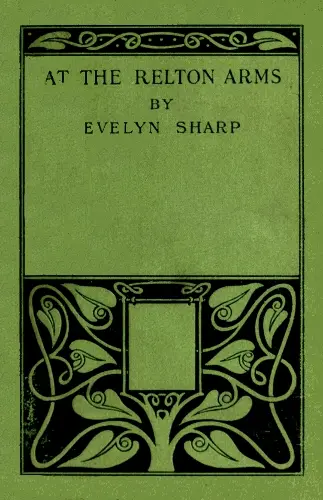
THE CLASSIC COLLECTION · 1895
"At the Relton Arms" by Evelyn Sharp is a novel written in the late 19th century. The narrative begins with a reception in a musician's studio attended by a mix of socially obligated guests and his devoted pupils. Central to the unfolding drama are characters such as the passionate musician Digby Raleigh and the unconventional Lady Joan Relton, whose interactions set the stage for themes of love, artistic aspiration, and societal expectations. At the start of the story, we are introduced to a crowded reception where the musician captivates his remaining students with his theories and compositions, while the restless Lady Joan challenges traditional ideas and boldly engages with Digby. Their playful banter reveals contrasting views on art, life, and the looming presence of societal norms. As the evening progresses, the tension between personal desires and external expectations becomes palpable, highlighted by the arrival of new characters and their complex interconnected relationships. This initial chapter lays the groundwork for the numerous emotional entanglements and moral dilemmas that will be explored throughout the novel.
Introduction adapted from the source catalogue; source summaries may be automatically generated.
Free to read · English · 36,716 words · No account needed
MAKE TIME FOR A GOOD BOOK
On by default. Untick to stop anonymous reading totals. Each page counts after 10 seconds in view. How this works.
Anonymous counting is on unless you have switched it off.
"I wrote it when you went away, last time, with your father. It was full
of tears for you."
She still kept her face turned from him, and she spoke almost in a
whisper.
"And the other? The song?"
"Guess," he said, also in a whisper.
She swept her tearful eyes round upon him searchingly, hungrily.
"Was it this evening--after--?"
He bowed his head gravely. Her hands went out to him impetuously.
"Oh, Digby, did it make you feel all that?"
"There is no doubt," said Lady Joan, loudly, "that our sympathies or our antipathies make us sometimes imagine a likeness where it cannot exist. I remember when I was a small child and came to stay with my great-uncle here, I used to invent every kind of excuse for going down to the post-office, because I thought the boy behind the counter was like a cousin of mine I had a romantic admiration for at the time. And of course you know how there are some days when everybody in the street reminds you of some one you don't want to meet, and others when you feel you have not the least affinity to your own sister. The fact is, family likeness is all rubbish, like most of the traditions we have grown up with; I mean, there is just as much chance of two strangers being alike, which you have just proved yourself, Mr. Johnson, by supposing Mr. Raleigh and my little friend Norah to be brother and sister. Shall we go in, now, or would you like another turn round the garden?"
The curate felt he had been sufficiently battered in that one brief stroll to the lake, and he consulted his watch and said he had some work waiting for him at home. So they came back again through the open window, and found Norah still lying on the couch, and the musician on the low chair at her side.
"What a horrid little man," said Lady Joan, when the curate had left.
"Is he?" said Norah, vaguely.
"Oh, I don't think he's bad," said the musician, cheerfully.
Their hostess made a huge effort, and preserved her smile.
"It may be because I had to entertain him," she said, knitting busily
at her large white shawl.
"Why didn't you leave him alone?" they asked, with the sublime innocence
of the selfish.
"Because that was what you did," she replied.
"Oh, but we thought you were getting on so well with him," said Norah.
"Besides," added Digby, "you need not have asked him into the garden."
"Perhaps I needn't," said Lady Joan, and counted her stitches.
"I am so dreadfully worried about something," she said, presently.
Your reading position is saved on this browser. Take it to another device with a library code. Reading pages adapt to text, rather than matching a printed edition.
BEHIND THE BOOK
This eBook is for the use of anyone anywhere in the United States and most other parts of the world at no cost and with almost no restrictions whatsoever. You may copy it, give it away or re-use it under the terms of the Project Gutenberg License included with this eBook or online at www.gutenberg.org. If you are not located in the United States, you will have to check the laws of the country where you are located before using this eBook. Read the source licence.
The original source file, including credits and licence, is retained by this library. Request an original-format copy at no charge. Please include the book title and Project Gutenberg identifier #41403.
KEEP YOUR CURIOSITY GOING
Coulson Kernahan

Maurice Baring
Frances Wright
Cécile Tormay

Frederic Jesup Stimson

W. H. P. (William Henry Pope) Jarvis