The Making of a Prig
Evelyn Sharp
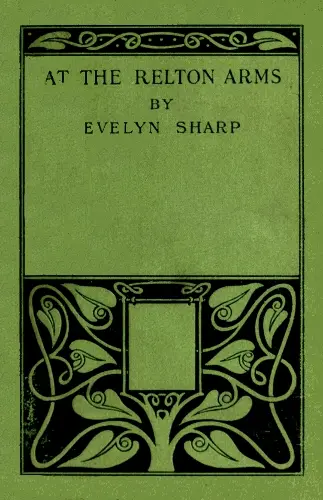
THE CLASSIC COLLECTION · 1895
"At the Relton Arms" by Evelyn Sharp is a novel written in the late 19th century. The narrative begins with a reception in a musician's studio attended by a mix of socially obligated guests and his devoted pupils. Central to the unfolding drama are characters such as the passionate musician Digby Raleigh and the unconventional Lady Joan Relton, whose interactions set the stage for themes of love, artistic aspiration, and societal expectations. At the start of the story, we are introduced to a crowded reception where the musician captivates his remaining students with his theories and compositions, while the restless Lady Joan challenges traditional ideas and boldly engages with Digby. Their playful banter reveals contrasting views on art, life, and the looming presence of societal norms. As the evening progresses, the tension between personal desires and external expectations becomes palpable, highlighted by the arrival of new characters and their complex interconnected relationships. This initial chapter lays the groundwork for the numerous emotional entanglements and moral dilemmas that will be explored throughout the novel.
Introduction adapted from the source catalogue; source summaries may be automatically generated.
Free to read · English · 36,716 words · No account needed
MAKE TIME FOR A GOOD BOOK
On by default. Untick to stop anonymous reading totals. Each page counts after 10 seconds in view. How this works.
Anonymous counting is on unless you have switched it off.
"Once upon a time," began the musician vaguely, and his thoughts strayed away to the lithesome figure swaying to and fro on the broken wall, and he tried hard to realize his crestfallen condition now that she had refused him.
"Yes, daddy, yes; go on, please, my daddy: are you forgotten the end of my story, daddy dear?" pleaded the restless spirit in his arms.
"Oh, dear, once upon a time there was--there was--oh, confound it all, there was a beautiful lady, wasn't there?" he began wearily.
"A booful lady? Welly booful, daddy?"
"Very beautiful, my son."
"Oh," solemnly, "and what sort of daddy did she have?"
"Eh, what? Daddy? Oh--she didn't have one," said the musician, oblivious of morality; he was going through an eloquent speech in his mind which he might have said in the castle meadow if only he had not been so absurdly nervous.
"Oh," said the baby voice, growing shrill with interest, "didn't she never have no daddy at all?"
Of course, thought the musician, if he had said that to her instead of stuttering over a few commonplaces she would have found him irresistible at once.
"Daddy, dear," implored Sonny, tugging at his coat suggestively.
"Oh, the devil take the story!" shouted the musician; "didn't I tell you she never had a daddy? Don't ask so many questions, Sonny."
The big blue eyes became tearful at the unusual tone of anger and at the untimely end of the story, and Digby's conscience smote him a little.
"I aren't crying, only little girls cry," gasped the child between his hardly suppressed sobs. "I was only just thinking, daddy, what a welly funny booful lady she were, daddy."
"Yes, my son," said the musician, very much in the tone of respect he would have used to a man of his own age who was battling with some terrible grief, "yes, my son, she was a very funny beautiful lady, so funny that daddy could not understand her at all, although he loved her so much. And she laughed at daddy, and wouldn't be kind to him, though she was kind to the whole world besides."
The musician almost choked with his own emotion this time; but Sonny jumped up and down with glee at having at last discovered a human chord in the mythical beautiful lady.
"Oh, so she were a naughty booful lady, daddy? Then she won't have jam for tea next Sunday, will she, daddy dear?"
The wooden door that led into the yard creaked open again, and again the red light from the setting sun flooded the little room.
Your reading position is saved on this browser. Take it to another device with a library code. Reading pages adapt to text, rather than matching a printed edition.
BEHIND THE BOOK
This eBook is for the use of anyone anywhere in the United States and most other parts of the world at no cost and with almost no restrictions whatsoever. You may copy it, give it away or re-use it under the terms of the Project Gutenberg License included with this eBook or online at www.gutenberg.org. If you are not located in the United States, you will have to check the laws of the country where you are located before using this eBook. Read the source licence.
The original source file, including credits and licence, is retained by this library. Request an original-format copy at no charge. Please include the book title and Project Gutenberg identifier #41403.
KEEP YOUR CURIOSITY GOING
Coulson Kernahan

Maurice Baring
Frances Wright
Cécile Tormay

Frederic Jesup Stimson

W. H. P. (William Henry Pope) Jarvis